Posts

Coin Bags Explained: Types, Bank Standards, and Secure Coin Handling

What Are Coin Bags (Money Bags for Coins)

Coin bags are specialized bags used to hold and transport large quantities of coins securely. Banks, businesses, and even individuals use coin bags to organize loose change and facilitate deposits. For example, retail stores, bars, and arcades often accumulate heavy, bulky coins and rely on sturdy coin bags to manage and store them safely. Historically made of cloth and closed with a drawstring, money bags for coins are a form of currency packaging commonly seen in bank cash handling.

Coin bags come in various materials and styles to suit different needs. Commonly, they are made from heavy-duty canvas cloth or thick poly/plastic. Smaller zippered pouches made of vinyl or canvas are often used for everyday cash deposits, while larger drawstring canvas sacks or clear plastic bags are used for transporting bulk coins. Many businesses prefer clear plastic coin bags because they allow easy visibility of contents, whereas others opt for opaque canvas bags for added security. In all cases, the bags are built to withstand the weight of coins (often up to tens of kilograms).

Modern coin bags often incorporate security features to prevent theft and tampering. For instance, tamper-evident deposit bags have self-sealing adhesive strips that irreversibly show signs if opened. Many bank coin bags come with unique serial numbers and barcodes for tracking, and even removable tear-off receipts for record-keeping. Such features allow banks and businesses to ensure the coins remain secure in transit. In summary, a coin bag (or “money bag” for coins) is an essential tool for safely handling coins – from loose change at home to large coin deposits in financial institutions – with materials and designs optimized for durability and security.

Types of Coin Bags

Coin bags come in several types, each suited for different uses. Below are the common types of coin bags and their features:

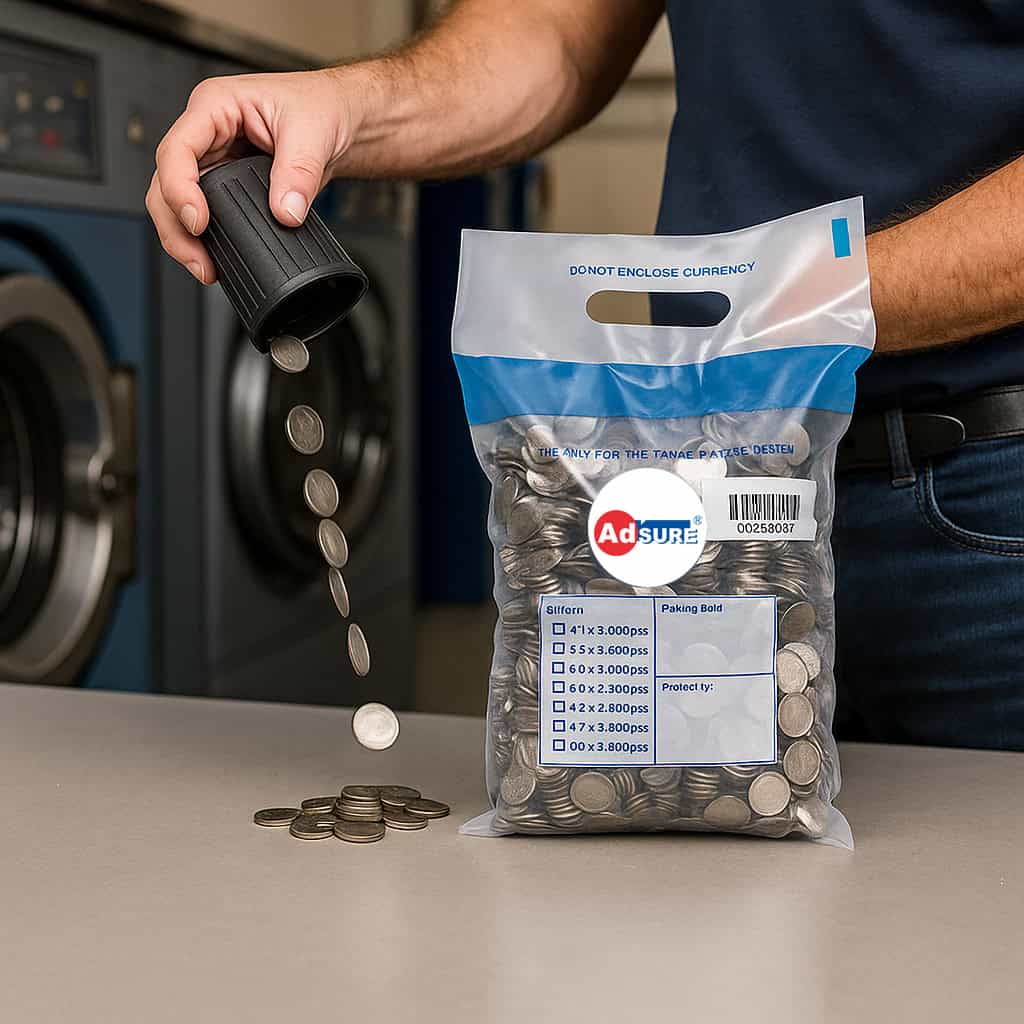
  • Poly/Plastic Coin Bags: These are heavy-duty clear plastic bags made from multi-layer polymer film. They are single-use, tamper-evident deposit bags designed for banks and armored transport. A quality poly coin bag meets Federal Reserve standards with a thick (often ~6.5 mil) material and a reinforced handle that can hold up to 50 lbs of coins without breaking. They usually have self-sealing adhesive closures and often include tracking features (barcoded labels, serial numbers) for high security. Poly coin bags allow visibility of contents and are tamper-evident, meaning any attempt to open will be obvious. They are commonly used by banks, armored car services, and coin-operated businesses for depositing large coin amounts.

  • Canvas/Cloth Coin Bags: These are reusable cloth bags, traditionally made of heavy cotton canvas or duck cloth. Canvas coin bags often have a drawstring top or tie closure, and can be secured with cable ties or locks for security. They are very durable – for example, a large 10 oz cotton canvas coin bag (about 14″×28″) can withstand years of wear and tear. Canvas bags are breathable (allowing moisture to escape) and ideal for repeated use within businesses or between banks. However, by themselves they are not tamper-evident; banks typically seal them with lead seals or zip-ties if security is needed. Canvas coin bags were the standard for banks in the past and are still used for internal coin storage or transport. They are popular for lower-cost, eco-friendly coin transport and can hold substantial weight, though typically one would not overfill beyond ~50 lb for handling reasons.

  • Tamper-Evident Deposit Bags: This category refers to secure coin deposit bags (often plastic) used for bank deposits and cash-in-transit. They are usually clear, heavy-duty poly bags with tamper-evident seals and often a handle for carrying. These bags meet bank requirements for coin deposits – for example, they have a tamper-indicating seal, are made of thick material (around 6–6.5 mil), sized similar to canvas coin sacks, and have labels for recording contents. Tamper-evident deposit bags typically feature a self-sealing adhesive strip: once you fill the bag and seal it, any attempt to open will visibly damage the seal. They also include unique identifiers (numbered, barcoded) on each bag and often a tear-off receipt for the depositor. These bags are used by banks, armored car services, and large retailers to securely send loose coins to coin processing or central vaults. Because they are one-time use, they ensure a fresh, uncompromised bag for each deposit.

  • Personal Coin Pouches: For individuals or cashiers handling smaller amounts of coin, coin pouches or coin purses are common. These are small bags (often leather, fabric, or nylon) with zippers or snap closures used to carry loose change. Some pouches are designed with multiple compartments to sort coins by denomination. For example, businesses offer 6-compartment coin pouches that hold various denominations in separate pockets (with an extra section for bills or coupons). This helps users like vendors or waitstaff quickly make change and keep coins organized. Personal coin pouches do not have special security features since they are intended for personal custody, but they are convenient for daily use. Coin collectors also use small cloth or plastic pouches to store valuable coins individually. In short, personal coin bags range from simple change purses to more organized pouches for professional use.

Bank Coin Bag Standards (Standard Amounts)

Banks and financial institutions have established standard amounts for coin bags, to ensure consistency in deposits and ease of handling. In the United States, the Federal Reserve specifies uniform “full bag” amounts for each coin denomination. For example, a full bag of pennies contains $50 (which is 5,000 pennies), a full bag of nickels contains $200 (4,000 nickels), and a full bag of dimes or quarters contains $1,000. Half-dollar coins are also bagged as $1,000 per bag (2,000 halves), while dollar coins are typically bagged as $2,000 (2,000 $1 coins) per bag. These standard amounts ensure that each bag weighs roughly the same (around 45–50 pounds for silver coins) for safety. Color-coding is used to label U.S. coin bags by denomination for quick identification: e.g. Red for pennies, Blue for nickels, Green for dimes, Orange for quarters, Buff (tan) for halves, and Grey for dollar coins. The table below summarizes the typical U.S. coin bag standards and their color codes:

Standard U.S. Coin Bag Amounts and Color Codes

Coin Denomination

Standard Full Bag Amount

Bag Tag Color (ABA Standard)

1¢ penny

$50 (5,000 pennies)

Red

5¢ nickel

$200 (4,000 nickels)

Blue

10¢ dime

$1,000 (10,000 dimes)

Green

25¢ quarter

$1,000 (4,000 quarters)

Orange

50¢ half-dollar

$1,000 (2,000 halves)

Buff

$1 coin

$2,000 (2,000 dollar coins)

Grey

Note: The above are Federal Reserve standard bag amounts for U.S. coin deposits. Banks typically require deposits in full bags of these amounts for efficiency. The color codes are as per the American Bankers Association (ABA) standard and are used on bag labels or tags for quick visual identification

In the United Kingdom, banks likewise have standard coin bag requirements (sometimes called “coin sachets”). UK high-street banks provide small, clear plastic coin bags to customers, each designed to hold a specific value of coins. Typically, a bag will contain £1 in pennies or 2p coins (for example, 100 pennies or 50 two-pence coins), £5 in 5p or 10p coins, £10 in 20p or 50p coins, or £20 in £1 or £2 coins. For instance, one full bag holds 20 × £1 coins (worth £20), or 20 × 50p coins (worth £10). The table below shows the standard UK coin bag quantities:

Standard UK Coin Bag Amounts

Coin Denomination

Number of Coins per Standard Bag

Total Value per Bag

1p penny

100 coins

£1

2p two pence

50 coins

£1

5p five pence

100 coins

£5

10p five pence

50 coins

£5

20p five pence

50 coins

£10

50p five pence

20 coins

£10

£1 one-pound

20 coins

£20

£2 two-pound

10 coins

£20

(UK banks generally require coins to be sorted by denomination and bagged separately; mixed coin bags are usually not accepted. Tellers can quickly verify the deposit by weighing the bag, as each full bag has a known weight.)

How to Obtain Coin Bags

Where can you get coin bags? There are several convenient sources:

  • Banks: Most banks or credit unions will provide coin bags (or coin wrappers) to their customers for free if you ask. In the UK, for example, it’s common to request small coin bags at the bank counter for sorting your change. In the US, many banks supply free paper coin rolls and may have deposit bags available for business account holders. For larger tamper-evident coin bags, some banks can order them for you (especially for business needs) if given advance notice. Always check with your bank’s branch – they often have the necessary coin bags or coin wrappers on hand.

  • Online Retailers & Office Suppliers: Coin bags (both cloth and plastic) are widely available for purchase. E-commerce sites and office supply stores carry tamper-evident deposit bags, canvas coin sacks, and coin roll wrappers. For instance, one can find packs of Federal Reserve-compliant plastic deposit bags online, which include features like tear-off receipts and serial numbers. Office supply catalogs also sell canvas bank bags and smaller change pouches. If your bank doesn’t provide the bags you need, you can easily obtain them from such vendors.

Tips for using coin bags: 

Always sort your coins by denomination before bagging – banks will not accept mixed denominations in one bag. Use coin wrappers for very small amounts: rolling coins in paper tubes (rolls) can make it easier to count and exchange small change. In fact, rolling coins yourself is often the most cost-effective method, and banks typically provide the paper rolls for free. When preparing a deposit, fill coin bags up to the standard amount (if possible) to simplify the bank’s verification. It’s a good practice to label your bags with your name and account details if the bag has a writable panel. For businesses, plan ahead and order coin bags from your bank if you anticipate needing many – some banks might require notice to supply large quantities. Finally, ensure coin bags are properly sealed (especially tamper-evident bags) and keep the tear-off receipt or note the serial number for your records.

Recommended Supplier – Adsure Packaging Limited

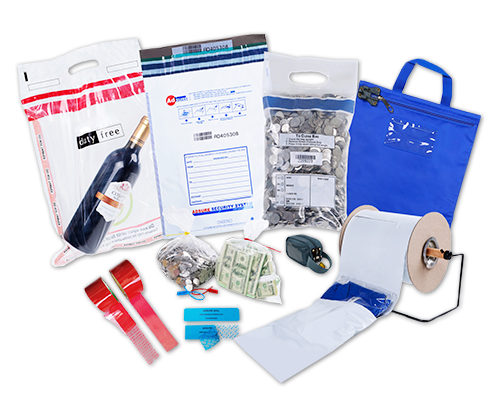
When choosing coin bags, it’s wise to purchase from trusted suppliers. Adsure Packaging, a specialist in security packaging since 1985, is one recommended manufacturer known for high-quality tamper-evident coin bags. With over 40 years of experience in producing security bags, Adsure’s coin deposit bags are Federal Reserve compliant, meaning they meet the rigorous standards required for bank coin shipments.

They are constructed with a special multi-layer polyethylene film that is extremely durable—tested to hold heavy coin loads (up to approximately 50 pounds) without tearing. Each bag features a self-sealing tamper-evident tape closure and is uniquely numbered with a barcode for tracking and security. The design also includes reinforced carry handles with die-cut holes to support the weight of coins during transit.

Adsure’s tamper-evident coin bags are available in various sizes and security levels and can be ordered online through its website or authorized distributors. They are widely used by banks, retail businesses, and vending operators for their long-proven reliability, regulatory compliance, and consistent quality. By choosing an experienced supplier like Adsure, organizations handling coins can ensure they use high-security bags that effectively protect against theft while meeting strict bank requirements.

Conclusion

In summary, coin bags are an indispensable part of cash handling for coins, ensuring that coins are stored, transported, and deposited safely and efficiently. From small canvas pouches for daily use to tamper-evident plastic bags for large bank deposits, using the right type of coin bag maintains organization and security. It is important to adhere to bank standards (proper amounts and packaging) to avoid hassles when depositing coins. By obtaining quality coin bags – whether through your bank or trusted suppliers like Adsure Packaging – businesses and individuals can protect their coin assets and streamline their cash management. In a world where coins can quickly become cumbersome, the proper coin bag keeps your money secure and makes handling large quantities of coins practical and hassle-free.