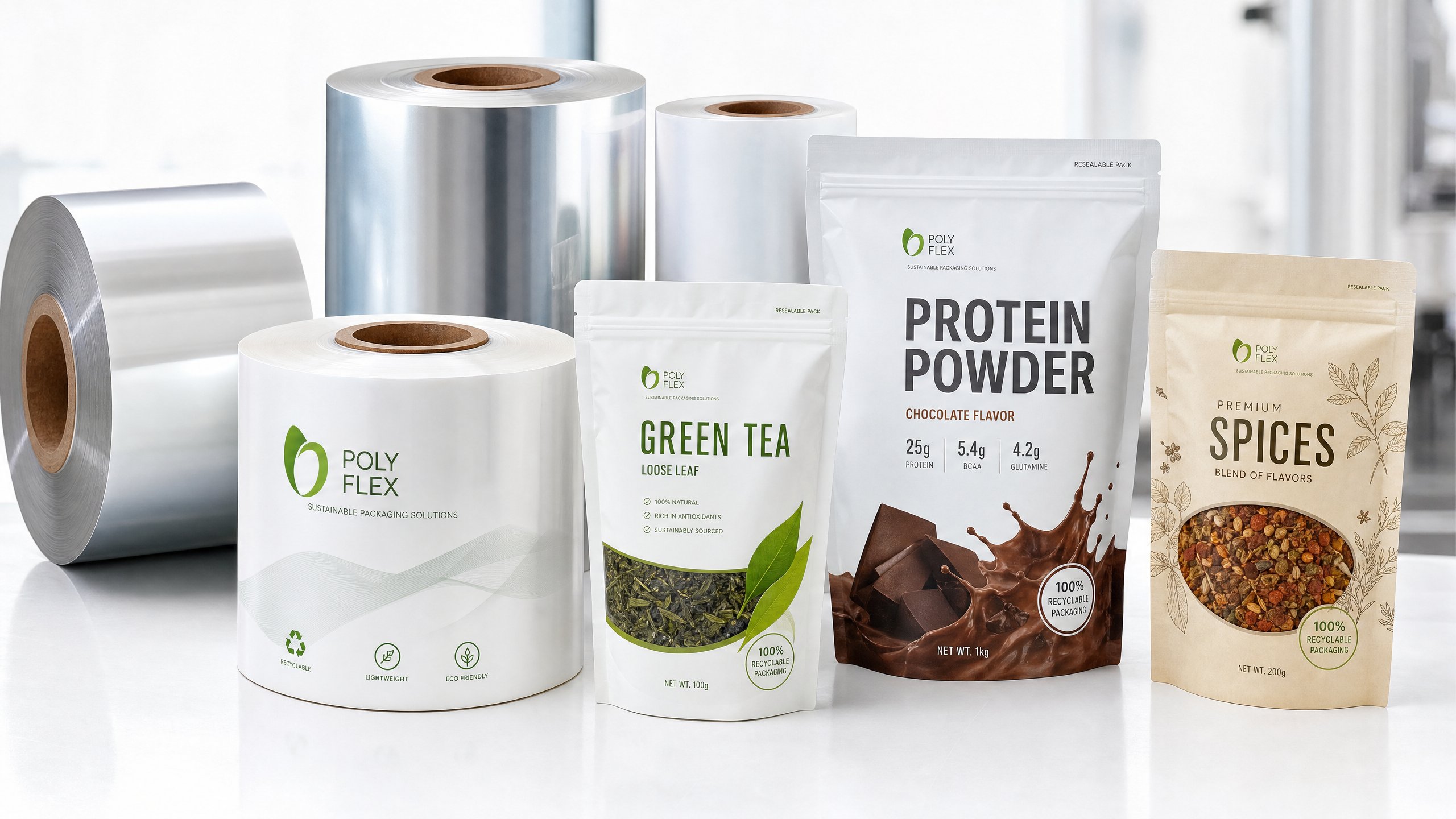
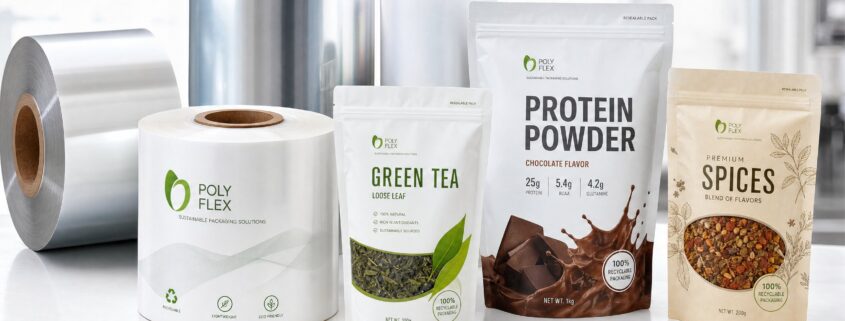
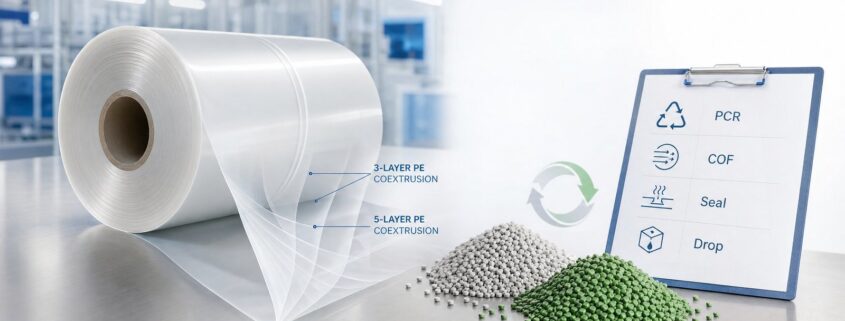
PCR FFS film roll for recyclable mono PE industrial packaging with application testing checklist

How to Choose PCR Content for Mono PE FFS Film: Why Up to 30% Needs Application Testing

PCR FFS film is becoming an important material choice for brands, industrial packers, and packaging engineers preparing for recyclable packaging expectations in Europe. A mono PE structure can support a more recycling-oriented design, while post-consumer recycled content helps reduce reliance on virgin plastic. However, the phrase “up to 30% PCR” should not be treated as a fixed number for every bag, every product, or every form-fill-seal line. In real production, PCR content must be selected through application testing.

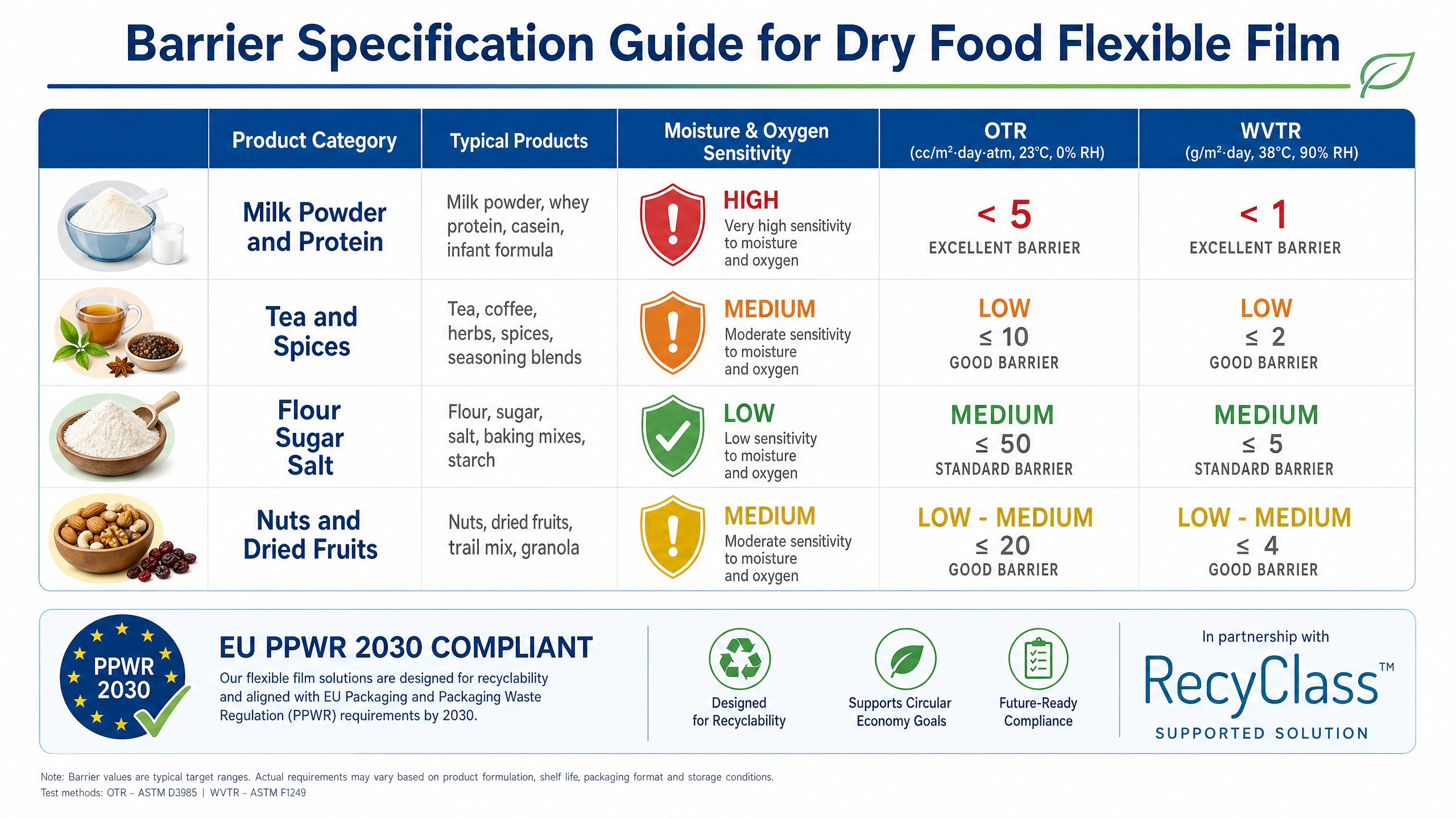
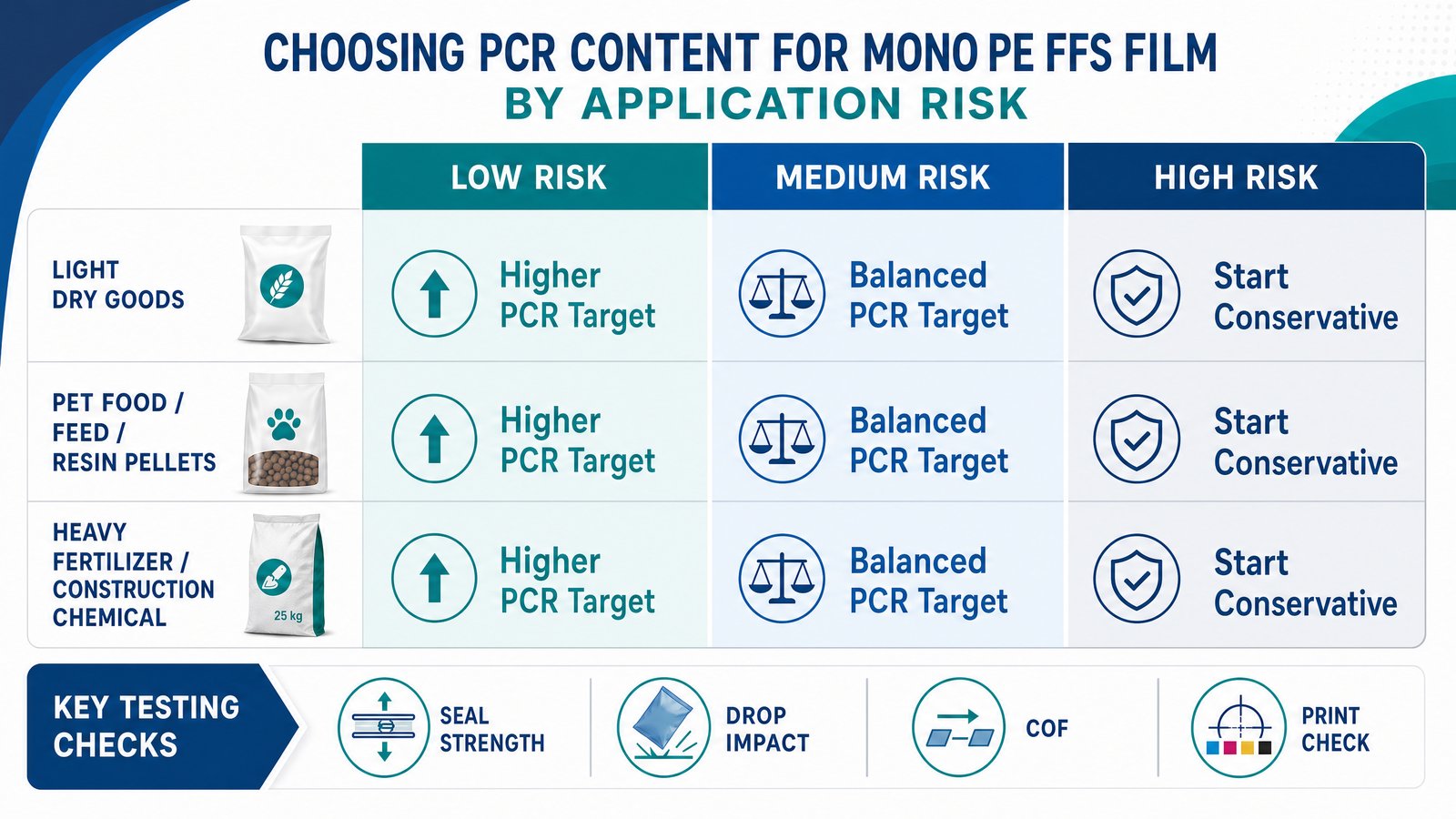
PCR FFS film application testing matrix for different bag weights and product risks

Adsure’s EU Recyclable Mono PE FFS Film with up to 30% PCR Content is designed for vertical and horizontal form-fill-seal packaging lines, with customizable COF, film thickness, roll width, sealing layer formulation, printing, and a 3-layer PE co-extrusion structure. The purpose of this article is to explain how buyers should evaluate PCR percentage before ordering, and why sample testing is the safest path for heavy-duty packaging, printed packaging, and European-market projects.

Why PCR FFS Film Is Not a One-Number Specification

A realistic PCR target depends on the filling product, bag weight, drop height, film thickness, pigment, ink coverage, sealing temperature, and machine speed. A 5 kg pet food pack and a 50 kg fertilizer sack may both use mono PE FFS film, but they do not have the same mechanical risk. The lighter pack may focus on appearance, printing, and barcode readability, while the heavier sack may need stronger puncture resistance, higher dart impact, and reinforced sealing performance.

Specification factor Why it affects PCR percentage Practical buyer question
Filling weight Heavier bags place more stress on seals, corners, and palletized loads. Will the bag survive 25 kg or 50 kg filling and handling?
Product shape Sharp granules and powders with hard particles increase puncture risk. Is the product fertilizer, resin, feed, salt, or powder?
Printing coverage Heavy ink coverage can affect recyclability, appearance, and process control. Is the pack plain, white, tinted, matte, or heavily printed?
Machine speed Faster FFS lines need stable unwinding, tracking, and heat-sealing windows. What are the VFFS or HFFS speed and sealing parameters?
PCR source quality PCR consistency influences gels, odor, color variation, and mechanical stability. Has the PCR resin been qualified for this structure?

What “Up to 30% PCR” Means in Mono PE FFS Film

“Up to 30% PCR” means the film can be engineered with post-consumer recycled PE content reaching 30% when the application, thickness, color, printing, and performance requirements allow it. It does not mean every specification should automatically use 30% PCR without validation. This distinction is important for honest sustainability communication and for reducing packaging failure risk.

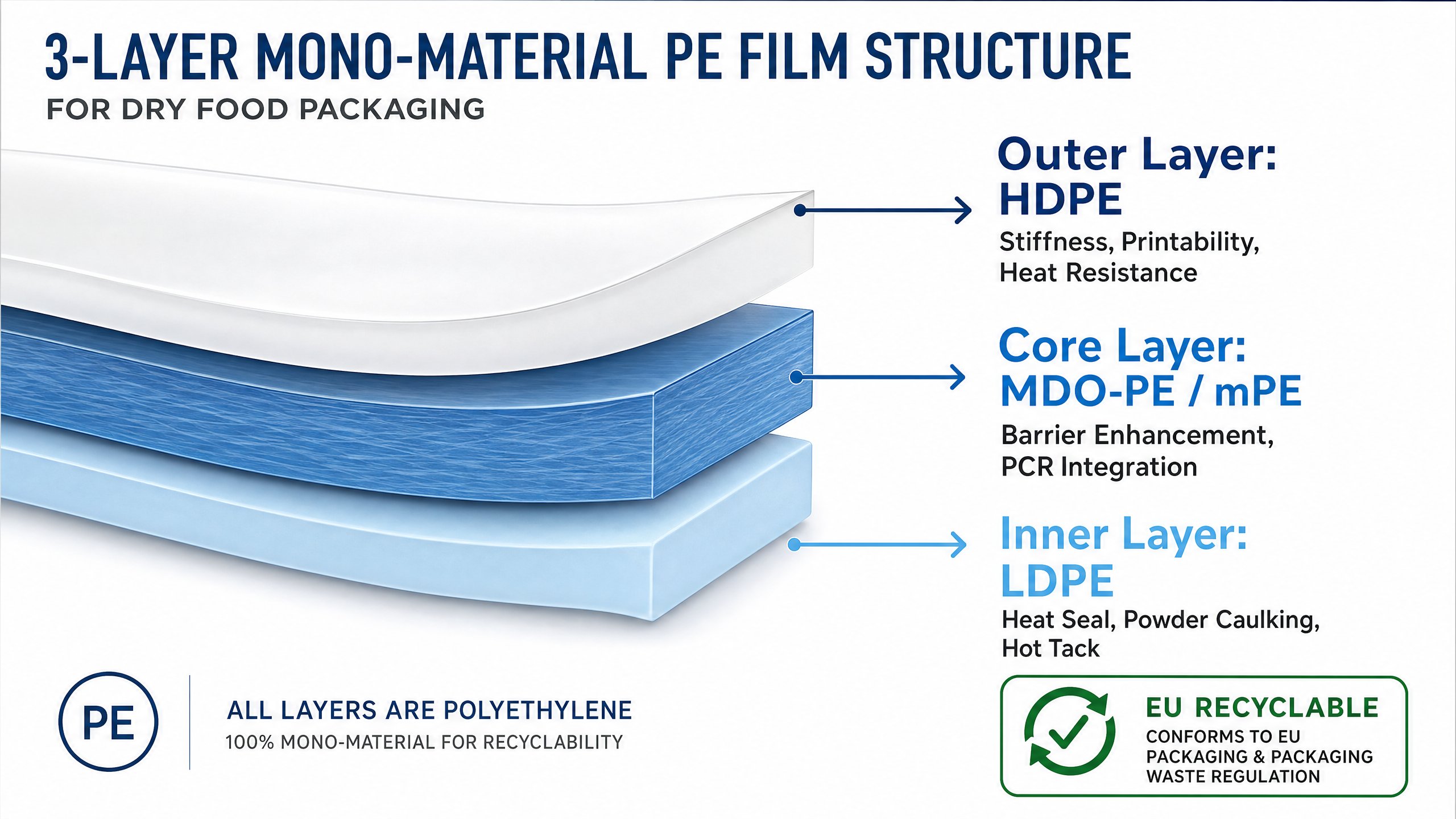
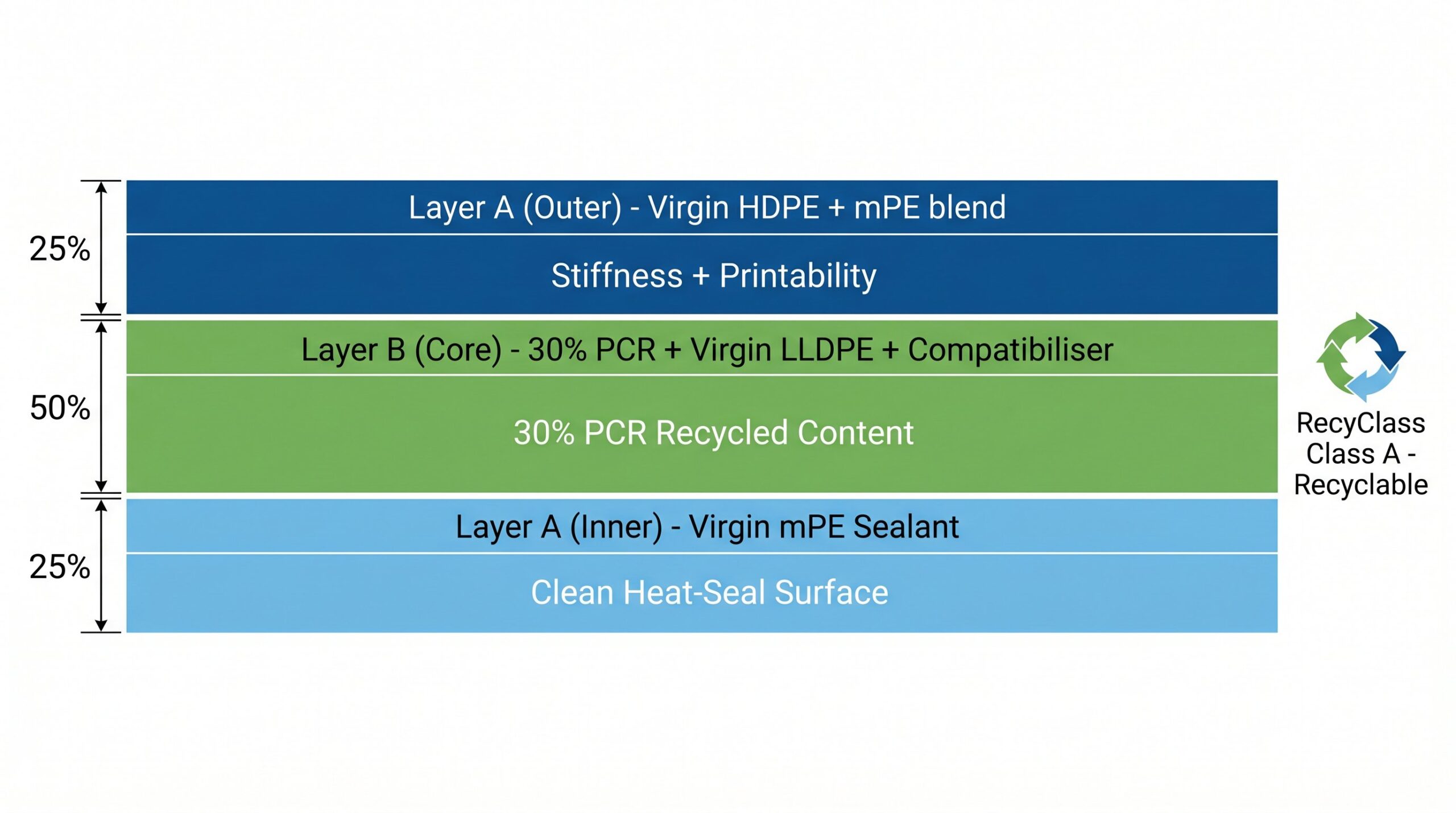
For many non-food-contact industrial applications, 30% PCR can be a practical target when the recycled material is placed in the core layer and protected by optimized outer and inner layers. Adsure uses a 3-layer PE co-extrusion structure, where the core layer can carry PCR content, the outer layer supports strength and printability, and the inner sealant layer is adjusted for low seal initiation temperature and seal integrity. This three-layer design can be customized for 5 kg to 50 kg applications through thickness, resin selection, COF control, and application testing.

How to Select PCR FFS Film by Application Risk

A practical way to choose PCR FFS film is to classify the application by packaging risk. Low-risk applications may be able to start near the upper PCR target earlier, while high-risk applications should begin with a more conservative formulation and then increase PCR content after testing.

Application risk level Typical products Suggested development direction Testing emphasis
Lower risk Light dry goods and small consumer-size packs Evaluate higher PCR targets earlier if appearance requirements allow. Seal appearance, print quality, film tracking, basic drop testing.
Medium risk Pet food, animal feed, rice, flour, salt, resin pellets Balance PCR content with puncture resistance and controlled COF. Dart impact, tear resistance, seal strength, line trial.
Higher risk Fertilizer, construction chemicals, tile adhesive, heavy powders, 25–50 kg sacks Use a reinforced 3-layer PE co-extrusion design and validate before mass production. Drop impact, hot tack, creep resistance, pallet stability, shipping simulation.

Why PCR Content Affects Strength, Sealing, and Appearance

PCR FFS film must satisfy both sustainability and performance requirements. Depending on the source and grade, PCR resin can introduce variation in melt flow, color, odor, gels, and mechanical properties. These variables do not automatically make PCR unsuitable, but they do require supplier control and application testing.

From a mechanical perspective, heavy-duty packaging usually needs tensile strength, dart impact resistance, tear resistance, and puncture resistance. If the PCR percentage is increased too quickly without adjusting the structure, the film may lose safety margin during filling, stacking, or transport. From a sealing perspective, the inner layer must still create reliable seals under the customer’s dwell time, jaw pressure, and sealing temperature. A low-SIT sealing formulation can help improve sealing reliability, especially on high-speed packaging lines.

PCR FFS Film Testing Checklist Before Bulk Production

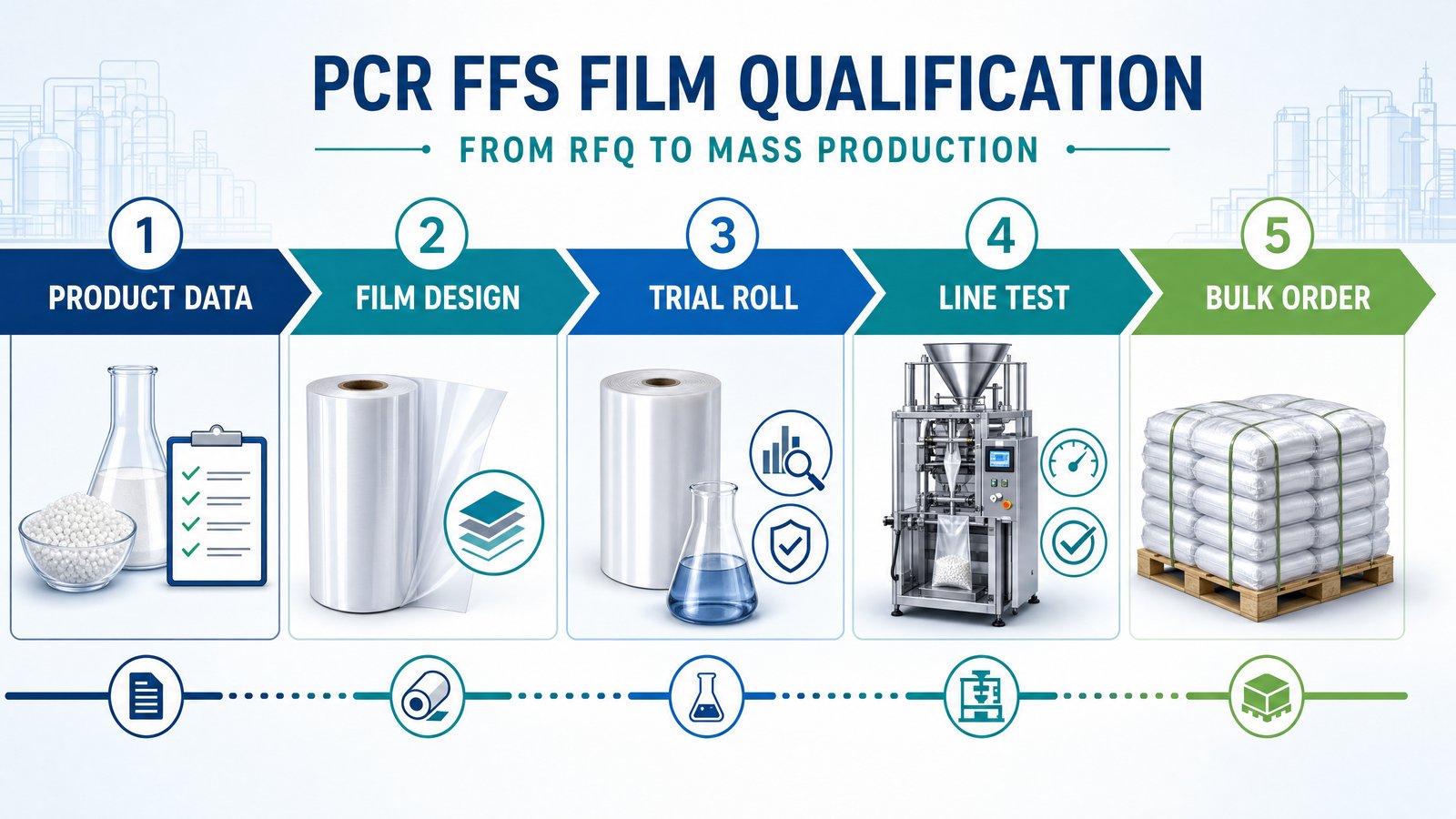
Before placing a bulk order, buyers should request a trial roll or sample structure and test it on the actual production line. Lab data is useful, but FFS packaging is a process. Film behavior on forming shoulders, rollers, sealing jaws, filling stations, and pallets must be confirmed under real operating conditions.

Test item What it verifies Why it matters for PCR FFS film
COF test Film-to-metal and film-to-film friction behavior. Supports smooth unwinding, tracking, and fewer film jams.
Gauge tolerance Consistency of film thickness across the roll. Helps maintain stable roll tension and bag forming.
Seal strength Final seal integrity after cooling. Prevents leaks, open seals, and product loss.
Hot tack Seal strength before the seal fully cools. Critical when product drops immediately after sealing.
Dart impact Resistance to sudden impact. Important for heavy products and rough handling.
Drop test Finished bag performance under handling stress. Validates the full package, not only the film sample.

How Layer Structure Helps Balance PCR and Performance

Adsure’s PCR FFS film uses a three-layer structure that separates the main functions across the film. In this 3-layer PE co-extrusion structure, the outer layer can support stiffness, printability, and surface treatment; the core layer can carry PCR content; and the inner layer can provide sealing performance.

This structure-based design is especially important for 25 kg to 50 kg industrial bags. If the product is abrasive or dense, the three-layer PE structure should be reinforced through thickness, resin selection, PCR placement, sealing-layer optimization, and application testing. If the application is lighter, the same three-layer structure may be optimized for cost efficiency and machineability. In all cases, the target PCR percentage should be confirmed through film testing and line trials.

PCR FFS film qualification workflow from RFQ to trial roll testing and mass production

How Buyers Should Prepare an RFQ for PCR FFS Film

The best way to get a reliable recommendation is to provide complete packaging and machine information at the RFQ stage. Without these details, a supplier can only estimate the PCR percentage. With the right details, the supplier can recommend the film structure, thickness, roll width, roll diameter, core size, COF target, sealing layer, printing method, and testing plan.

RFQ information Why Adsure needs it
Filling product and product photo Identifies puncture, dust, abrasion, and contamination risks.
Packing weight and bag dimensions Determines film thickness, structure, and load-bearing needs.
VFFS or HFFS machine brand and model Helps match roll width, forming collar, tension, and sealing settings.
Current film thickness and structure Provides a baseline for conversion to mono PE and PCR content.
Target PCR percentage Allows Adsure to propose a realistic test path, not only a claim.
Printing artwork and destination market Affects surface treatment, barcode readability, appearance, and EU-market documentation.

Conclusion: Choose PCR FFS Film by Evidence, Not Assumption

PCR FFS film is a practical route for brands and industrial packers that want recyclable mono PE packaging with recycled-content potential. But the right PCR percentage is not determined by a marketing target alone. It must be validated against product weight, puncture risk, seal performance, machine compatibility, printing, color, and shipping conditions.

For buyers converting from standard FFS film or PA/PE laminate structures, Adsure recommends starting with a technical review, then moving to sample development and trial roll testing. If your project requires a recyclable mono PE structure with up to 30% PCR content, contact Adsure to discuss your application, machine model, packing weight, and destination market.

Request a PCR FFS Film Trial Roll »

FAQ: PCR FFS Film Selection

Can every mono PE FFS film use 30% PCR?

No. A mono PE FFS film can be designed with up to 30% PCR when the application, thickness, product weight, printing, color, and performance requirements allow it. Heavy-duty bags, abrasive products, or high-speed FFS lines may need a phased test plan before reaching the highest PCR target.

Does PCR content reduce FFS film strength?

PCR content can affect strength depending on resin quality, percentage, and layer placement. A well-designed PCR FFS film can balance recycled content with puncture resistance, dart impact, and seal performance by using controlled PCR in the core layer and optimized PE layers where needed.

Is PCR FFS film suitable for 25 kg to 50 kg bags?

Yes, it can be suitable for 25 kg to 50 kg applications, but testing is essential. For fertilizer, feed, resin pellets, building materials, and heavy powders, Adsure recommends validating structure, thickness, sealing, drop impact, and pallet stability before bulk production.

Reviewed by: Adsure Packaging Technical Team

Trademark Disclaimer: Autobag®, SidePouch®, and FAS SPRint Revolution™ are trademarks of Automated Packaging Systems, Inc. (a Sealed Air company). Adsure Packaging is not affiliated with, endorsed by, or authorized by Sealed Air Corporation or Automated Packaging Systems. All compatible products are independently manufactured by Adsure Packaging.
ffs_ppwr_final

FFS Mono-Material PE Film: The PPWR-Ready Solution for Heavy-Duty Packaging in 2026

If you are a packaging buyer or sustainability manager sourcing flexible film for industrial bagging lines, mono-material PE film for Form-Fill-Seal (FFS) applications is the single most important material shift you need to understand before 2030. The EU’s Packaging and Packaging Waste Regulation (PPWR) is already reshaping procurement decisions across Europe — and mono-material PE film sits at the very centre of that transformation.

In this guide, we break down exactly what FFS mono-material PE film is, how it performs against traditional multi-layer laminates, what the PPWR requires, and why the 30% PCR version manufactured by Adsure Packaging delivers both compliance and performance without compromise.

What Is FFS Mono-Material PE Film and Why Does It Matter?

Mono-material PE film is a polyethylene-only flexible film structure — typically produced via three-layer or five-layer blown co-extrusion — that contains no mixed polymer types such as nylon (PA) or polyester (PET). Because every layer is made from the same polymer family, the finished film can enter the existing PE recycling stream without any separation step.

In a Form-Fill-Seal context, the film is supplied on a roll, fed into a vertical or horizontal FFS machine, formed into a tube, filled with product (fertiliser, resin pellets, animal feed, construction chemicals, etc.), and heat-sealed at both ends to create a finished bag — all in one continuous automated operation.

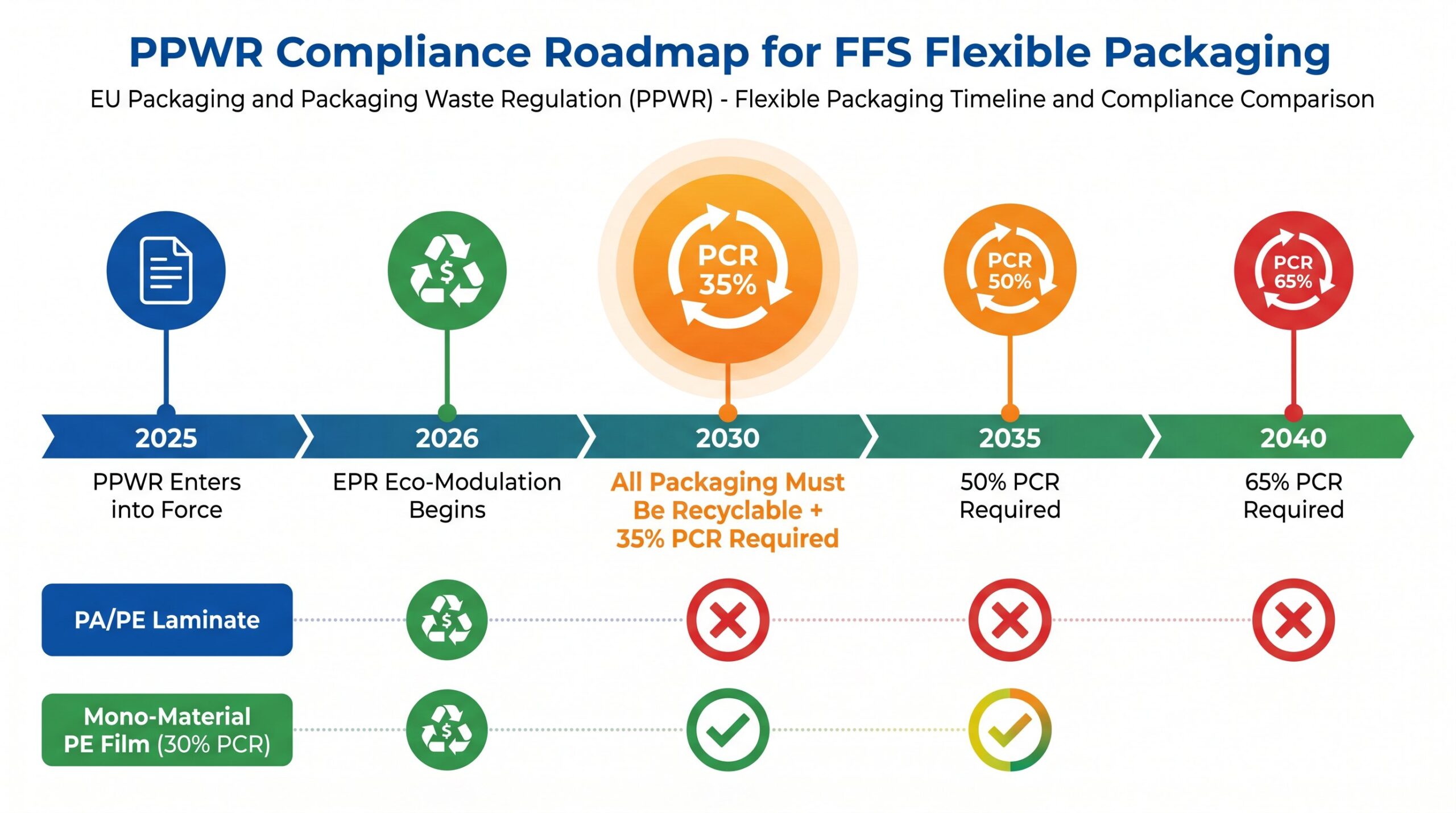
The reason mono-material PE film matters right now is simple: the EU PPWR (Regulation 2025/40), which entered into force in February 2025, mandates that all plastic packaging placed on the EU market must be recyclable by 2030, and that non-contact-sensitive plastic packaging must contain a minimum of 35% recycled content by 2030, rising to 65% by 2040. Traditional multi-layer laminates containing PA or aluminium foil fail the recyclability test entirely. Mono-material PE film passes it by design.


PPWR Compliance: What the Regulation Actually Requires for FFS Film

The PPWR introduces a tiered set of obligations that directly affect FFS film buyers and brand owners:

PPWR Requirement Deadline Impact on FFS Film
All packaging must be recyclable 2030 Multi-layer PA/PE laminates are non-compliant; mono-PE is compliant
Non-contact plastic packaging: ≥ 35% recycled content 2030 30% PCR FFS film already approaches this threshold
Non-contact plastic packaging: ≥ 50% recycled content 2035 Requires ongoing PCR ramp-up strategy
Non-contact plastic packaging: ≥ 65% recycled content 2040 Long-term roadmap required from suppliers
Extended Producer Responsibility (EPR) eco-modulation 2025 onwards Lower EPR fees for recyclable + high-PCR packaging

The eco-modulation mechanism is particularly important for buyers. Under national EPR schemes aligned with PPWR, packaging that is both recyclable and contains high recycled content qualifies for significantly reduced producer fees. Switching from a standard PA/PE laminate to a 30% PCR mono-material PE film can therefore deliver a direct cost saving on EPR contributions — in addition to the sustainability benefit.

“Packaging that is designed for recyclability and incorporates post-consumer recycled content will benefit from lower eco-modulated EPR fees under national schemes implementing PPWR.”
European Commission, FAQ on PPWR (2025)

For a deeper overview of our sustainable packaging solutions, including recycled-content materials and eco-friendly options, visit our dedicated sustainability page.


Mono-Material PE Film vs. Multi-Layer Laminates: A Technical Comparison

The most common objection to switching from a PA/PE laminate to a mono-material PE film is performance. Nylon layers add puncture resistance, stiffness, and barrier properties that standard PE cannot match — or so the conventional wisdom goes. The reality in 2025 is more nuanced.

Performance Parameter PA/PE Laminate Mono-Material PE Film (3-layer mPE)
Tensile strength (MD) ★★★★★ ★★★★☆
Puncture resistance ★★★★★ ★★★★☆
Creep resistance (25 kg+ loads) ★★★★★ ★★★★☆
Heat seal window Narrow Wide
Hot tack strength Moderate High
Recyclability (EU PPWR) ✗ Non
-compliant ✓ Fully compliant
EPR fee category High Low
PCR incorporation Difficult Straightforward

Modern metallocene PE (mPE) resins, combined with high-density PE (HDPE) skin layers, allow mono-material PE film to achieve tensile and puncture values that are within 10–15% of a comparable PA/PE laminate — a gap that is entirely acceptable for the vast majority of industrial FFS applications including 25 kg fertiliser bags, 50 kg resin pellet sacks, and 20 kg animal feed bags.

Where mono-material PE film genuinely excels over PA/PE laminates is in hot tack strength — the ability of a freshly formed seal to withstand the impact of falling product before the seal has cooled. Because PE seals at a lower temperature and retains flexibility at the seal line, hot tack performance is superior, which directly reduces bag burst rates on high-speed VFFS lines.


Cross-section diagram of 3-layer ABA mono-material PE film with 30% PCR core layer

The 30% PCR Challenge: How Adsure Solves It

Incorporating 30% post-consumer recycled (PCR) polyethylene into a FFS film structure is not simply a matter of blending recycled pellets into the extruder. PCR resin introduces variability in melt flow index, contamination risk (gels, black specks), potential odour, and reduced mechanical consistency. These are real challenges — and they are exactly the challenges that Adsure Packaging’s manufacturing process is engineered to address.

Our mono-material PE film with 30% PCR uses a three-layer ABA co-extrusion architecture.

This architecture means that the PCR content never contacts the packaged product and never appears on the film surface — eliminating the two most common quality complaints about PCR-containing films.

On the process side, all incoming PCR resin passes through a continuous melt filtration system (40-micron screen) before extrusion, removing gels and contaminants. An inline degassing step removes volatile organic compounds (VOCs) responsible for odour. The result is a film that is visually comparable to a virgin PE film and mechanically consistent batch-to-batch.

For more information on how our pre-opened auto bags and film products are manufactured to exacting quality standards, visit our products page.


Running FFS Mono-Material PE Film on Your Packaging Line

One of the most practical questions buyers ask is whether a mono-material PE film will run reliably on their existing FFS equipment. The answer is yes — with the right film specification.

Key parameters to verify when trialling a mono-material PE film on a VFFS or HFFS machine:

Coefficient of Friction (COF): The film’s COF must be matched to your machine’s film transport system. Adsure’s standard FFS film is produced with a COF of 0.15–0.25 (kinetic, film-to-metal), which is compatible with the majority of W&H, Windmöller & Hölscher, Concetti, and Premier Tech FFS systems.

Heat Seal Temperature Range: Our 30% PCR mono-PE film seals reliably in the range of 130–160°C, with an optimal window of 140–150°C at standard dwell times of 0.3–0.5 seconds. This is a broader window than most PA/PE laminates, which reduces the risk of seal failures during production speed changes.

Film Thickness: For heavy-duty FFS applications, we recommend:

Application Recommended Thickness Typical Bag Weight
Fertiliser / agrochemicals 120–150 µm 25–50 kg
Resin pellets / masterbatch 100–130 µm 25 kg
Animal feed 90–120 µm 20–25 kg
Construction chemicals 130–160 µm 25–50 kg

Trial Roll Programme: Adsure offers trial rolls in standard widths (400–1,200 mm) and lengths (500–1,000 m) for machine qualification. Our technical team can provide remote or on-site support during the trial period to optimise machine parameters.


EU PPWR compliance timeline infographic for FFS flexible packaging 2025 to 2040

FFS Mono-Material PE Film and the Circular Economy

Beyond PPWR compliance, mono-material PE film plays a direct role in building a functioning circular economy for flexible plastic packaging. The key enabler is design for recyclability: because the film contains only PE polymers, it is compatible with existing PE film collection and recycling infrastructure in Europe, including the CEFLEX-aligned collection streams operating in Germany, the Netherlands, Belgium, and Scandinavia.

RecyClass — the European recyclability assessment platform — classifies mono-material PE films as Class A (Recyclable) when they meet specific design criteria, including:

  • No non-PE layers exceeding 5% of total film weight
  • No black carbon pigments that interfere with NIR sorting
  • Ink coverage below 50% of total surface area (or use of PE-compatible inks)

Adsure’s FFS mono-material PE film is designed to meet all three criteria. The 30% PCR content itself comes from post-consumer PE film collected through European take-back schemes, closing the loop and demonstrating a genuine circular material flow.

This commitment to sustainable packaging is part of Adsure’s broader strategy to help customers meet their Scope 3 emissions targets and ESG reporting obligations.


FFS Mono-Material PE Film: 5 Key FAQs

Q1: Does 30% PCR content reduce the tensile strength of FFS mono-material PE film?
In our three-layer ABA architecture, the PCR is confined to the core layer. Independent tensile testing confirms that our 30% PCR film achieves ≥95% of the tensile strength of an equivalent virgin PE film. For standard heavy-duty FFS applications (25–50 kg bags), this difference is within the design safety margin.

Q2: Is your mono-material PE film certified as recyclable?
Our FFS mono-material PE film is designed in accordance with RecyClass guidelines and CEFLEX’s Design for a Circular Economy (D4ACE) framework. We provide third-party test reports confirming polymer composition and recyclability classification upon request.

Q3: Will the film run on our existing W&H or Concetti FFS machine without modification?
In the majority of cases, yes. Our film is produced with a COF, stiffness, and heat-seal profile optimised for standard FFS equipment. We recommend a trial roll qualification run before full production changeover, and our technical team is available to support parameter optimisation remotely or on-site.

Q4: What is the minimum order quantity for custom-width FFS mono-material PE film?
Standard minimum order quantities start at 5,000 kg per specification (width, thickness, PCR content, print). For trial orders, we offer reduced MOQs of 1,000–2,000 kg. Contact our sales team for a detailed quotation.

Q5: How does using your 30% PCR mono-PE film reduce my EPR fees?
Under PPWR-aligned national EPR schemes, packaging is assessed on two criteria: recyclability and recycled content. Our film scores positively on both. While exact fee reductions vary by country and scheme operator, buyers in Germany, France, and the Netherlands have reported EPR fee reductions of 15–30% when switching from non-recyclable multi-layer laminates to recyclable mono-material PE with PCR content.


Why Choose Adsure Packaging for FFS Mono-Material PE Film?

Adsure Packaging has over 40 years of experience manufacturing high-performance flexible packaging films and bags for industrial and commercial applications worldwide. Our FFS mono-material PE film with 30% PCR represents the convergence of our materials science expertise, our commitment to circular economy principles, and our understanding of the practical demands of high-speed automated packaging lines.

We supply to customers across Europe, the Americas, and Asia-Pacific, with full technical documentation, third-party test reports, and dedicated account management support.

Ready to switch to a PPWR-compliant FFS film? Get a Free Quote Today »


Video: FFS Packaging in Action

See how our pre-opened bags and film products perform on automated packaging lines:


Reviewed by: Adsure Packaging Technical Team


Custom Compostable Poly Mailer Bags

Why do you choose compostable mailer for mailing?

It seems that compostable mailer become more and more popular for mailing.

Many customer expecially Australia customer prefer choose compostable mailer as their choice.

Custom Compostable Poly Mailer Bags with Handle

So what is compostable mailer and why it became a trend?

Compostable mailers have all the lightweight shipping benefits of traditional poly mailers, but with proper disposal, they break down into natural components that aid in healthy soil. 

These mailers are made from renewable bioplastic derived from corn starch combined with a synthetic binding agent for strength and flexibility. They can be composted in a home compost bin or in industrial composting facilities, depending on local availability.

blog

Green Biodegradable Plastic Material for Tamper Evident Bags

Sustainable Development and Our Commitment to the Environment

Environmental issues form a fundamental part of ADsure activities.

ADsure is committed to sustainability. We have taken clear steps towards protecting our environment while maintaining high quality and reliable products. We persistently search for the best raw materials and production methods that limit any negative effects on the environment. This includes a strong commitment to use as much renewable raw materials in our products as possible. Along with the commitment to our products and the environment, we emphasize the importance of this commitment internally with our employees. Our sustainability pledge is a natural part of our company culture.
Raw Materials

ADsure deposit bags are biodegradable and 100% recyclable Tamper- Evident Cash Deposit Bags. ADsure provides the same tamper indicating features as our ADSURE® bags; cold, saliva and side seam. ADsure biodegradable deposit bags provide a premium level of tamper-evidence and security. They also feature the addition of the EcoPure additive, the best “green” solution for plastics on the market today. Unlike other biodegradable bags, ADsure will not begin to biodegrade until placed in an active microbial environment, so shelf life is not affected.