ICAO STEBs Guide: Secure Duty-Free Liquids for Airport Transfers
ICAO STEBs Guide: Secure Duty-Free Liquids for Airport Transfers
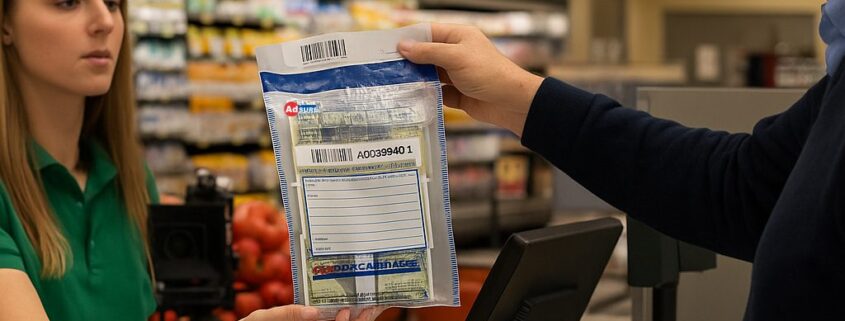
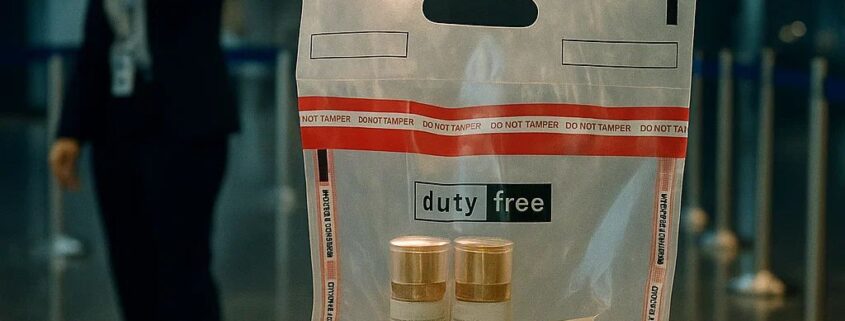
ICAO STEBs are specialized Security Tamper-Evident Bags designed for the aviation security chain, especially for liquids, aerosols, and gels purchased at airport duty-free shops or on board aircraft. Unlike a standard retail shopping bag, an ICAO STEB combines transparent film, high-security tamper-evident closure, traceable identification, and receipt visibility so transfer passengers can move through international connections with a clearer chain of custody for duty-free LAGs. According to ICAO, STEBs were developed to support an exemption from volumetric controls for LAGs bought at airport retailers or on board aircraft and carried by transfer passengers.1
For airport retailers, airlines, duty-free operators, and travel retail procurement teams, the practical question is not simply whether a bag can carry a bottle. The real question is whether the bag helps security staff verify origin, detect tampering, inspect the receipt, and maintain a controlled supply chain. This guide explains how ICAO STEBs work, which security features buyers should evaluate, and why choosing a listed manufacturer matters for reliable aviation retail operations.
ICAO explains that security tamper-evident bags were developed to allow an exemption to volumetric controls for liquids purchased at airport retailers or on board aircraft and carried by transfer passengers.1
What Are ICAO STEBs?
ICAO STEBs stands for International Civil Aviation Organization Security Tamper-Evident Bags. In day-to-day procurement language, they are also called duty-free security bags, airport LAGs bags, secure tamper-evident bags, or aviation security bags. Their purpose is to protect transfer LAGs, meaning liquids, aerosols, and gels that passengers buy during international travel and may need to carry through a connecting airport.
ICAO’s LAGs definition is broad. It includes water and other drinks, soups, syrups, jams, sauces, foods with high liquid content, creams, lotions, cosmetics, oils, perfumes, sprays, gels, pressurized containers, pastes, liquid-solid mixtures, mascara, lip gloss, lip balm, and other items of similar consistency at room temperature.1 TSA similarly applies its liquids, aerosols, and gels rule to liquids, aerosols, gels, creams, and pastes in carry-on baggage, with the familiar 3.4 oz / 100 ml limit for ordinary carry-on containers.2
| Packaging Type | Primary Purpose | Typical Security Features | Best Use Case |
|---|---|---|---|
| Standard duty-free shopping bag | Convenient retail carrying | Usually no high-security closure or traceable identifier | Non-transfer goods or ordinary retail carrying |
| Low-level security bag | Basic tamper indication | Simple adhesive closure or basic tear evidence | Local retail uses where aviation transfer controls are not required |
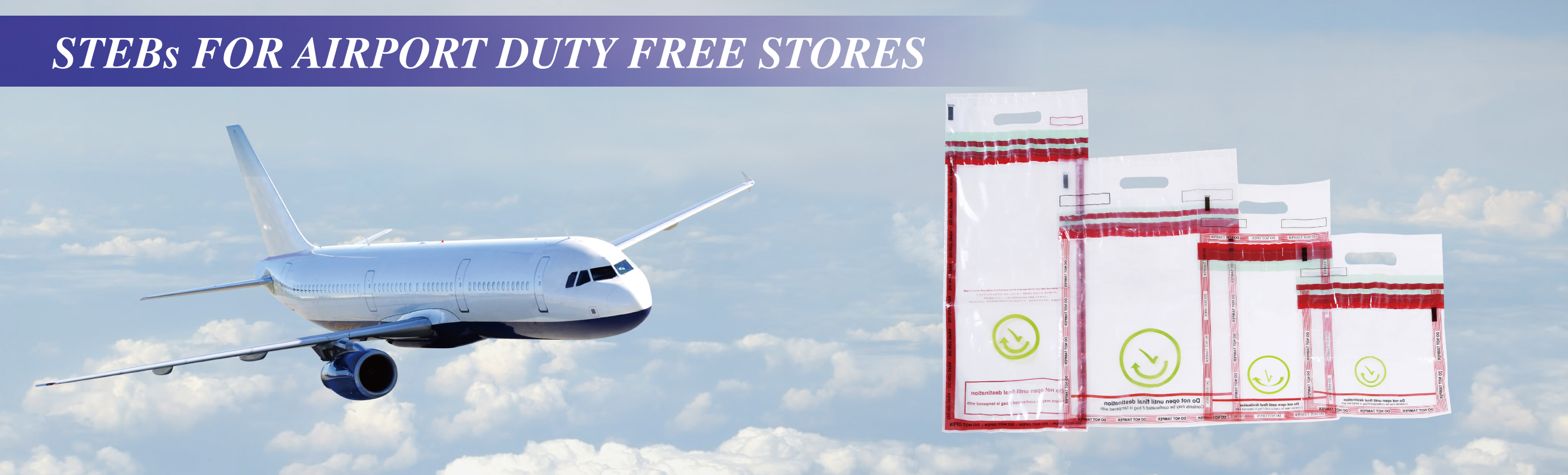
| ICAO STEBs | Secure transfer of duty-free LAGs | Transparent PE film, high-security tamper-evident tape, serial number, barcode, state/manufacturer code, visible receipt pocket | International airport duty-free LAGs and airline onboard retail |
The distinction matters because not every bag marketed as “security packaging” is suitable for international transfer LAGs. ICAO STEBs must be designed around aviation screening, supply-chain control, and visual inspection. For procurement teams, that means the specification should be evaluated before price comparison begins.
Why ICAO STEBs Matter for Duty-Free Transfers
The modern LAGs control environment was shaped by aviation security risks involving liquid explosives. ICAO notes that volumetric controls for LAGs were developed after the 2006 plot to sabotage aircraft by assembling an improvised explosive device using hazardous ingredients carried in seemingly ordinary LAGs.1 Until efficient and widely adoptable detection technology can replace current restrictions, ICAO states that LAGs security controls should remain in effect and be universally implemented by Member States.1
For passengers, this security framework affects whether duty-free purchases can pass through a connecting checkpoint. TSA states that, for inbound international flights with a connecting flight, duty-free liquids over 3.4 oz / 100 ml may be carried in secure, tamper-evident bags if the liquids were purchased internationally, packed in a transparent secure tamper-evident bag by the retailer, show no signs of tampering, and have the original receipt with a purchase made within 48 hours.2 The items must still be screened and cleared, so ICAO STEBs support inspection rather than replacing it.2
| Stakeholder | What They Need from ICAO STEBs | Business Impact |
|---|---|---|
| Duty-free retailers | Fast packing, visible receipt, scan-ready codes, tamper evidence | Fewer checkout delays and clearer handover to passengers |
| Airport security teams | Transparent bag, visible origin, clear tamper indication | Easier inspection and harmonized staff training |
| Airlines | Secure onboard retail packaging and passenger transfer support | Better passenger experience and fewer disputes at connections |
| Procurement managers | Listed manufacturer, stable quality, consistent numbering, correct print layout | Lower compliance risk and more predictable inventory control |
Key ICAO STEBs Specifications to Check Before Ordering
A good STEB specification should begin with visibility and tamper evidence. Transparent material helps security personnel inspect contents without opening the bag. Adsure’s standard bags use transparent co-extruded polyethylene film with customizable thickness from 50 to 100 microns, depending on size, loading requirement, and customer specification.3 For LAGs such as cosmetics, liquor bottles, perfumes, or mixed retail purchases, the film must balance clarity, puncture resistance, seal strength, and machine or manual packing efficiency.
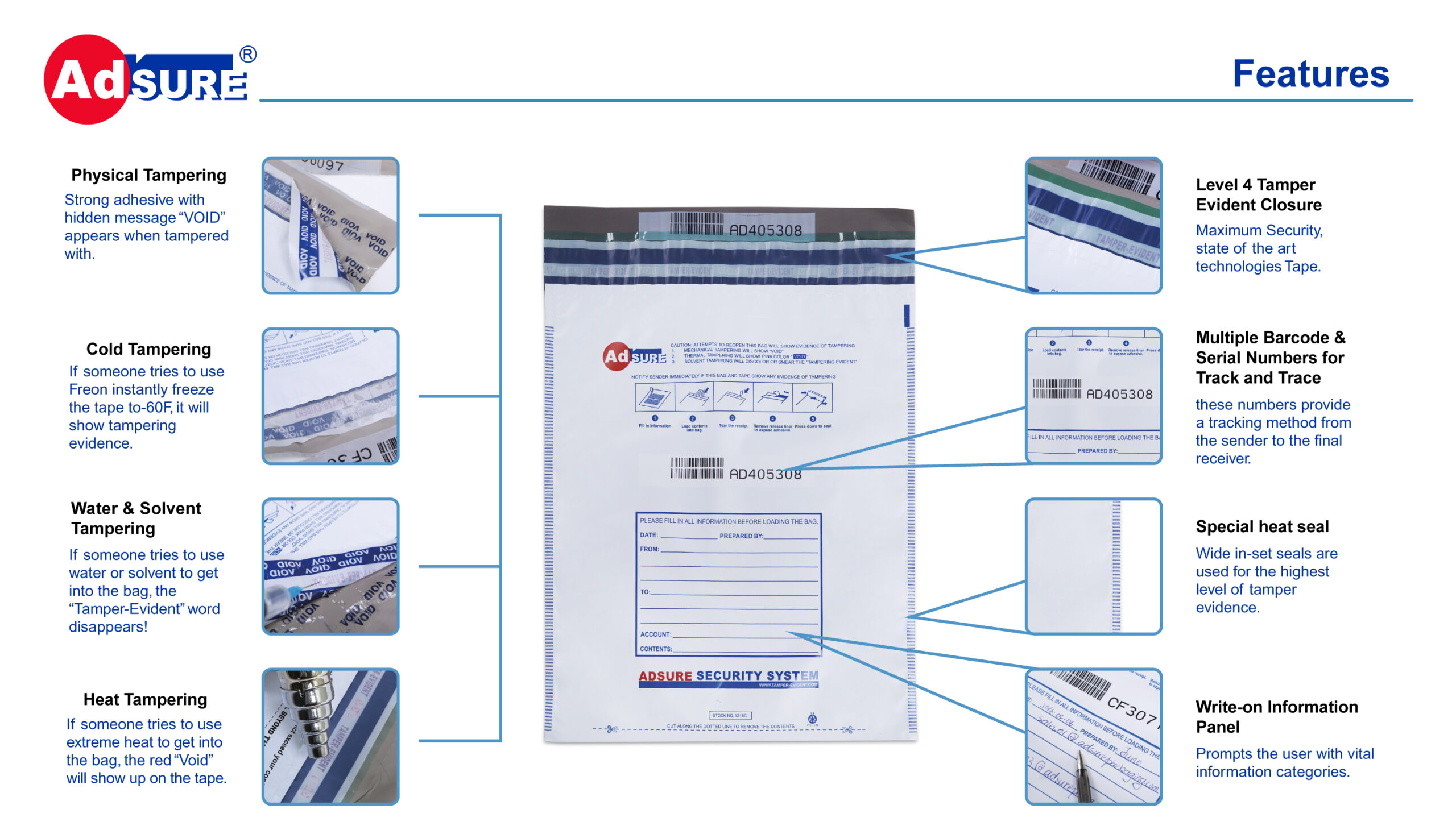
The closure is the core security component. A high-security tamper-evident tape should react to common attack methods such as peeling, heat, cold, solvents, water, and physical force. Adsure’s product specification includes Level 4 tamper-evident security tape designed to reveal irreversible evidence when unauthorized opening is attempted.3 This matters because an effective STEB must not be easily opened and resealed without visible signs.
Identification is the second major requirement. ICAO explains that manufacturer registration supports a centralized list of STEB manufacturers, faster reporting of problems, and future enhancements related to design, production, or additional security devices.1 ICAO also states that only manufacturers, not distributors, may use their name in the State/Manufacturer box.1 In procurement terms, buyers should verify that the printed format includes the correct state code, manufacturer identification, unique numbering, and barcode format.
| Specification Area | What to Verify | Why It Matters |
|---|---|---|
| Material | Transparent PE film, suitable thickness, tear resistance | Supports visual inspection and product protection |
| Closure | High-security tamper-evident tape, visible irreversible message after attack | Helps detect unauthorized access |
| Traceability | Sequential serial number, barcode, optional 2D code or RFID | Enables stock control and issue reporting |
| Receipt pocket | Internal pouch that keeps receipt visible and protected | Supports inspection at transfer checkpoints |
| Printing | State code, manufacturer identity, required layout, airport or airline branding where allowed | Helps determine origin and supports operational recognition |
| Inventory controls | Scan-ready codes and controlled distribution | Reduces the risk of stolen or mishandled empty bags |
Known Supplier Concept for Duty-Free Security Bags
These bags are not only a physical package; they are also part of a wider aviation security system. ICAO explains that STEBs are only one component of the overall security system for LAGs, which should include measures for manufacturers, warehouses, and airport retailers.1 ICAO’s FAQ further explains that appropriate authorities and/or airport operators should approve known suppliers of LAGs and STEBs, and that distributors should take responsibility for the security supply chain.1
This concept is important because empty STEBs can become a security risk if they are stolen, resold, or mishandled. ICAO recommends inventory codes so retailers can manage STEB stock and identify whether empty bags have been stolen or misused. ICAO also recommends security devices such as unique numbering, two-dimensional barcodes, or RFID chips, while leaving the choice of technology open.1
For airport retail operators, a practical procurement checklist should therefore include both product quality and operational control. Ask how serial numbers are generated, how barcode data is supplied, whether carton labels match internal inventory systems, how unused bags are stored, and how staff are trained to identify tampering. When the process is controlled from production to point of sale, the bag becomes much more than a packaging item; it becomes a traceable security asset.
Choosing an ICAO STEBs Manufacturer: What Buyers Should Ask
When selecting a supplier, avoid vague claims and focus on documented capability. Adsure Packaging should be described as a listed manufacturer of ICAO or a listed manufacturer by ICAO, which accurately reflects ICAO listing language. Adsure’s product page states that Adsure provides duty-free sealed STEBs for international airports and duty-free shops and highlights transparent PE material, Level 4 tamper-evident tape, barcode tracking, internal receipt pouch, and custom printing options.3
Buyers should ask for production history, print layout control, quality inspection records, tamper-evident tape performance, film thickness tolerance, barcode readability, carton-level traceability, and delivery lead time. For international duty-free operations, the supplier should also understand how airport codes, state codes, airline requirements, receipt pockets, and security graphics work together in one bag design.
| Buyer Question | Strong Supplier Response |
|---|---|
| Can you provide STEBs with state/manufacturer code and required print layout? | The supplier can confirm the correct artwork structure and manufacturer identity fields. |
| Can the bag include sequential numbering and barcode formats such as Code 39 or Code 128? | The supplier can generate controlled sequences and deliver data files for inventory systems. |
| How does the closure respond to heat, cold, solvents, and force? | The supplier can explain tamper-evident reactions and provide test or quality-control references. |
| Can size, thickness, handle, and branding be customized? | The supplier can customize dimensions and print while preserving required security features. |
| How should stock be stored and rotated? | The supplier gives clear shelf-life, storage, and FIFO recommendations for adhesive performance. |
For related solutions, buyers can review Adsure’s dedicated product page and broader Airport & Airlines Applications resources. If your operation also handles cash, documents, or forensic evidence, Adsure’s tamper-evident security bags category may help standardize security packaging across departments.
Practical Applications of ICAO STEBs in Airports and Airlines
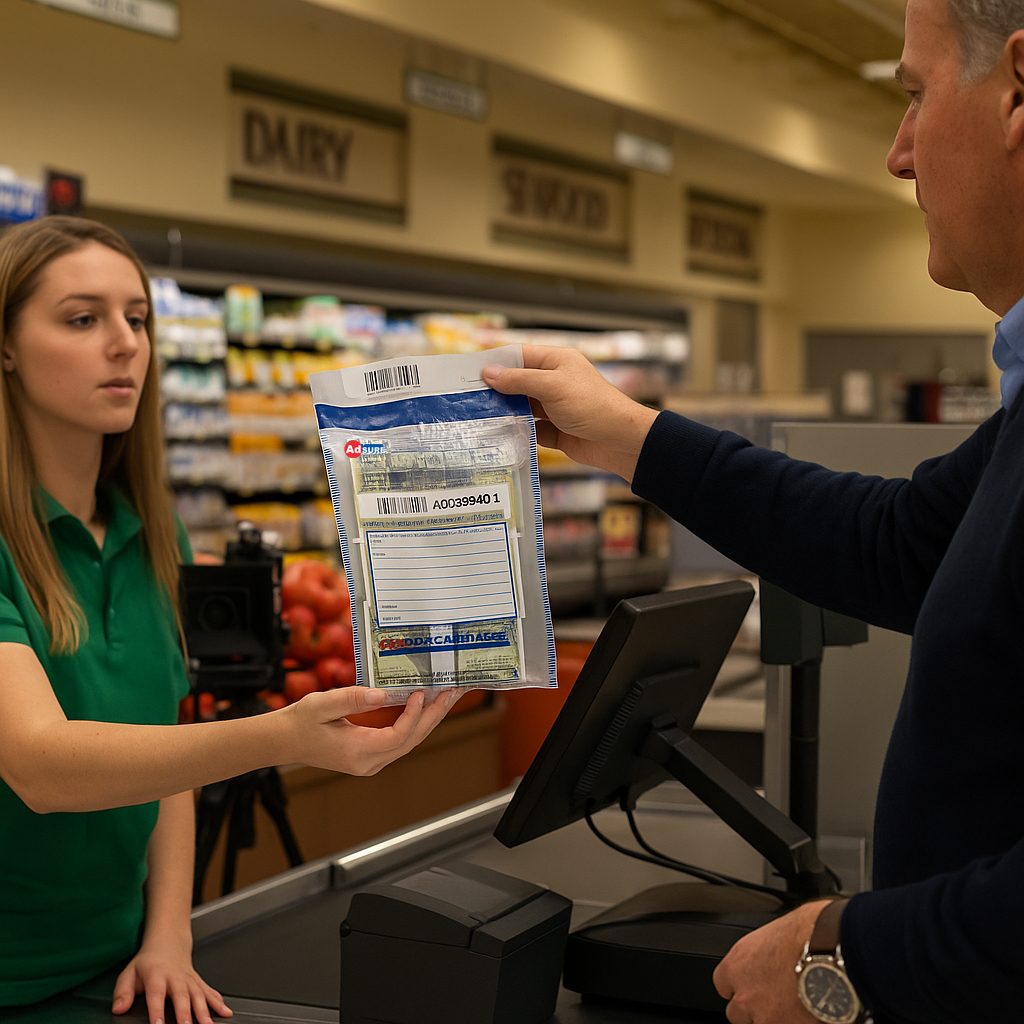
The most common use case for these bags is airport duty-free retail, especially for liquor, perfume, cosmetics, skincare, and other LAGs sold to international travelers. A correctly designed bag lets the retailer seal the purchase, place the receipt inside a visible pocket, and provide the passenger with a package that can be inspected at later checkpoints. The result is a smoother connection journey and fewer disputes over whether a bag was opened after purchase.
Airlines can also use STEBs for onboard retail when passengers may connect through another airport. In this environment, speed and simplicity matter. Cabin crew need a bag that can be sealed quickly, inspected visually, and presented clearly to passengers. Airport retailers may require additional features such as reinforced handles, large-format bags for bottles, or custom barcode integration with POS systems.
Another important application is inventory and loss prevention. Because STEBs may include unique serial numbers, barcodes, and controlled issue procedures, they help retailers monitor stock and reduce misuse. ICAO specifically highlights the importance of inventory codes in managing STEB stock and preventing stolen or mishandled empty bags.1 For high-volume duty-free shops, this traceability can support both aviation security and retail operations.
Storage, Shelf Life, and Quality Testing for ICAO STEBs
The most overlooked part of STEB procurement is storage. Tamper-evident closures rely on adhesive chemistry and layered security films, so bags should be stored in a clean, dry, climate-controlled environment away from excessive heat, freezing conditions, direct sunlight, and chemical vapors. Procurement teams should apply first-in, first-out stock rotation and avoid over-ordering if their transfer LAGs volume is seasonal.
Quality testing should focus on the real attack methods that security bags may face. A supplier should understand solvent attack, freezing, heat exposure, water exposure, peeling force, cut-and-reseal attempts, and barcode durability. Adsure’s specification references Level 4 tamper-evident security tape resistant to heat, cold, solvent, and water, which aligns with the practical need for visible evidence after attempted infiltration.3
To estimate order quantity, ICAO notes that STEBs should be used for transfer LAGs only, not all duty-free goods, and that transfer passenger percentages can range from 10% to 50%, with an average around 25% to 30%.1 This is a useful planning benchmark. Airport retailers should calculate their transfer passenger mix, LAGs sales ratio, average bag size, and seasonal demand before setting reorder points.
Recommended Image and Video Plan
Conclusion: ICAO STEBs Protect Both Compliance and Passenger Experience
ICAO STEBs help connect aviation security, airport retail, airline service, and passenger convenience in one controlled packaging format. The best STEBs are transparent for inspection, strong enough for travel, clearly tamper-evident after attack, traceable through serial numbers and barcodes, and designed with a visible receipt pocket. They also come from a supplier that understands the known supplier concept, inventory control, and the correct way to describe ICAO listing.
Adsure Packaging offers customizable ICAO STEBs for duty-free shops, airport retailers, airlines, and aviation retail operators, with options for transparent PE material, high-security closure tape, sequential numbering, barcode formats, receipt pockets, and custom printing. To specify the right bag size, film thickness, barcode format, and delivery schedule for your airport or airline operation, contact Adsure Packaging for a tailored quotation.
Request a Custom ICAO STEBs Quote »
Reviewed by: Adsure Packaging Technical Team
FAQ: ICAO STEBs for Duty-Free LAGs
What is the difference between a standard duty-free bag and an ICAO STEB?
A standard duty-free bag is mainly a retail carrying bag, while an ICAO STEB is a security tamper-evident bag for transfer liquids, aerosols, and gels. ICAO STEBs include features such as transparent material, a high-security seal, visible receipt pocket, state/manufacturer identification, serial number, and barcode to support inspection and traceability.
Are all tamper-evident bags automatically suitable for duty-free LAGs?
No. A tamper-evident closure alone does not make a bag suitable for international transfer LAGs. Duty-free LAGs packaging should follow the aviation security expectations for STEBs, including transparent inspection, traceable identification, controlled supply, and receipt visibility. Buyers should verify supplier capability and avoid generic security bags when ICAO STEBs are required.
Why is manufacturer listing important for ICAO STEBs?
ICAO explains that manufacturer registration provides each manufacturer with a unique identification code and supports a centralized manufacturer list, faster issue reporting, and future security enhancements. For buyers, working with a listed manufacturer helps confirm that the STEBs are produced by a source familiar with aviation security requirements and supply-chain accountability.
Do ICAO STEBs need serial numbers and barcodes?
Yes, serial numbers and barcodes are strongly recommended for traceability and inventory control. ICAO notes that inventory codes help retailers manage STEB stock and reduce the risk of stolen or mishandled empty bags. Barcodes can also support POS scanning, stock reconciliation, and investigation if a bag is questioned during travel.
How should duty-free operators store ICAO STEBs?
Store ICAO STEBs in a clean, dry, climate-controlled area away from direct sunlight, excessive heat, freezing conditions, and chemical vapors. Because tamper-evident adhesive performance can be affected by storage conditions, procurement teams should apply first-in, first-out rotation and confirm recommended shelf life with the manufacturer before placing large orders.