Posts

Realistic mono PE FFS film roll and small packaging samples on a packaging line

Mono PE FFS Film: 3-Layer Design for PPWR-Ready Small Packs

Mono PE FFS Film: 3-Layer Design for PPWR-Ready Small Packs

The European flexible packaging market is moving from multi-material performance by default toward recyclability by design. For brands running form-fill-seal packaging lines, mono PE FFS film is becoming a practical route to replace PET/PE, PA/PE, or PVC-based laminates in suitable small-pack applications. The key is not to oversell a complex structure. The more useful message is that a carefully engineered 3-layer polyethylene film can balance printability, stiffness, core strength, optional PCR integration, and heat-seal reliability while keeping the material family easier to explain in a PE recycling context.
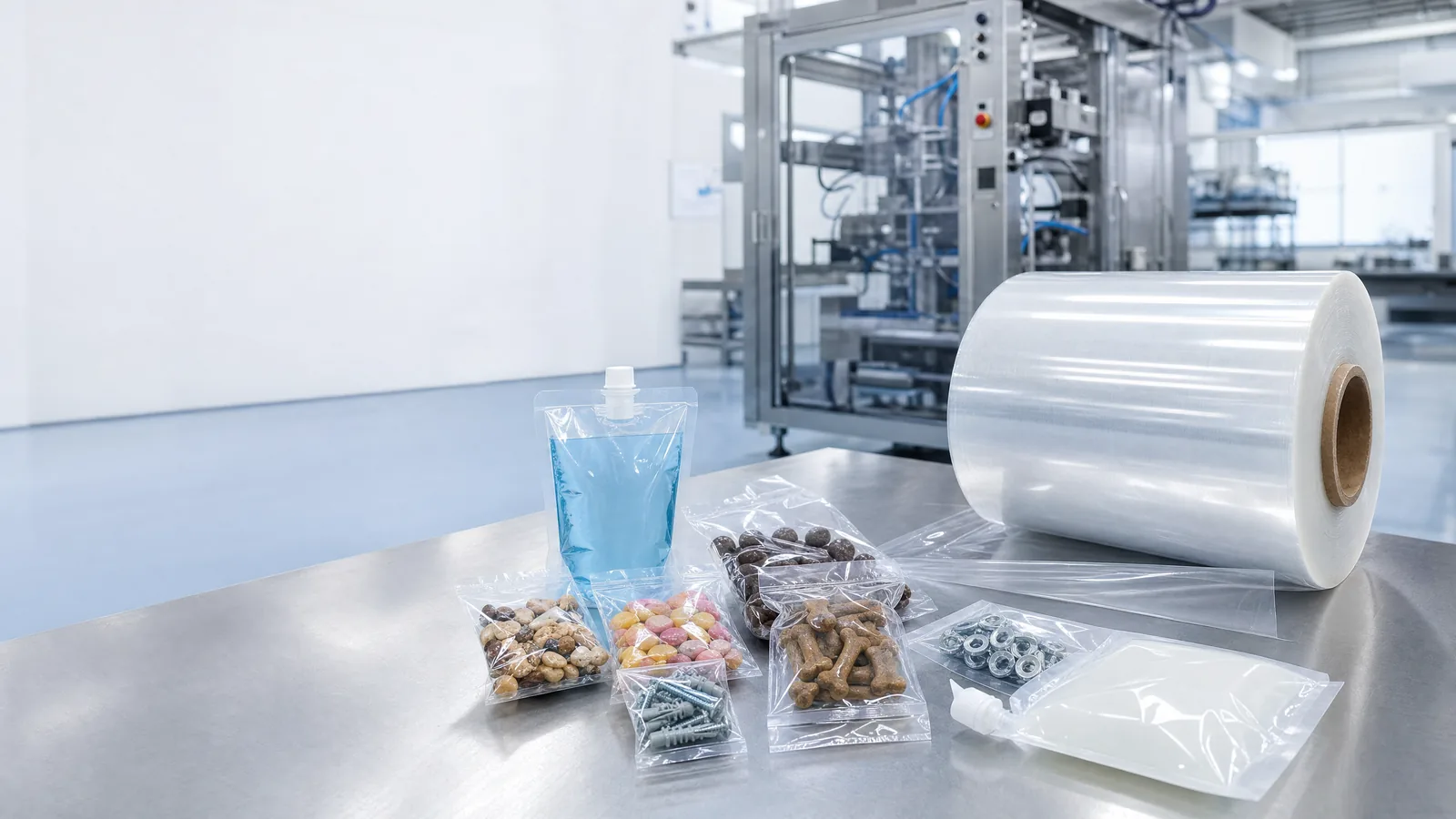
Mono PE FFS film for PPWR-ready small packaging

This article focuses on small and mid-light packaging formats, such as snack packs, confectionery packs, frozen vegetable pouches, pet treat packs, coffee refill packs, detergent pod outer packs, small hardware packs, and e-commerce accessory packs. In these applications, the major packaging challenges are usually not extreme load-bearing performance. They are machine stability, heat-seal consistency, shelf appearance, printable branding area, recyclability communication, and regulatory readiness.

Why Mono PE FFS Film Is Becoming Relevant in Europe

The EU Packaging and Packaging Waste Regulation, or PPWR, has changed the way packaging teams evaluate flexible materials. According to the European Commission, Regulation 2025/40 entered into force on 11 February 2025 and will generally apply from 12 August 2026. One of its stated objectives is to make all packaging on the EU market recyclable in an economically viable way by 2030, while safely increasing recycled plastics use and reducing dependence on virgin materials.1

The European Commission states that PPWR aims to make all packaging on the EU market “recyclable in an economically viable way by 2030” and to “safely increase the use of recycled plastics in packaging.”1

Traditional mixed-material films have been successful because each material contributes a specific advantage. PET can provide stiffness and a printable surface. PA can help with toughness or barrier needs. PE provides sealability. However, once these materials are laminated together, they become much harder to separate in mechanical recycling systems. That is why many European buyers are asking suppliers whether a package can be redesigned around one dominant polymer family.

A mono PE FFS film answers that question for suitable applications by keeping the main film structure within the polyethylene family. For small-pack brands, this creates a clearer route for recyclability discussions, PPWR preparation, EPR conversations, and internal sustainability reporting, while still allowing the film to be engineered for existing VFFS or HFFS equipment.

Market pressure Impact on small-pack brands How a 3-layer mono PE FFS film helps
PPWR raises expectations for recyclable design Multi-material films face increasing scrutiny A PE-family structure is easier to position for PE recycling streams
Buyers request recycled content options Procurement teams ask about PCR and sustainability claims The core layer can be evaluated for PCR while functional skins remain optimized
Existing FFS lines must remain stable Material changes cannot cause downtime or sealing defects Outer, core, and inner layers can be tuned for machinability
Shelf appearance still matters Small packs rely on visual quality and brand impact The outer layer can support printability, stiffness, and surface consistency

Why a 3-Layer Mono PE FFS Film Is the Right Message

More layers do not automatically mean a better solution for every brand. For many small packaging applications, a complex multilayer story may increase cost, complicate specification control, and weaken the recyclability narrative. Adsure Packaging should therefore emphasize a 3-layer mono PE FFS film structure: simple enough to explain, yet engineered enough to solve real packaging-line problems.

The value of the three-layer structure is functional separation. The outer layer supports printability, stiffness, abrasion resistance, and visual quality. The core layer provides thickness, body, mechanical strength, and a suitable position for optional PCR evaluation. The inner layer is designed around low-temperature sealing, hot tack, and seal integrity. For small packs, this layer-by-layer logic is especially important because the pack size is compact, the sealing cycle is fast, and even small variations in film behavior can affect bag shape and shelf presentation.

Layer Main function Value in small packaging
Outer layer Printability, stiffness, surface quality, and scuff resistance Supports branded snack packs, pet treat packs, refill packs, and retail presentation
Core layer Gauge support, mechanical strength, and optional PCR placement Helps manage recycled-content targets without exposing the PCR-rich layer directly
Inner layer Low-temperature sealing, hot tack, and seal integrity Supports fast VFFS/HFFS sealing and reduces the risk of weak or distorted seals

This positioning is important. The article should not present the product as a high-complexity barrier laminate. The stronger message is that a mono PE FFS film can be a practical and scalable replacement option where the product does not require extreme oxygen, moisture, aroma, or puncture protection.
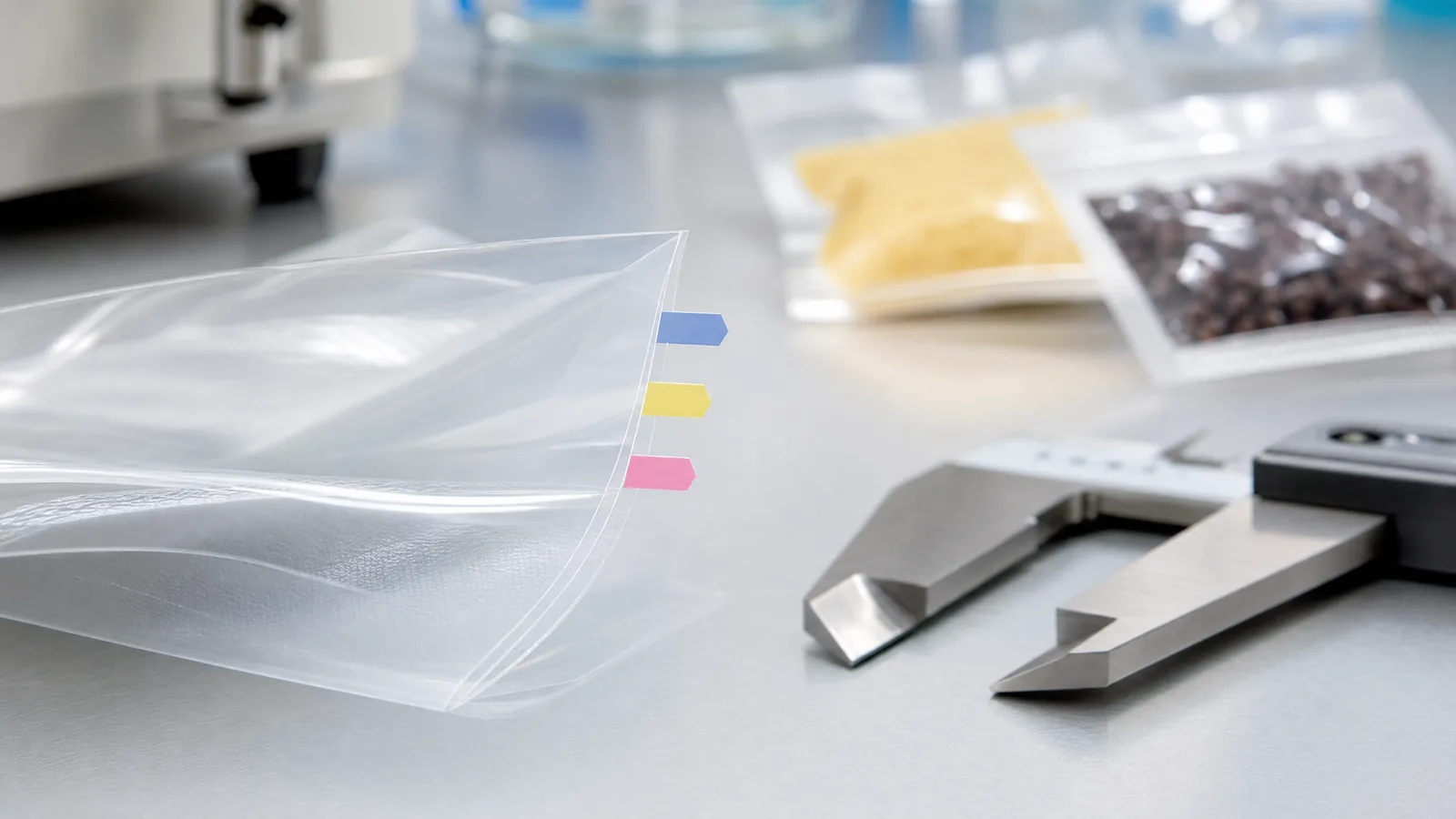
Three-layer mono PE FFS film structure with outer core and inner layers

How Mono PE FFS Film Supports Small-Pack FFS Performance

Small-pack FFS lines can be demanding even when the product itself is light. Smaller bags often mean more sealing cycles per minute. Lighter packs can be more sensitive to film tension, coefficient of friction, static behavior, and tracking stability. If the package has a clear window or high-coverage printing, the film surface also affects brand perception.

A 3-layer mono PE FFS film can be specified around the packaging process rather than treated as a generic material. The outer layer can be tuned for stiffness and printing behavior so the film forms cleanly. The core layer can provide body and mechanical support. The inner layer can be designed for a stable sealing window, helping the packer reduce leakers, wrinkles, and inconsistent seals.

FFS line challenge Typical symptom 3-layer design response
Narrow sealing window Leakers, weak seals, seal distortion Inner layer optimized for lower-temperature sealing and hot tack
Film tracking issues Wandering film, slipping, registration variation Surface design and COF control support smoother feeding
Inconsistent pack appearance Wrinkles, collapsed packs, uneven printed surface Outer layer improves stiffness and surface consistency
Sustainability claims are hard to explain Customers question whether a laminate is recyclable PE-family structure supports a clearer recyclability discussion
PCR affects consistency Color variation, gels, or sealing changes PCR can be evaluated mainly in the core layer, with functional skins retained

For many brands, the goal is not to replace every laminate with one universal solution. The goal is to identify the right group of products where a mono PE FFS film can deliver a realistic balance of runnability, appearance, and recyclability.

Small-Pack Applications Suitable for Evaluation

CEFLEX emphasizes that flexible packaging design must support collection, sorting, and recycling, and its “Designing for a Circular Economy” guidelines are intended to help the value chain prepare for 2030 and align with legislation.3 This makes small packaging a useful starting point for material redesign, especially where the packed product does not require extreme barrier protection.

Application area Suitable examples Why a 3-layer mono PE FFS film may fit
Snack and confectionery packs Nuts, candies, biscuit inner packs, light snack sharing packs Requires sealing speed, shelf appeal, and a more recyclable material story
Frozen small packs Frozen vegetable portions, frozen pastry portions, chilled ingredient packs Needs good seal integrity and low-temperature durability
Pet product packs Pet treats, sample packs, deodorizing granule packs Benefits from printability, tear resistance, and stable forming
Home-care refill packs Detergent pod outer packs, cleaning powder packs, fragrance refill packs Requires seal integrity, retail appearance, and sustainability positioning
E-commerce and hardware packs Screw kits, electronic accessories, small tool components Requires anti-scatter containment, identification printing, and automation efficiency
Coffee and dry-goods refills Coffee refill packs, tea overwraps, dried fruit packs Suitable when barrier requirements are moderate and validated by testing

For sensitive products, shelf-life testing remains essential. A mono PE FFS film should not be promoted as a universal replacement for every high-barrier laminate. The professional approach is to evaluate product sensitivity, pack size, filling speed, sealing temperature, storage conditions, and the intended recyclability claim before moving to production.

PCR in the Core Layer: A Controlled Sustainability Option

The European Commission’s PPWR factsheet states that plastic packaging must be made in part from recycled content, with increasing targets for 2030 and 2040.2 As a result, European buyers are increasingly asking not only whether a film is designed for recycling, but also whether PCR can be included.

For a three-layer structure, the core layer is the most practical position to evaluate PCR. Placing PCR mainly in the core can reduce its impact on the external printing surface and the direct sealing layer. The outer layer can remain optimized for appearance and print consistency, while the inner layer can remain focused on heat sealing. This does not mean PCR has no performance impact. It means the structure gives the supplier and customer a more controlled way to manage that impact.

PCR question Recommended technical response
Can PCR be used for direct food contact? This depends on PCR source, approvals, migration requirements, and application. Conservative projects should start with non-direct-contact or outer packaging uses.
Can the PCR level reach 30% or higher? It should be evaluated by film thickness, color, mechanical strength, sealing requirements, and trial results rather than promised without testing.
Will PCR affect appearance? Slight color shift or clarity variation is possible, so sample rolls and print trials are recommended.
Will PCR affect heat sealing? The inner layer can be designed to protect sealing performance, but validation on the customer’s FFS machine is still required.

For Adsure Packaging, the best wording is to describe PCR as an engineered option rather than a blanket guarantee. This is credible for European buyers who are accustomed to reviewing technical data, compliance documents, and trial results.
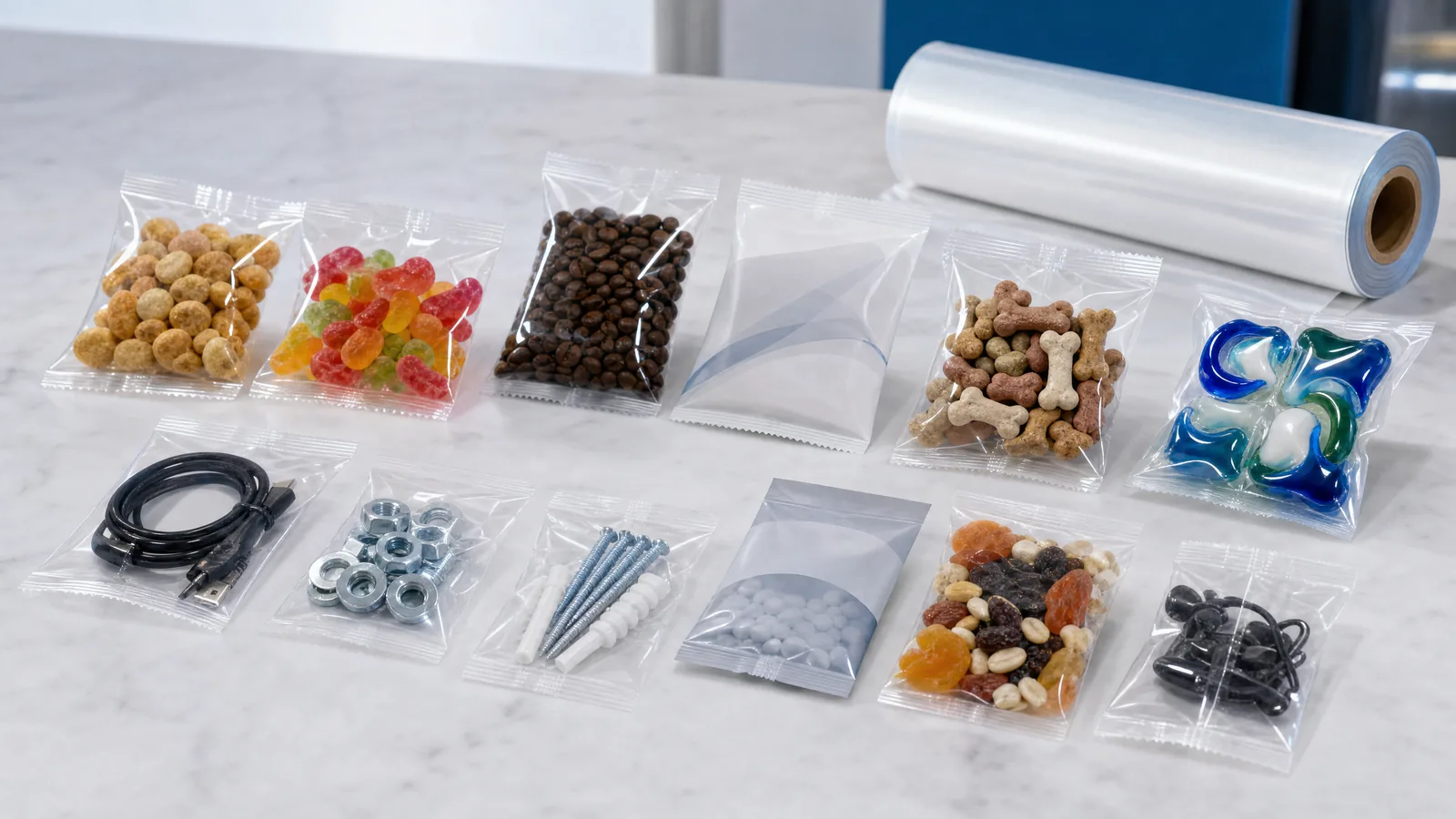
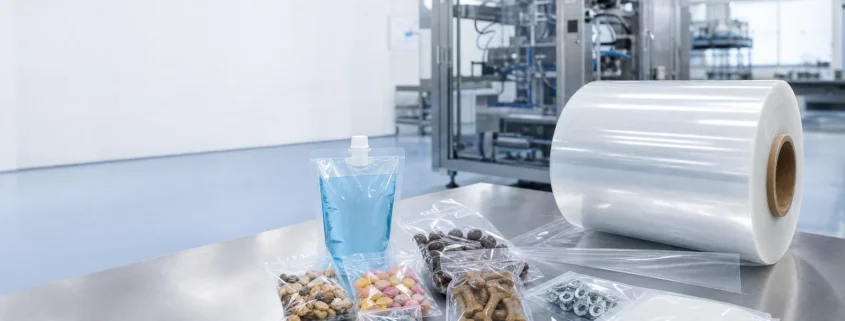
Realistic small packs made with mono PE FFS film

Mono PE FFS Film Versus PET/PE and PA/PE Laminates

PET/PE and PA/PE laminates have been widely used because they provide reliable stiffness, heat resistance, toughness, and barrier options. The issue is that mixed-polymer laminates are increasingly difficult to defend in a recycling-driven regulatory environment. PPWR pushes packaging design to consider recyclability from the beginning, not only after the package becomes waste.1

A mono PE FFS film should therefore be positioned as a targeted replacement for suitable products, not as a simplistic substitute for every laminate. For many small packs, the essential requirements are stable sealing, smooth film feeding, attractive presentation, and a clear material story. A 3-layer PE design can often provide that balance without overengineering the structure.

Comparison point PET/PE or PA/PE laminate 3-layer mono PE FFS film
Material structure Mixed polymers that are harder to separate PE-family structure with a clearer recycling pathway
FFS compatibility Mature and stable, but under sustainability pressure Can be tuned for sealing, COF, stiffness, and tracking
Printing and appearance Strong print surface options Outer layer can be optimized for printability and shelf appeal
PCR strategy Recycled-content claims can be more complex Core layer can be evaluated for controlled PCR inclusion
Best-fit use High-barrier or special-performance packs Small and mid-light packs with moderate barrier requirements

This is why the three-layer message deserves its own article. It is not a downgraded laminate. It is a material redesign strategy built around PPWR readiness, mechanical recycling logic, and real FFS production needs.

Specification Checklist for Buyers

When a brand wants to switch from a conventional laminate to a mono PE FFS film, the most efficient discussion starts with product and machine data. A supplier cannot design the correct three-layer structure from a price request alone.

Specification area Information to provide Why it matters
Packed product Product type, pack weight, oil content, moisture sensitivity, sharp edges Defines strength, sealing, and barrier requirements
Packaging equipment VFFS or HFFS model, speed, sealing system, bag format Determines sealing window, COF, and tracking behavior
Film format Width, thickness, roll diameter, print colors, clear window Defines structure, printability, and roll handling
Sustainability target Mono PE claim, PCR target, destination market Guides documentation, testing, and material selection
Validation tests Seal strength, hot tack, transport simulation, shelf-life test Confirms whether the film is ready for production

Adsure Packaging can review existing film samples, machine parameters, and market requirements to develop a three-layer trial structure. For European small-pack projects, trial rolls, print checks, seal-strength testing, and production-line validation should be completed before full commercial conversion.

Recommended Visual Assets for the Published Post

To make the article more effective for SEO and GEO, the published page should include visual assets that explain the engineering logic. A cover image can show a PE roll film and small-pack FFS line. An in-content illustration can show the outer layer, core layer, and inner layer. A comparison infographic can show how a mixed-material laminate differs from a 3-layer PE-family structure.

Image position Image concept Recommended alt text
Featured image PE roll film for small-pack FFS production Mono PE FFS film for PPWR-ready small packaging
In-content illustration Three-layer PE film cross-section Three-layer mono PE FFS film structure with outer core and inner layers
Infographic Laminate versus mono PE recycling pathway Realistic small packs made with mono PE FFS film

FAQ: Mono PE FFS Film for Small Packaging

Can mono PE FFS film replace PET/PE laminate?

A mono PE FFS film can replace PET/PE laminate in many small-pack applications with moderate barrier requirements, including snacks, confectionery, pet treats, home-care refills, and small hardware packs. Products requiring extreme oxygen, moisture, aroma, or heat resistance should be validated through shelf-life testing, seal testing, and machine trials before conversion.

Why promote a 3-layer structure instead of a more complex film?

A 3-layer structure is easier for buyers to understand and easier to align with a mono-material recyclability message. The outer layer supports printability and stiffness, the core layer supports strength and optional PCR placement, and the inner layer supports heat sealing. For many small packs, this structure provides the right balance without unnecessary complexity.

Can PCR be added to a mono PE FFS film?

PCR can be evaluated as a core-layer option in a three-layer mono PE structure. This helps protect the external printing surface and inner sealing layer while supporting recycled-content goals. The exact PCR percentage should be confirmed by film gauge, color, strength requirements, food-contact status, and FFS trial results.

Will the film run on existing VFFS or HFFS equipment?

A mono PE FFS film can be designed for existing VFFS or HFFS machines, but the film should be matched to the equipment. Machine speed, sealing method, bag width, roll dimensions, COF requirements, and packed product details should be reviewed before trial. Trial runs help optimize temperature, tension, and feeding parameters.

What should a brand send before requesting a quotation?

A brand should provide the current film sample, pack size, product information, filling machine details, target market, printing requirements, and sustainability goals. With this information, Adsure Packaging can recommend a suitable 3-layer mono PE FFS film structure and prepare trial-roll options.

Conclusion: A Practical Route to Recyclable Small Packaging

European packaging rules are pushing brands to rethink flexible packaging before 2030. For many small-pack applications, the most practical step is not a complicated material system, but a clear, engineered, and explainable 3-layer mono PE FFS film.

The outer layer supports printability, stiffness, and shelf appeal. The core layer provides body, strength, and optional PCR placement. The inner layer supports heat sealing and FFS runnability. Together, this structure gives snack, confectionery, pet treat, frozen small-pack, refill, e-commerce accessory, and small hardware brands a realistic way to improve recyclability communication while protecting packaging-line performance.

If your team is evaluating a mono PE FFS film for the European market, Adsure Packaging can help review your current film, machine parameters, and target sustainability claims, then develop a three-layer trial structure for validation.

Request a 3-Layer Mono PE FFS Film Trial »

Reviewed by: Adsure Packaging Technical Team
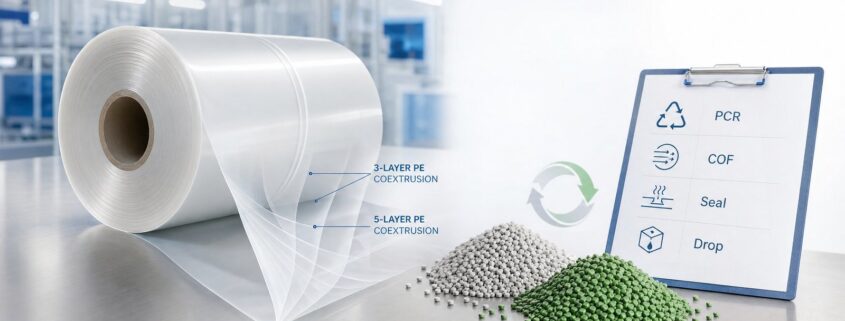
References

PCR FFS film roll for recyclable mono PE industrial packaging with application testing checklist

How to Choose PCR Content for Mono PE FFS Film: Why Up to 30% Needs Application Testing

PCR FFS film is becoming an important material choice for brands, industrial packers, and packaging engineers preparing for recyclable packaging expectations in Europe. A mono PE structure can support a more recycling-oriented design, while post-consumer recycled content helps reduce reliance on virgin plastic. However, the phrase “up to 30% PCR” should not be treated as a fixed number for every bag, every product, or every form-fill-seal line. In real production, PCR content must be selected through application testing.

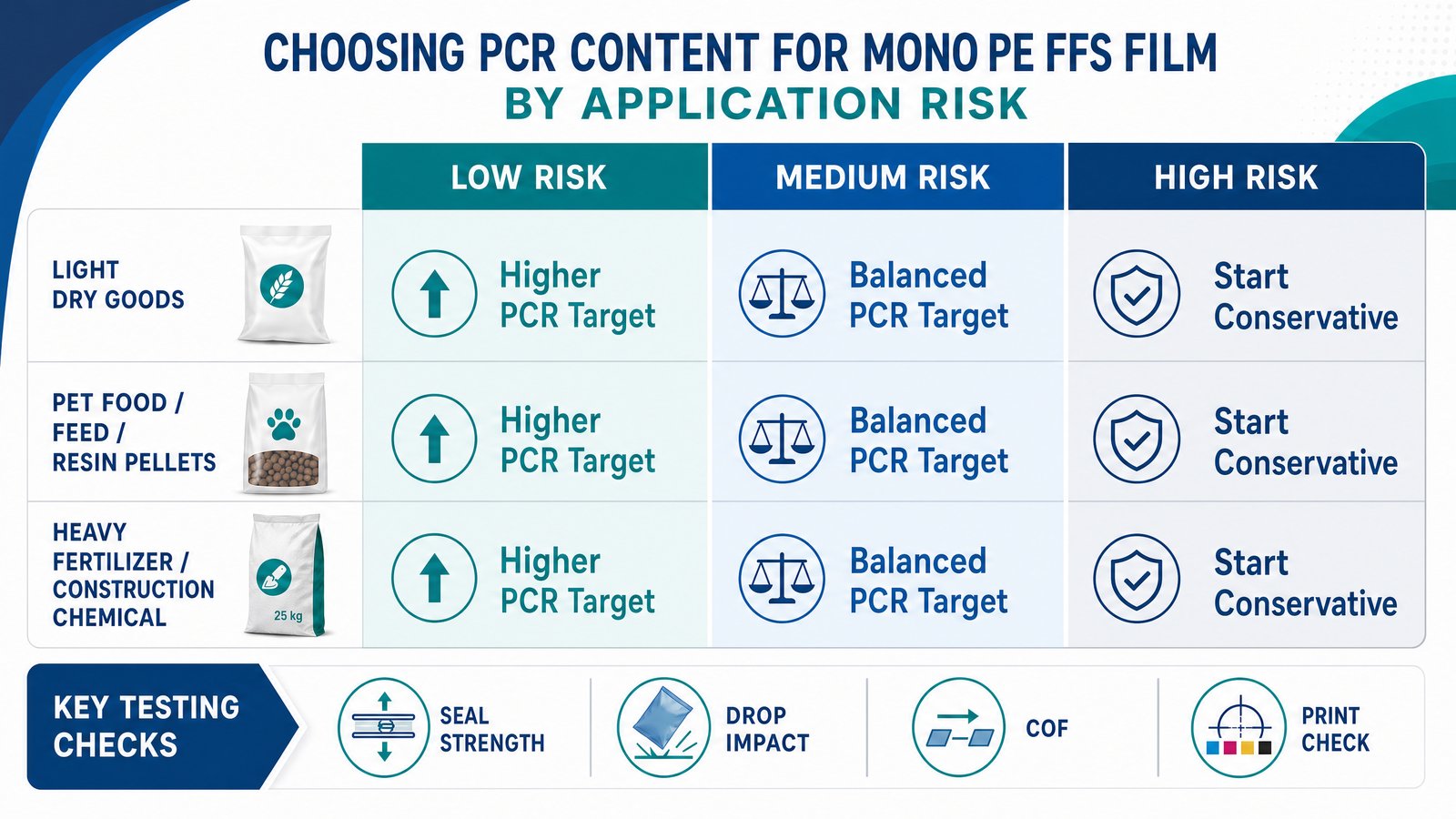
PCR FFS film application testing matrix for different bag weights and product risks

Adsure’s EU Recyclable Mono PE FFS Film with up to 30% PCR Content is designed for vertical and horizontal form-fill-seal packaging lines, with customizable COF, film thickness, roll width, sealing layer formulation, printing, and a 3-layer PE co-extrusion structure. The purpose of this article is to explain how buyers should evaluate PCR percentage before ordering, and why sample testing is the safest path for heavy-duty packaging, printed packaging, and European-market projects.

Why PCR FFS Film Is Not a One-Number Specification

A realistic PCR target depends on the filling product, bag weight, drop height, film thickness, pigment, ink coverage, sealing temperature, and machine speed. A 5 kg pet food pack and a 50 kg fertilizer sack may both use mono PE FFS film, but they do not have the same mechanical risk. The lighter pack may focus on appearance, printing, and barcode readability, while the heavier sack may need stronger puncture resistance, higher dart impact, and reinforced sealing performance.

Specification factor Why it affects PCR percentage Practical buyer question
Filling weight Heavier bags place more stress on seals, corners, and palletized loads. Will the bag survive 25 kg or 50 kg filling and handling?
Product shape Sharp granules and powders with hard particles increase puncture risk. Is the product fertilizer, resin, feed, salt, or powder?
Printing coverage Heavy ink coverage can affect recyclability, appearance, and process control. Is the pack plain, white, tinted, matte, or heavily printed?
Machine speed Faster FFS lines need stable unwinding, tracking, and heat-sealing windows. What are the VFFS or HFFS speed and sealing parameters?
PCR source quality PCR consistency influences gels, odor, color variation, and mechanical stability. Has the PCR resin been qualified for this structure?

What “Up to 30% PCR” Means in Mono PE FFS Film

“Up to 30% PCR” means the film can be engineered with post-consumer recycled PE content reaching 30% when the application, thickness, color, printing, and performance requirements allow it. It does not mean every specification should automatically use 30% PCR without validation. This distinction is important for honest sustainability communication and for reducing packaging failure risk.

For many non-food-contact industrial applications, 30% PCR can be a practical target when the recycled material is placed in the core layer and protected by optimized outer and inner layers. Adsure uses a 3-layer PE co-extrusion structure, where the core layer can carry PCR content, the outer layer supports strength and printability, and the inner sealant layer is adjusted for low seal initiation temperature and seal integrity. This three-layer design can be customized for 5 kg to 50 kg applications through thickness, resin selection, COF control, and application testing.

How to Select PCR FFS Film by Application Risk

A practical way to choose PCR FFS film is to classify the application by packaging risk. Low-risk applications may be able to start near the upper PCR target earlier, while high-risk applications should begin with a more conservative formulation and then increase PCR content after testing.

Application risk level Typical products Suggested development direction Testing emphasis
Lower risk Light dry goods and small consumer-size packs Evaluate higher PCR targets earlier if appearance requirements allow. Seal appearance, print quality, film tracking, basic drop testing.
Medium risk Pet food, animal feed, rice, flour, salt, resin pellets Balance PCR content with puncture resistance and controlled COF. Dart impact, tear resistance, seal strength, line trial.
Higher risk Fertilizer, construction chemicals, tile adhesive, heavy powders, 25–50 kg sacks Use a reinforced 3-layer PE co-extrusion design and validate before mass production. Drop impact, hot tack, creep resistance, pallet stability, shipping simulation.

Why PCR Content Affects Strength, Sealing, and Appearance

PCR FFS film must satisfy both sustainability and performance requirements. Depending on the source and grade, PCR resin can introduce variation in melt flow, color, odor, gels, and mechanical properties. These variables do not automatically make PCR unsuitable, but they do require supplier control and application testing.

From a mechanical perspective, heavy-duty packaging usually needs tensile strength, dart impact resistance, tear resistance, and puncture resistance. If the PCR percentage is increased too quickly without adjusting the structure, the film may lose safety margin during filling, stacking, or transport. From a sealing perspective, the inner layer must still create reliable seals under the customer’s dwell time, jaw pressure, and sealing temperature. A low-SIT sealing formulation can help improve sealing reliability, especially on high-speed packaging lines.

PCR FFS Film Testing Checklist Before Bulk Production

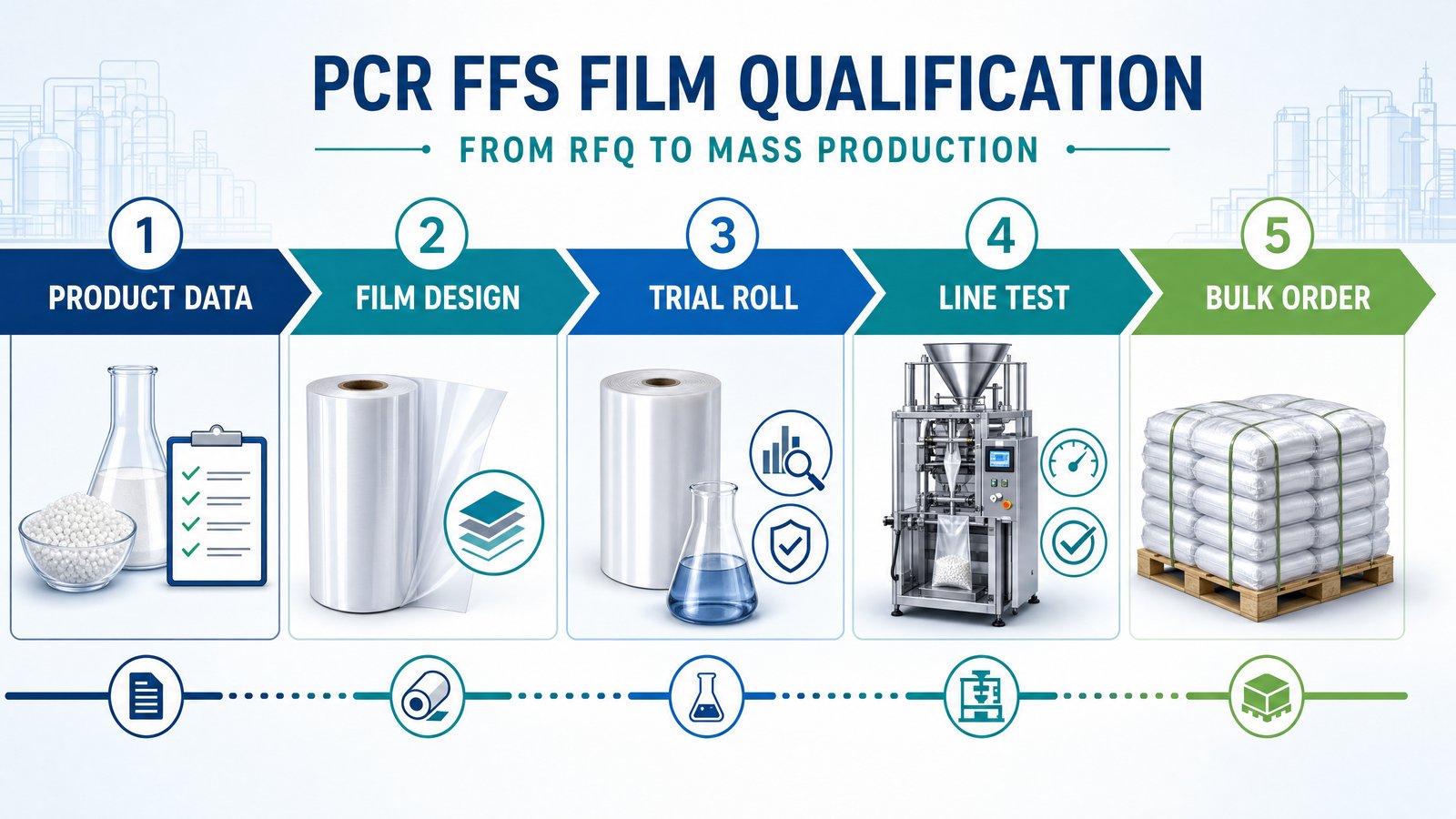
Before placing a bulk order, buyers should request a trial roll or sample structure and test it on the actual production line. Lab data is useful, but FFS packaging is a process. Film behavior on forming shoulders, rollers, sealing jaws, filling stations, and pallets must be confirmed under real operating conditions.

Test item What it verifies Why it matters for PCR FFS film
COF test Film-to-metal and film-to-film friction behavior. Supports smooth unwinding, tracking, and fewer film jams.
Gauge tolerance Consistency of film thickness across the roll. Helps maintain stable roll tension and bag forming.
Seal strength Final seal integrity after cooling. Prevents leaks, open seals, and product loss.
Hot tack Seal strength before the seal fully cools. Critical when product drops immediately after sealing.
Dart impact Resistance to sudden impact. Important for heavy products and rough handling.
Drop test Finished bag performance under handling stress. Validates the full package, not only the film sample.

How Layer Structure Helps Balance PCR and Performance

Adsure’s PCR FFS film uses a three-layer structure that separates the main functions across the film. In this 3-layer PE co-extrusion structure, the outer layer can support stiffness, printability, and surface treatment; the core layer can carry PCR content; and the inner layer can provide sealing performance.

This structure-based design is especially important for 25 kg to 50 kg industrial bags. If the product is abrasive or dense, the three-layer PE structure should be reinforced through thickness, resin selection, PCR placement, sealing-layer optimization, and application testing. If the application is lighter, the same three-layer structure may be optimized for cost efficiency and machineability. In all cases, the target PCR percentage should be confirmed through film testing and line trials.

PCR FFS film qualification workflow from RFQ to trial roll testing and mass production

How Buyers Should Prepare an RFQ for PCR FFS Film

The best way to get a reliable recommendation is to provide complete packaging and machine information at the RFQ stage. Without these details, a supplier can only estimate the PCR percentage. With the right details, the supplier can recommend the film structure, thickness, roll width, roll diameter, core size, COF target, sealing layer, printing method, and testing plan.

RFQ information Why Adsure needs it
Filling product and product photo Identifies puncture, dust, abrasion, and contamination risks.
Packing weight and bag dimensions Determines film thickness, structure, and load-bearing needs.
VFFS or HFFS machine brand and model Helps match roll width, forming collar, tension, and sealing settings.
Current film thickness and structure Provides a baseline for conversion to mono PE and PCR content.
Target PCR percentage Allows Adsure to propose a realistic test path, not only a claim.
Printing artwork and destination market Affects surface treatment, barcode readability, appearance, and EU-market documentation.

Conclusion: Choose PCR FFS Film by Evidence, Not Assumption

PCR FFS film is a practical route for brands and industrial packers that want recyclable mono PE packaging with recycled-content potential. But the right PCR percentage is not determined by a marketing target alone. It must be validated against product weight, puncture risk, seal performance, machine compatibility, printing, color, and shipping conditions.

For buyers converting from standard FFS film or PA/PE laminate structures, Adsure recommends starting with a technical review, then moving to sample development and trial roll testing. If your project requires a recyclable mono PE structure with up to 30% PCR content, contact Adsure to discuss your application, machine model, packing weight, and destination market.

Request a PCR FFS Film Trial Roll »

FAQ: PCR FFS Film Selection

Can every mono PE FFS film use 30% PCR?

No. A mono PE FFS film can be designed with up to 30% PCR when the application, thickness, product weight, printing, color, and performance requirements allow it. Heavy-duty bags, abrasive products, or high-speed FFS lines may need a phased test plan before reaching the highest PCR target.

Does PCR content reduce FFS film strength?

PCR content can affect strength depending on resin quality, percentage, and layer placement. A well-designed PCR FFS film can balance recycled content with puncture resistance, dart impact, and seal performance by using controlled PCR in the core layer and optimized PE layers where needed.

Is PCR FFS film suitable for 25 kg to 50 kg bags?

Yes, it can be suitable for 25 kg to 50 kg applications, but testing is essential. For fertilizer, feed, resin pellets, building materials, and heavy powders, Adsure recommends validating structure, thickness, sealing, drop impact, and pallet stability before bulk production.

Reviewed by: Adsure Packaging Technical Team
Trademark Disclaimer: Autobag®, SidePouch®, and FAS SPRint Revolution™ are trademarks of Automated Packaging Systems, Inc. (a Sealed Air company). Adsure Packaging is not affiliated with, endorsed by, or authorized by Sealed Air Corporation or Automated Packaging Systems. All compatible products are independently manufactured by Adsure Packaging.

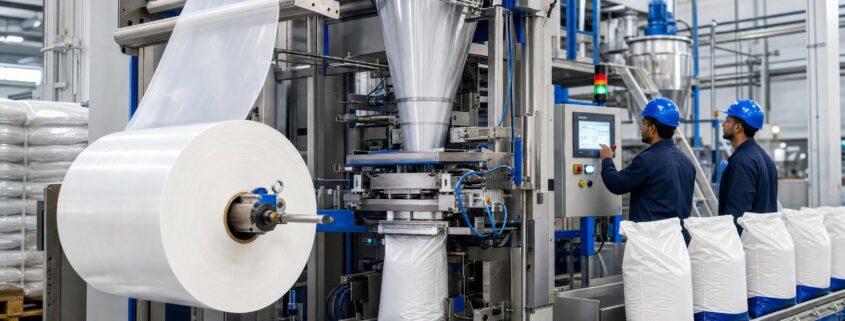
FFS packaging film running smoothly on an industrial form-fill-seal line

How to Reduce Downtime on FFS Packaging Lines: A Film Selection Guide for Industrial Products

FFS packaging film running smoothly on an industrial form-fill-seal line

FFS packaging film is not only a roll of plastic film; it is a production-critical component that affects line speed, sealing consistency, bag appearance, product protection, and overall equipment efficiency. When an industrial packaging line stops because of poor tracking, wrinkling, seal contamination, film tearing, or unstable roll quality, the real cost is much higher than the price difference between two film suppliers.

For manufacturers packing fertilizer, resin pellets, chemical powders, pet food, construction materials, and other industrial products, the right FFS packaging film should help the machine run smoothly from unwinding to forming, filling, sealing, cutting, palletizing, and storage. This guide explains the main film-related causes of downtime and shows how buyers and packaging engineers can select a more machineable film before production problems become daily losses.

Why FFS Packaging Film Is a Downtime Risk Factor

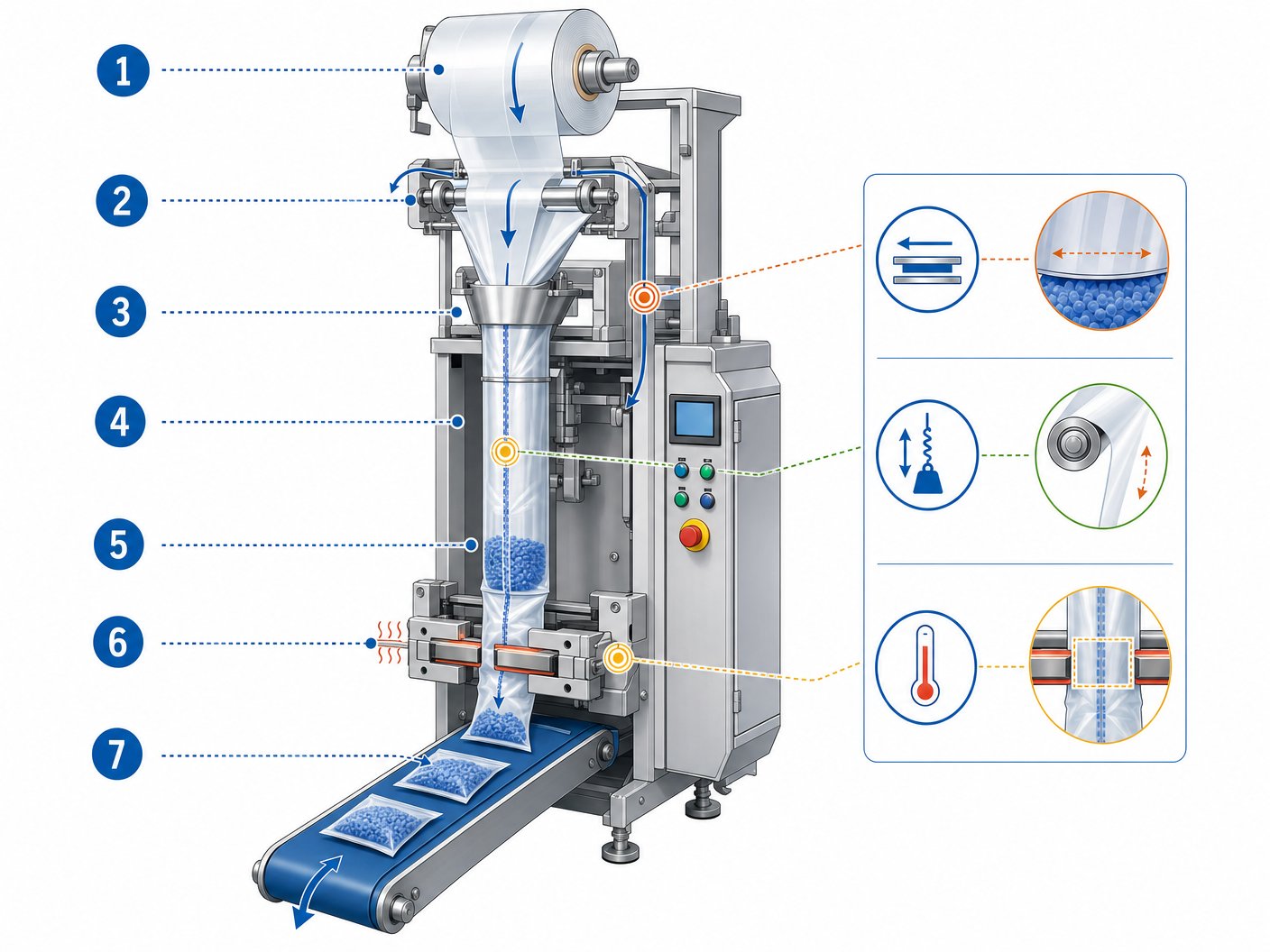
Form-fill-seal lines are designed to form a package from rollstock film, fill the product, and seal the bag in a continuous or intermittent cycle. In that process, the film travels through rollers, over a forming shoulder or forming tube, through sealing jaws, and into downstream handling. Even a small variation in film behavior can be amplified at production speed.

ROVEMA notes that film coefficient of friction plays a major role in VFFS operations because the film must move through carriage rollers and over the forming collar with controlled resistance. When the film changes direction by more than 90 degrees over the forming collar, higher kinetic friction can create stress that leads to wrinkling or film tearing.1 For a high-output industrial line, that means FFS packaging film should be evaluated as a machine component, not merely as a packaging material.

“The coefficient of friction of your film plays a huge part in the success—or potential issues—of your packing operations, especially for vertical form fill seal machines.” — ROVEMA North America1

Downtime symptom Likely film-related cause What to check before changing machine settings
Film tracks left or right COF is too low or tension is unstable Static and kinetic COF, roll winding quality, edge alignment
Wrinkles on the bag face Excessive friction or uneven tension Forming shoulder contact, film flatness, gauge tolerance
Intermittent seal leaks Narrow sealing window or jaw contamination Seal initiation temperature, hot tack, inner-layer resin design
Bag breaks after filling Low impact or puncture resistance Dart impact, tear resistance, product drop height
Pallet instability Poor creep resistance or inadequate stiffness Long-term load stability, thickness, resin structure
Frequent film splices or roll changes Poor roll quality or unsuitable roll length Roll diameter, core quality, winding tension, splice visibility

FFS Packaging Film and COF: The Hidden Cause of Tracking Problems

Coefficient of friction, usually called COF, describes how easily one surface slides against another. On an FFS line, COF affects how the film moves over rollers, forming collars, belts, guides, sealing jaws, and sometimes the packed bag surface itself. A film that is too “grabby” can increase drag, create excessive tension, slow machine speed, and cause film stretching or tearing. A film that is too slippery can lose tension, move off track, and create wrinkles or poor seals.1

This is why FFS packaging film should not be selected only by thickness and price. For industrial products, the film supplier should provide a consistent COF target and explain how slip additives, antiblock additives, recycled content, printing, lamination, and storage conditions may affect real machine performance. A controlled COF range helps operators reduce the temptation to keep adjusting tension, temperature, and jaw pressure during every shift.

At Adsure Packaging, our technical discussions often start with the customer’s equipment and product behavior. A fine powder, a sharp-edged pellet, and a dense 25 kg chemical product do not stress the film in the same way. If your machine repeatedly shows the same tracking issue after each roll change, the root cause may be film consistency rather than operator error. Buyers can also review our broader industrial packaging product range when comparing FFS film with other flexible packaging options.

Film path, COF control points, and sealing station on an FFS machine

Hot Tack and Seal Window: Why Good Sealing Starts Before Cooling

For heavy industrial bags, the seal is tested almost immediately. In many VFFS applications, the product drops into the forming bag while the seal is still warm. If the film has weak hot tack, the seal may open before it fully cools, causing product leakage, dust contamination, rework, and line stoppage.

Windmöller & Hölscher identifies excellent sealing and hot tack properties as key benefits of heavy duty sack film, alongside impact resistance, package integrity, load stability, toughness, and stiffness.2 These are not abstract laboratory terms. They are the properties that determine whether the bag survives filling, conveying, palletizing, warehousing, and transportation.

Film property Why it matters on an FFS line Typical buyer question
Hot tack strength Keeps the seal closed before it cools Can the bag survive product drop immediately after sealing?
Seal initiation temperature Allows sealing at lower or more stable temperatures Can we reduce burn-through and seal distortion?
Sealing window Gives operators more room for speed and temperature variation Will the film run on both old and new machines?
Dart impact Measures resistance to sudden impact Can the bag survive filling shock and rough handling?
Tear resistance Helps prevent small nicks from becoming bag failures Will the bag resist tearing at corners and edges?
Creep resistance Maintains shape under long-term load Will palletized bags remain stable during storage?

A well-designed FFS packaging film uses the inner sealing layer to support a broad sealing window while the outer and core layers contribute stiffness, puncture resistance, and dimensional stability. For PE-based industrial films, high-performance polyethylene, metallocene PE, HDPE-rich structures, or multi-layer coextrusion can be used to balance toughness and processability.

Match FFS Packaging Film to the Product, Not Just the Machine

The same machine can behave very differently when packing different products. Fertilizer may need moisture protection and strong seals. Resin pellets may require puncture and impact resistance. Chemical powders may require clean sealing performance and optional micro-perforation for air release. Construction materials may place severe stress on the bag during dropping, stacking, and forklift handling.

W&H describes heavy duty sack film as a solution that must maintain package integrity and load stability under filling, transportation, storage, and use. Its technical examples include 100 μm and 110 μm FFS bag films designed to pass creep and drop tests while supporting downstream processes such as inline printing, side gusseting, embossing, filling, and stacking.2

Product type Main downtime risk Recommended film priority
Fertilizer and agri-nutrients Moisture ingress, seal contamination, pallet instability Strong hot tack, moisture protection, stiffness
Resin pellets and granules Impact during filling, corner tearing, bag drop damage Dart impact, tear resistance, puncture resistance
Chemical powders Dust in seal area, trapped air, wrinkling Clean sealing layer, suitable COF, optional micro-perforation
Pet food and feed Odor, bag appearance, seal strength Consistent sealing, print quality, toughness
Construction materials Heavy load, rough handling, long storage Creep resistance, high stiffness, reinforced thickness

If you are switching from paper sacks, woven sacks, or laminated structures to PE-based FFS packaging film, do not rely on a one-to-one thickness comparison. The better method is to define the product weight, filling temperature if applicable, drop height, pallet pattern, storage period, print requirements, and machine model. Then the supplier can recommend a film structure that supports both performance and productivity.

Roll Quality and Film Tolerance: Small Variations Become Big Stops

Many downtime problems begin before the film reaches the forming tube. If roll edges are uneven, winding tension is inconsistent, the core is damaged, or the roll has telescoping, the operator may fight tracking issues for the entire shift. Good FFS packaging film should arrive with stable roll geometry, clean edge quality, predictable splice positions, and tight gauge control.

W&H also highlights excellent film tolerances and roll quality as key advantages for FFS processing.2 In practical terms, that means the film can feed consistently, form predictably, and seal repeatedly. When film thickness varies across the web, heat transfer can become uneven and seals may look inconsistent. When the roll is poorly wound, tension changes can lead to tracking alarms, wrinkles, or web breaks.

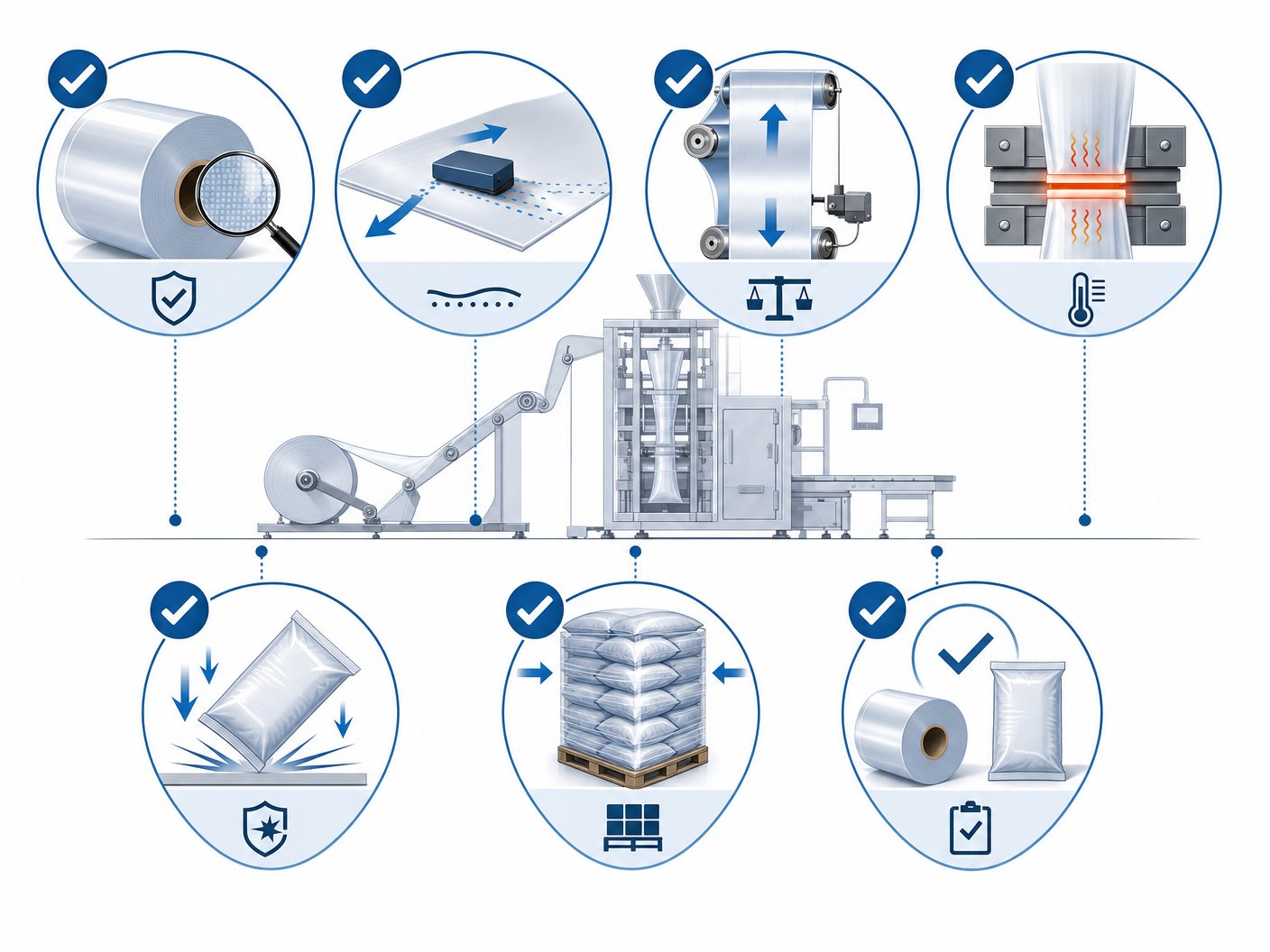
Seven checkpoints for reducing FFS packaging line downtime

A Practical Checklist Before Choosing a New FFS Film Supplier

Before approving a new supplier, buyers should request more than a quotation. A professional film supplier should help validate machineability, product protection, and repeatability. Adsure can support trial rolls, specification discussions, custom printing requirements, and technical evaluation for industrial packaging projects. If you need background on our manufacturing capabilities, visit the Adsure lab testing and quality resources and certificates and patent page for additional trust signals.

Supplier validation item Why it matters
Trial roll for your machine Confirms real tracking, sealing, and speed performance before bulk orders
Film specification sheet Aligns thickness, structure, COF, sealing layer, and mechanical properties
COA or batch record Helps maintain consistency between trial and production lots
Seal and strength testing Reduces the risk of leakage, breakage, and customer complaints
Print and barcode review Ensures branding, batch traceability, and scannability
Packaging line feedback loop Allows fast adjustment after the first production trial

If your current line is losing time to frequent stops, send Adsure your product type, bag weight, bag size, target film thickness, machine model, current problem photos, and packaging speed. Our team can help evaluate whether the issue is linked to COF, sealing layer design, roll quality, thickness selection, or product-specific stress.

Need help testing a new FFS packaging film?
Share your machine model, product weight, bag size, and current downtime issue with Adsure Packaging. We can recommend a trial roll and specification path for your industrial packaging line.

Conclusion: The Best FFS Packaging Film Protects Both Product and Production Time

A low-cost film can become expensive if it causes line stops, seal failures, roll waste, rework, or customer complaints. The best FFS packaging film is stable in COF, broad in sealing window, strong in hot tack, consistent in roll quality, and matched to the real stress profile of your product.

For industrial brands, the goal is not only to buy film. The goal is to keep the packaging line running, protect the product, and deliver stable bags to the customer. Adsure Packaging can help you evaluate your existing downtime issues and develop a custom FFS packaging film specification for your machine, product, and market.

Request an FFS Film Trial Roll »

Frequently Asked Questions About FFS Packaging Film

What causes FFS film tracking problems?

FFS film tracking problems are often caused by unstable COF, uneven roll winding, poor edge alignment, incorrect tension settings, static, or inconsistent film thickness. If the issue appears after changing film rolls or suppliers, the film specification and roll quality should be checked before making major machine adjustments.

How does COF affect FFS packaging film performance?

COF affects how the film slides over rollers, forming shoulders, guides, and sealing stations. If COF is too high, the film may drag, wrinkle, stretch, or tear. If COF is too low, the film may lose tension and track poorly. A controlled COF range supports smoother operation and fewer stops.

Why is hot tack important for heavy-duty FFS bags?

Hot tack is the ability of a warm seal to resist opening before it fully cools. It is especially important when heavy products drop into the bag immediately after sealing. Strong hot tack helps reduce seal bursts, powder leakage, rework, and product contamination during high-speed filling.

What should I test before switching FFS film suppliers?

Before switching suppliers, test roll quality, COF, sealing temperature range, hot tack, dart impact, tear resistance, print quality, barcode scannability, and bag performance under real filling conditions. A trial roll on your own machine is the most reliable way to validate machineability.

Can Adsure customize FFS packaging film for industrial products?

Yes. Adsure can discuss custom FFS packaging film structures for industrial products such as fertilizer, resin pellets, chemical powders, pet food, and construction materials. Share your machine model, bag size, product weight, and current line problems so the technical team can recommend a practical film specification.

Trademark Disclaimer: Autobag®, SidePouch®, and FAS SPRint Revolution™ are trademarks of Automated Packaging Systems, Inc. (a Sealed Air company). Adsure Packaging is not affiliated with, endorsed by, or authorized by Sealed Air Corporation or Automated Packaging Systems. All compatible products are independently manufactured by Adsure Packaging.

Reviewed by: Adsure Packaging Technical Team
References