Posts

Transparent unprinted medical bags containing surgical instruments, syringes and diagnostic kits on a clean white surface — PPWR-aligned medical packaging solution

Unprinted Medical Bags Under PPWR: Balancing Safety, Cleanliness & Sustainability

As the EU’s Packaging and Packaging Waste Regulation (PPWR) advances, the packaging industry faces immense pressure to transition toward a circular economy. Historically, the design of medical packaging has been driven almost exclusively by safety, sterility, and regulatory compliance. However, the new PPWR framework—Regulation (EU) 2025/40, which entered into force on February 11, 2025, and will apply directly across EU member states starting August 12, 2026—mandates that even medical packaging must gradually integrate sustainability while ensuring uncompromised safety.

In the context of PPWR driving packaging minimization, recyclable design, and transparent labeling requirements, unprinted medical bags offer a simpler, lower-interference, and future-ready packaging choice for medical devices, consumables, and cleanroom products.
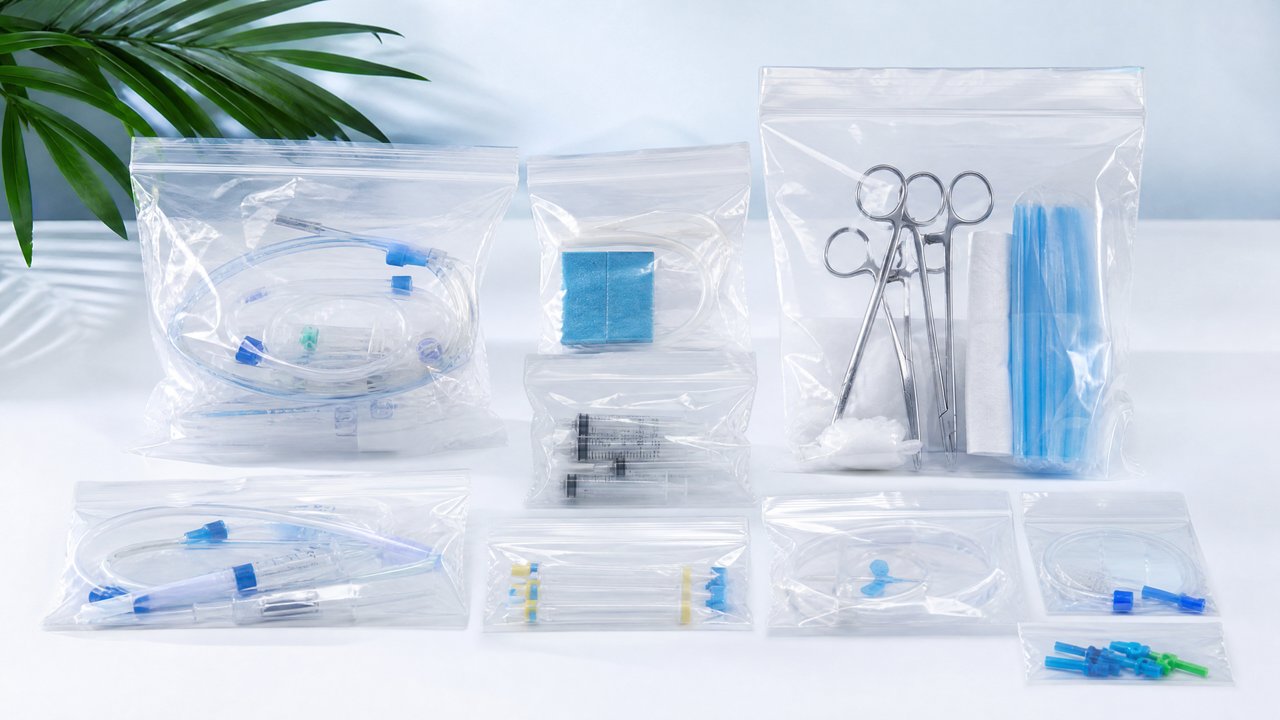
Transparent unprinted medical bags containing medical devices in a sterile clinical environment, aligned with EU PPWR packaging regulation requirements
Unprinted medical bags in a cleanroom environment — aligned with EU PPWR packaging regulation requirements

How PPWR is Changing Packaging Design Logic

PPWR does not only target common consumer plastic bags; it covers almost all packaging and packaging waste placed on the EU market. It introduces several core requirements that will profoundly alter packaging design logic, which the medical packaging industry must take seriously:

  • Design for Recycling: The European Commission has explicitly stated that by 2030, all packaging must be recyclable. Packaging design must allow materials to smoothly enter the recycling stream after use, rather than ending up in landfills or incinerators.
  • Minimization: PPWR requires controlling the weight, volume, and unnecessary empty space of packaging. By 2030, the maximum empty space ratio will be capped at 50%. While medical packaging prioritizes safety and function, material usage can still be reduced through optimized bag shapes, appropriate thickness, and the elimination of redundant structures.
  • No Blanket Exemption for Medical Packaging: Medical devices and pharmaceutical packaging do not have a “blanket exemption.” The regulation acknowledges the safety, sterility, and product integrity requirements of healthcare scenarios, granting temporary exemptions for certain contact-sensitive packaging regarding 2030 recyclability or recycled content targets. However, these exemptions will be reassessed by 2035. Companies must proactively plan their packaging strategies now.
  • Eco-modulated EPR Fees: From 2025, EU Member States must implement eco-modulated Extended Producer Responsibility (EPR) schemes. Healthcare companies will pay fees based on the recyclability of their packaging; the harder it is to recycle, the higher the fee.
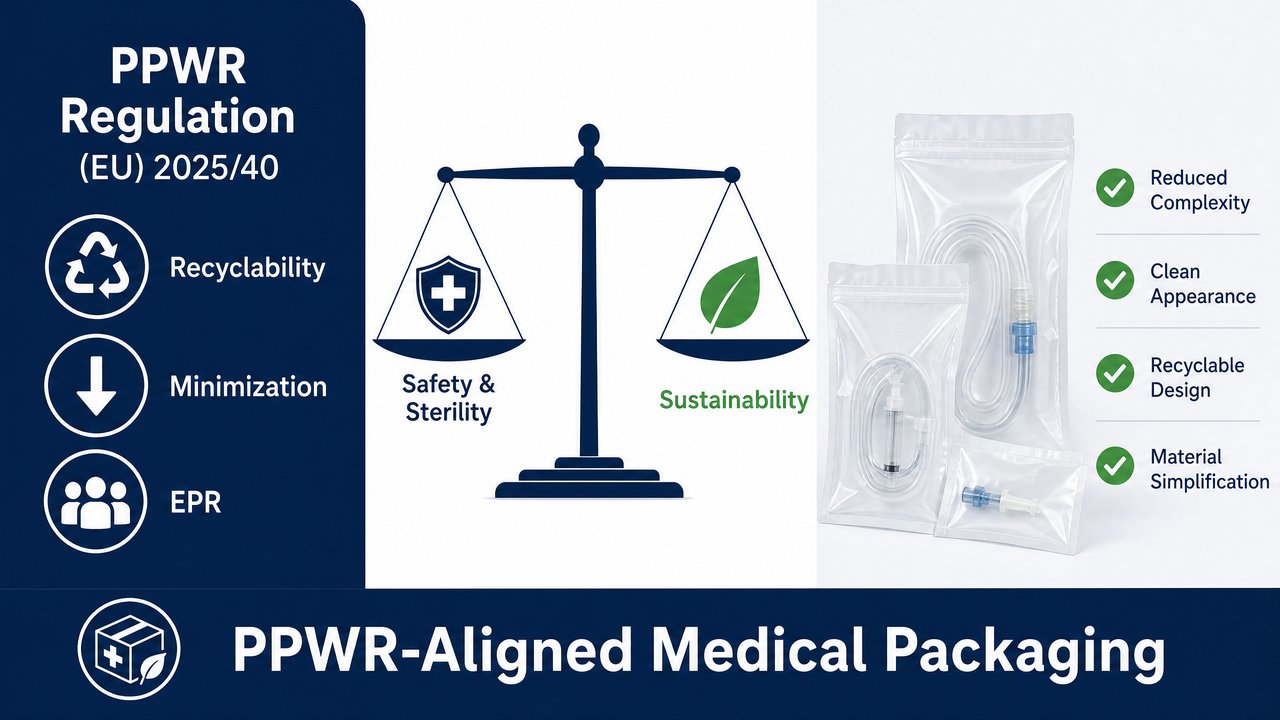
Infographic showing PPWR Regulation EU 2025/40 requirements balanced with medical packaging safety and sterility, highlighting recyclability, minimization, and EPR requirements
PPWR core requirements balanced against medical packaging sustainability — recyclability, minimization, and EPR

The Unique Nature of Medical Packaging and Compliance Challenges

The primary task of medical packaging is always to protect product safety and usage integrity. Medical packaging cannot simply pursue “less material”; it must also balance cleanliness, seal strength, traceability, and requirements from medical device regulations such as MDR/IVDR.

Industry commentary on medical packaging points out that lightweighting, removing invalid space, and rational size design are practical improvement directions for medical packaging facing PPWR. Furthermore, environmental claims must be specific, accurate, and supported by evidence, avoiding misleading green marketing. For medical packaging, sustainable optimization is not about sacrificing protective performance for an environmental concept, but reducing unnecessary packaging complexity while meeting basic functional requirements.

It is worth noting that while contact-sensitive medical packaging enjoys partial exemptions, healthcare companies must still pay EPR fees based on recyclability. This means that even during the exemption period, adopting simpler, more recyclable packaging designs can bring substantial cost optimization to companies.

Why Unprinted Medical Bags Align with This Trend

In the context of PPWR promoting recyclable design and packaging minimization, medical packaging companies are re-examining every packaging component: Is the material necessary? Is printing necessary? Can the structure be simplified? Does the size truly match the product’s needs?

For medical bags, being unprinted is not just about a clean appearance. It brings substantial compliance and application advantages:

  • Reduced Packaging Complexity for Better Recycling: Compared to heavily printed bags, unprinted medical bags reduce the interference of inks, coatings, and colors. Recycling design systems like RecyClass focus heavily on how labels, adhesives, and inks affect the recycling stream. Therefore, “reducing unnecessary printing” is a highly reasonable and provable narrative for recyclable design.
  • Transparent and Clean Appearance, Better for Medical Identification: Medical bags often require quick visual inspection of internal items, batch labels, or sterilization indicators. Unprinted bags make identification more intuitive and reduce surface information interference, providing a purer, cleaner visual experience.
  • Ideal for Non-Retail Display Packaging: Medical packaging is not consumer goods packaging; it does not require aggressive shelf marketing. Unprinted bags return the packaging function to protection, isolation, identification, and circulation — ideal for medical devices, single-use consumables, and diagnostic kit materials.
  • Facilitating Minimization Design: While ensuring strength, sealability, and convenience, combining optimized bag shapes and thickness, unprinted bags can effectively reduce unnecessary material usage, aligning with PPWR’s minimization direction.
  • Preserving Compliance Flexibility for Clients: Healthcare clients can carry necessary information via external labels, carton labels, UDI labels, or QR codes, while the bag body itself remains unprinted. This is highly suitable for the medical supply chain: the bag remains minimalist, and information management is handled by a controllable labeling system.
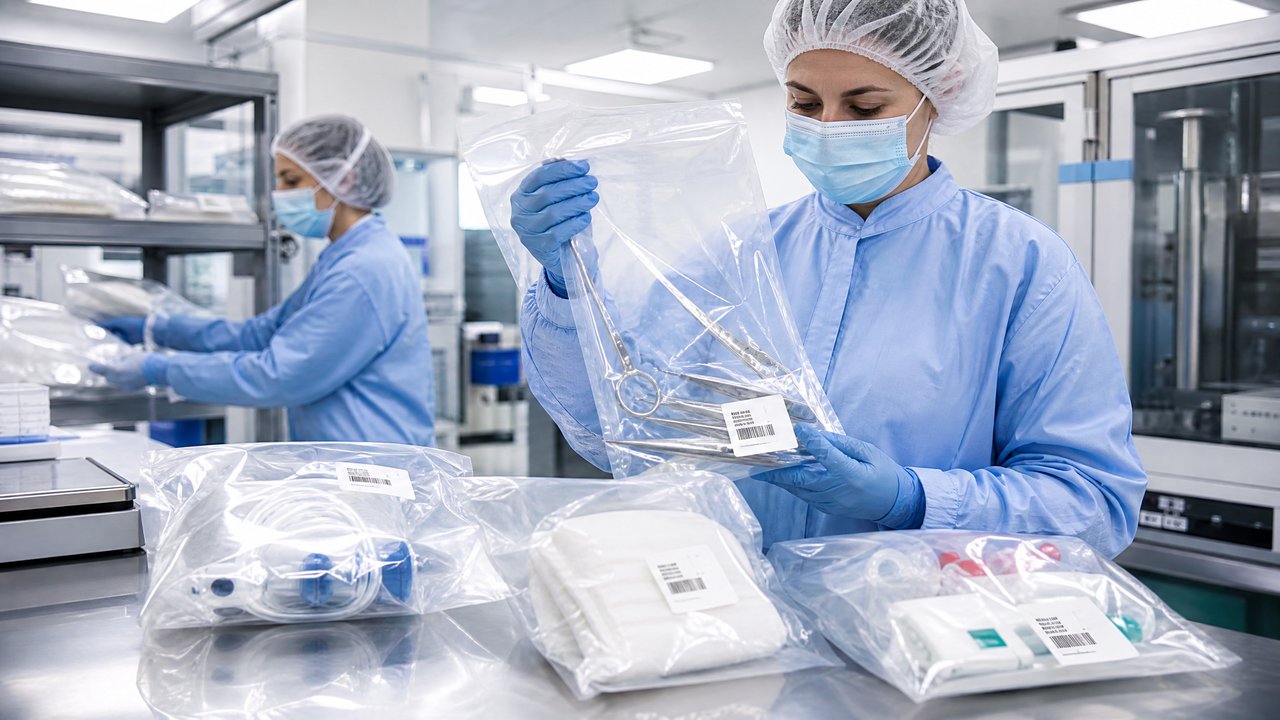
Healthcare workers in a cleanroom environment handling transparent unprinted medical bags with external UDI barcode labels for medical device packaging
Healthcare workers in a cleanroom handling unprinted medical bags with external UDI barcode labels

Adsure Packaging: Backed by PPWR Compliance Documentation

When navigating the complex requirements of PPWR, having the right documentation is just as critical as having the right product. At Adsure Packaging, we don’t just claim our unprinted medical bags are ready for PPWR — we back it up with concrete proof.

✓ We provide comprehensive PPWR Declaration of Conformity (DoC) documentation for our medical packaging products. When you source your unprinted medical bags from Adsure, you receive the necessary compliance materials to prove to your clients, auditors, and regulatory bodies that your packaging strategy aligns with the latest EU packaging directives — reducing your compliance risk and simplifying your EPR reporting processes.

Typical Application Scenarios for Unprinted Medical Bags

The specific applicability of unprinted medical bags needs to be evaluated based on material, usage, sterilization method, and client regulatory requirements. Typical application scenarios include:

  • Inner bags for medical devices (e.g., surgical instruments, catheters, syringes)
  • Packaging bags for single-use medical consumables
  • Cleanroom material transfer bags
  • In Vitro Diagnostic (IVD) consumable packaging
  • Medical accessory sub-packaging bags
  • Non-retail display medical packaging

What to Consider When Choosing Unprinted Medical Bags

If you are considering adopting unprinted medical bags to build a simpler, PPWR-aligned medical packaging scheme, please focus on the following aspects:

Consideration Specific Requirement Alignment with PPWR
Material & Thickness Sufficient puncture and tear resistance Minimization: avoid excessive thickness; adhere to the minimum necessary principle
Transparency & Cleanliness Meet the need for rapid identification in medical scenarios Unprinted design reduces surface processing complexity
Seal Strength Maintain seal integrity during transport, storage, and sterilization Ensures product safety without compromising functionality
Size Matching Avoid excessive redundant space Complies with PPWR’s 50% maximum empty space ratio limit
Traceability Labeling External UDI labels or digital information management Compliance flexibility: minimalist bag body, controllable information
Sterilization Suitability Confirm suitability for Autoclave / Gamma / EO Functionality first, sustainability second

Conclusion: Finding the Balance in the PPWR Era

In the PPWR era, medical packaging needs to strike a delicate balance between safety, cleanliness, and sustainability. The value of unprinted medical bags lies in stripping away unnecessary decoration, meeting the core protective needs of medical products with a simpler material structure and lower packaging complexity.

The unprinted medical bags provided by Adsure Packaging align with the packaging minimization and material simplification directions advocated by PPWR. They not only help clients build simpler medical packaging schemes but also provide a friendlier choice for future, stricter recyclable design and packaging responsibility requirements — fully supported by our PPWR Declaration of Conformity. Specific suitability must be assessed based on material, application, sterilization method, and applicable regulatory requirements.

To learn more about our medical packaging solutions, or to request samples, compliance documentation, and a quote for unprinted medical bags, contact our professional team today.

Get a Free Quote & Compliance Docs Today »


Frequently Asked Questions

Are medical packaging bags exempt from the new EU PPWR regulations?

While PPWR provides temporary exemptions for contact-sensitive medical packaging regarding 2030 recyclability and recycled content targets, these will be reviewed by 2035. Medical packaging is not exempt from minimization rules or eco-modulated Extended Producer Responsibility (EPR) fees. Companies should proactively evaluate their packaging strategies now.

How do unprinted medical bags help with PPWR compliance?

Unprinted medical bags reduce packaging complexity by eliminating inks and coatings that can interfere with recycling streams. This aligns with PPWR’s goals for material simplification and recyclable design, while still allowing for compliance labeling via external tags or UDI systems. They represent a packaging strategy aligned with the minimization and material simplification directions advocated by PPWR.

Does Adsure provide PPWR compliance documentation for their medical bags?

Yes. Adsure Packaging provides comprehensive PPWR Declaration of Conformity (DoC) documentation for our medical packaging products. This ensures you have the necessary proof of compliance for your supply chain, auditors, and regulatory bodies, reducing compliance risk and simplifying EPR reporting.


Reviewed by: Adsure Packaging Technical Team


Trademark Disclaimer: Autobag®, SidePouch®, and FAS SPRint Revolution™ are trademarks of Automated Packaging Systems, Inc. (a Sealed Air company). Adsure Packaging is not affiliated with, endorsed by, or authorized by Sealed Air Corporation or Automated Packaging Systems. All compatible products are independently manufactured by Adsure Packaging.

References:
[1] Advena Ltd. PPWR: What It Really Means for Medical Device Manufacturers
[2] European Commission. Packaging Waste
[3] Oliver Healthcare Packaging. EU PPWR: Impact on Healthcare
[4] RecyClass. Recyclability Certifications
ffs_ppwr_final

FFS Mono-Material PE Film: The PPWR-Ready Solution for Heavy-Duty Packaging in 2026

TL;DR: FFS mono-material PE film with ≥30% PCR content is the most practical path to EU PPWR compliance for heavy-duty packaging. It maintains the mechanical performance of multi-layer laminates while enabling full recyclability and reducing EPR fees.

If you are a packaging buyer or sustainability manager sourcing flexible film for industrial bagging lines, mono-material PE film for Form-Fill-Seal (FFS) applications is the single most important material shift you need to understand before 2030. The EU’s Packaging and Packaging Waste Regulation (PPWR) is already reshaping procurement decisions across Europe — and mono-material PE film sits at the very centre of that transformation.

In this guide, we break down exactly what FFS mono-material PE film is, how it performs against traditional multi-layer laminates, what the PPWR requires, and why the 30% PCR version manufactured by Adsure Packaging delivers both compliance and performance without compromise.

What Is FFS Mono-Material PE Film and Why Does It Matter?

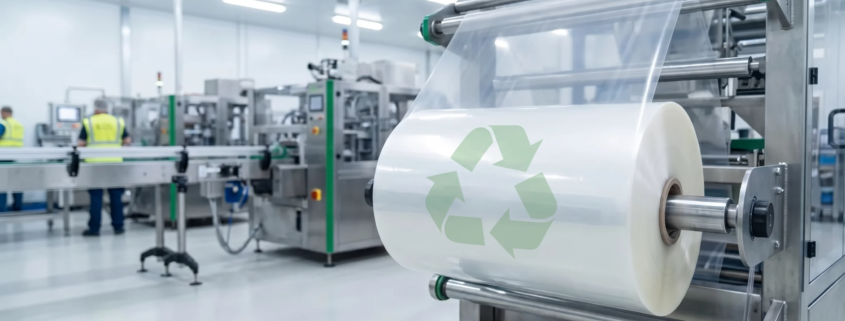
Mono-material PE film is a polyethylene-only flexible film structure — typically produced via three-layer or five-layer blown co-extrusion — that contains no mixed polymer types such as nylon (PA) or polyester (PET). Because every layer is made from the same polymer family, the finished film can enter the existing PE recycling stream without any separation step.

In a Form-Fill-Seal context, the film is supplied on a roll, fed into a vertical or horizontal FFS machine, formed into a tube, filled with product (fertiliser, resin pellets, animal feed, construction chemicals, etc.), and heat-sealed at both ends to create a finished bag — all in one continuous automated operation.

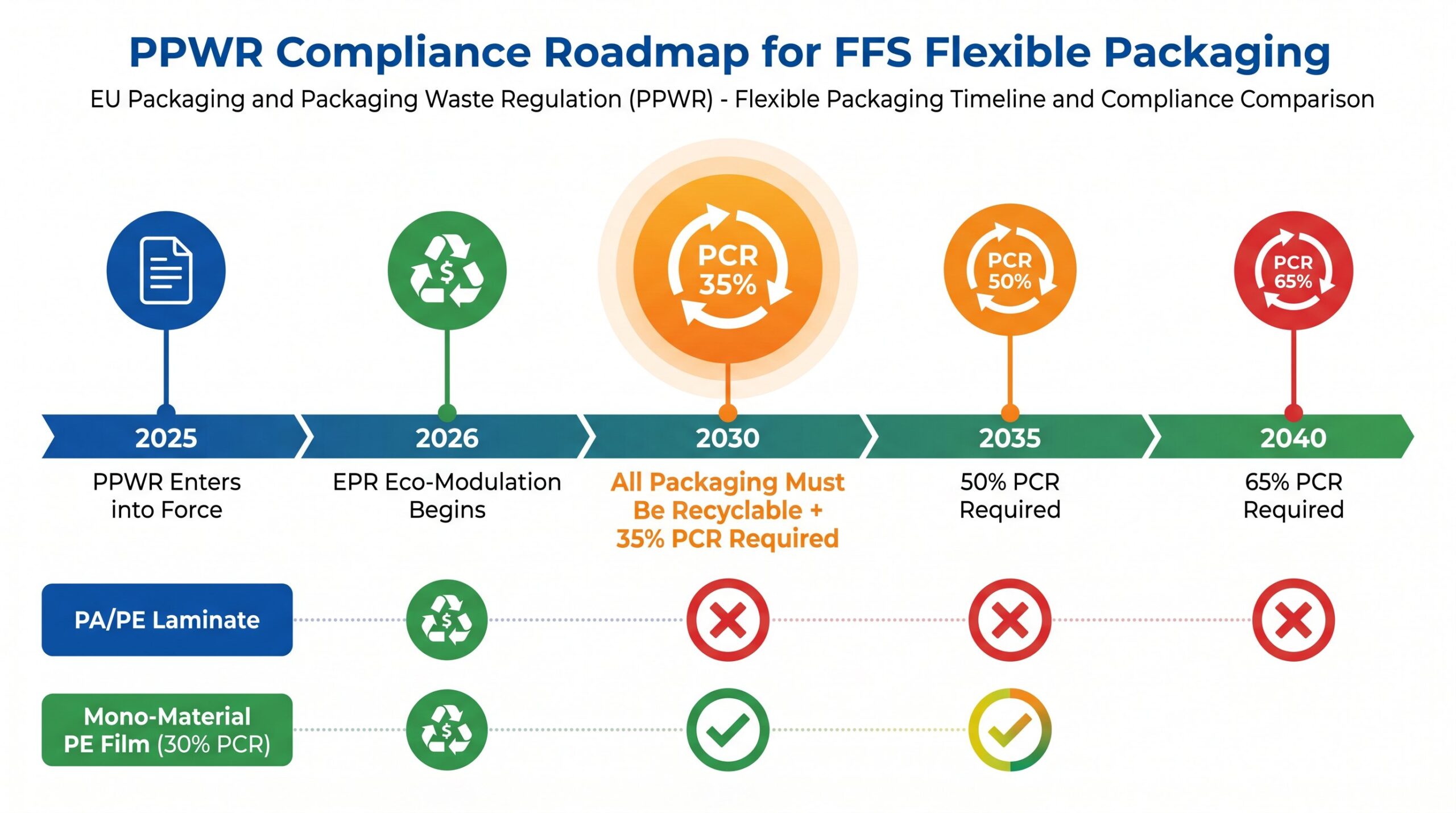
The reason mono-material PE film matters right now is simple: the EU PPWR (Regulation 2025/40), which entered into force in February 2025, mandates that all plastic packaging placed on the EU market must be recyclable by 2030, and that non-contact-sensitive plastic packaging must contain a minimum of 35% recycled content by 2030, rising to 65% by 2040. Traditional multi-layer laminates containing PA or aluminium foil fail the recyclability test entirely. Mono-material PE film passes it by design.


PPWR Compliance: What the Regulation Actually Requires for FFS Film

The PPWR introduces a tiered set of obligations that directly affect FFS film buyers and brand owners:

PPWR Requirement Deadline Impact on FFS Film
All packaging must be recyclable 2030 Multi-layer PA/PE laminates are non-compliant; mono-PE is compliant
Non-contact plastic packaging: ≥ 35% recycled content 2030 30% PCR FFS film already approaches this threshold
Non-contact plastic packaging: ≥ 50% recycled content 2035 Requires ongoing PCR ramp-up strategy
Non-contact plastic packaging: ≥ 65% recycled content 2040 Long-term roadmap required from suppliers
Extended Producer Responsibility (EPR) eco-modulation 2025 onwards Lower EPR fees for recyclable + high-PCR packaging

The eco-modulation mechanism is particularly important for buyers. Under national EPR schemes aligned with PPWR, packaging that is both recyclable and contains high recycled content qualifies for significantly reduced producer fees. Switching from a standard PA/PE laminate to a 30% PCR mono-material PE film can therefore deliver a direct cost saving on EPR contributions — in addition to the sustainability benefit.

“Packaging that is designed for recyclability and incorporates post-consumer recycled content will benefit from lower eco-modulated EPR fees under national schemes implementing PPWR.”
European Commission, FAQ on PPWR (2025)

For a deeper overview of our sustainable packaging solutions, including recycled-content materials and eco-friendly options, visit our dedicated sustainability page.


Mono-Material PE Film vs. Multi-Layer Laminates: A Technical Comparison

The most common objection to switching from a PA/PE laminate to a mono-material PE film is performance. Nylon layers add puncture resistance, stiffness, and barrier properties that standard PE cannot match — or so the conventional wisdom goes. The reality in 2025 is more nuanced.

Performance Parameter PA/PE Laminate Mono-Material PE Film (3-layer mPE)
Tensile strength (MD) ★★★★★ ★★★★☆
Puncture resistance ★★★★★ ★★★★☆
Creep resistance (25 kg+ loads) ★★★★★ ★★★★☆
Heat seal window Narrow Wide
Hot tack strength Moderate High
Recyclability (EU PPWR) ✗ Non
-compliant ✓ Fully compliant
EPR fee category High Low
PCR incorporation Difficult Straightforward

Modern metallocene PE (mPE) resins, combined with high-density PE (HDPE) skin layers, allow mono-material PE film to achieve tensile and puncture values that are within 10–15% of a comparable PA/PE laminate — a gap that is entirely acceptable for the vast majority of industrial FFS applications including 25 kg fertiliser bags, 50 kg resin pellet sacks, and 20 kg animal feed bags.

Where mono-material PE film genuinely excels over PA/PE laminates is in hot tack strength — the ability of a freshly formed seal to withstand the impact of falling product before the seal has cooled. Because PE seals at a lower temperature and retains flexibility at the seal line, hot tack performance is superior, which directly reduces bag burst rates on high-speed VFFS lines.


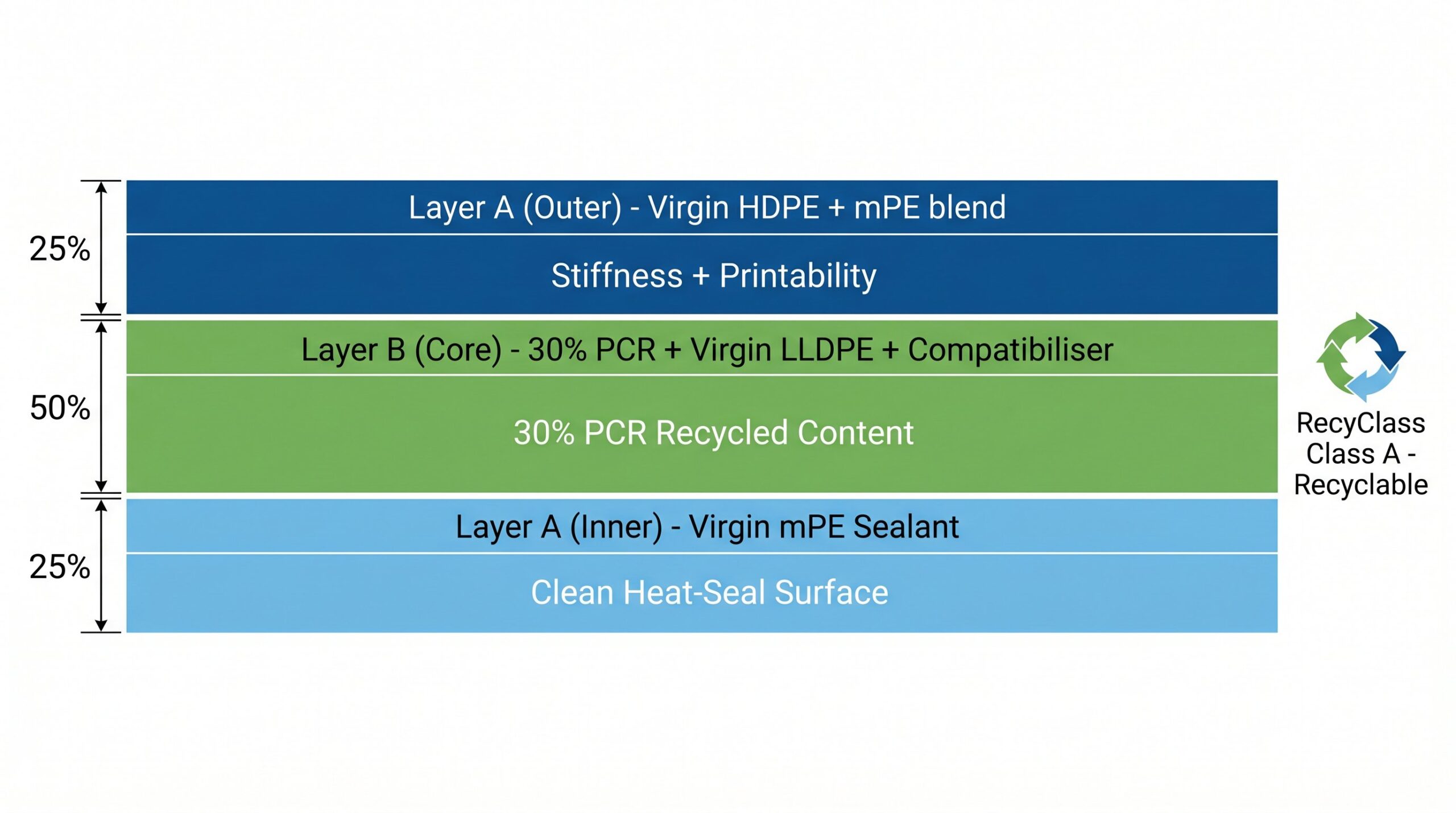
Cross-section diagram of 3-layer ABA mono-material PE film with 30% PCR core layer

The 30% PCR Challenge: How Adsure Solves It

Incorporating 30% post-consumer recycled (PCR) polyethylene into a FFS film structure is not simply a matter of blending recycled pellets into the extruder. PCR resin introduces variability in melt flow index, contamination risk (gels, black specks), potential odour, and reduced mechanical consistency. These are real challenges — and they are exactly the challenges that Adsure Packaging’s manufacturing process is engineered to address.

Our mono-material PE film with 30% PCR uses a three-layer ABA co-extrusion architecture.

This architecture means that the PCR content never contacts the packaged product and never appears on the film surface — eliminating the two most common quality complaints about PCR-containing films.

On the process side, all incoming PCR resin passes through a continuous melt filtration system (40-micron screen) before extrusion, removing gels and contaminants. An inline degassing step removes volatile organic compounds (VOCs) responsible for odour. The result is a film that is visually comparable to a virgin PE film and mechanically consistent batch-to-batch.

For more information on how our pre-opened auto bags and film products are manufactured to exacting quality standards, visit our products page.


Running FFS Mono-Material PE Film on Your Packaging Line

One of the most practical questions buyers ask is whether a mono-material PE film will run reliably on their existing FFS equipment. The answer is yes — with the right film specification.

Key parameters to verify when trialling a mono-material PE film on a VFFS or HFFS machine:

Coefficient of Friction (COF): The film’s COF must be matched to your machine’s film transport system. Adsure’s standard FFS film is produced with a COF of 0.15–0.25 (kinetic, film-to-metal), which is compatible with the majority of W&H, Windmöller & Hölscher, Concetti, and Premier Tech FFS systems.

Heat Seal Temperature Range: Our 30% PCR mono-PE film seals reliably in the range of 130–160°C, with an optimal window of 140–150°C at standard dwell times of 0.3–0.5 seconds. This is a broader window than most PA/PE laminates, which reduces the risk of seal failures during production speed changes.

Film Thickness: For heavy-duty FFS applications, we recommend:

Application Recommended Thickness Typical Bag Weight
Fertiliser / agrochemicals 120–150 µm 25–50 kg
Resin pellets / masterbatch 100–130 µm 25 kg
Animal feed 90–120 µm 20–25 kg
Construction chemicals 130–160 µm 25–50 kg

Trial Roll Programme: Adsure offers trial rolls in standard widths (400–1,200 mm) and lengths (500–1,000 m) for machine qualification. Our technical team can provide remote or on-site support during the trial period to optimise machine parameters.


EU PPWR compliance timeline infographic for FFS flexible packaging 2025 to 2040

FFS Mono-Material PE Film and the Circular Economy

Beyond PPWR compliance, mono-material PE film plays a direct role in building a functioning circular economy for flexible plastic packaging. The key enabler is design for recyclability: because the film contains only PE polymers, it is compatible with existing PE film collection and recycling infrastructure in Europe, including the CEFLEX-aligned collection streams operating in Germany, the Netherlands, Belgium, and Scandinavia.

RecyClass — the European recyclability assessment platform — classifies mono-material PE films as Class A (Recyclable) when they meet specific design criteria, including:

  • No non-PE layers exceeding 5% of total film weight
  • No black carbon pigments that interfere with NIR sorting
  • Ink coverage below 50% of total surface area (or use of PE-compatible inks)

Adsure’s FFS mono-material PE film is designed to meet all three criteria. The 30% PCR content itself comes from post-consumer PE film collected through European take-back schemes, closing the loop and demonstrating a genuine circular material flow.

This commitment to sustainable packaging is part of Adsure’s broader strategy to help customers meet their Scope 3 emissions targets and ESG reporting obligations.


FFS Mono-Material PE Film: 5 Key FAQs

Q1: Does 30% PCR content reduce the tensile strength of FFS mono-material PE film?
In our three-layer ABA architecture, the PCR is confined to the core layer. Independent tensile testing confirms that our 30% PCR film achieves ≥95% of the tensile strength of an equivalent virgin PE film. For standard heavy-duty FFS applications (25–50 kg bags), this difference is within the design safety margin.

Q2: Is your mono-material PE film certified as recyclable?
Our FFS mono-material PE film is designed in accordance with RecyClass guidelines and CEFLEX’s Design for a Circular Economy (D4ACE) framework. We provide third-party test reports confirming polymer composition and recyclability classification upon request.

Q3: Will the film run on our existing W&H or Concetti FFS machine without modification?
In the majority of cases, yes. Our film is produced with a COF, stiffness, and heat-seal profile optimised for standard FFS equipment. We recommend a trial roll qualification run before full production changeover, and our technical team is available to support parameter optimisation remotely or on-site.

Q4: What is the minimum order quantity for custom-width FFS mono-material PE film?
Standard minimum order quantities start at 5,000 kg per specification (width, thickness, PCR content, print). For trial orders, we offer reduced MOQs of 1,000–2,000 kg. Contact our sales team for a detailed quotation.

Q5: How does using your 30% PCR mono-PE film reduce my EPR fees?
Under PPWR-aligned national EPR schemes, packaging is assessed on two criteria: recyclability and recycled content. Our film scores positively on both. While exact fee reductions vary by country and scheme operator, buyers in Germany, France, and the Netherlands have reported EPR fee reductions of 15–30% when switching from non-recyclable multi-layer laminates to recyclable mono-material PE with PCR content.


Why Choose Adsure Packaging for FFS Mono-Material PE Film?

Adsure Packaging has over 40 years of experience manufacturing high-performance flexible packaging films and bags for industrial and commercial applications worldwide. Our FFS mono-material PE film with 30% PCR represents the convergence of our materials science expertise, our commitment to circular economy principles, and our understanding of the practical demands of high-speed automated packaging lines.

We supply to customers across Europe, the Americas, and Asia-Pacific, with full technical documentation, third-party test reports, and dedicated account management support.

Ready to switch to a PPWR-compliant FFS film? Get a Free Quote Today »


Video: FFS Packaging in Action

See how our pre-opened bags and film products perform on automated packaging lines:


Reviewed by: Adsure Packaging Technical Team


Frequently Asked Questions

What is FFS mono-material PE film?

FFS (Form-Fill-Seal) mono-material PE film is a single-polymer polyethylene film used on vertical or horizontal FFS packaging machines. Unlike multi-layer laminates, it contains only PE layers, making it fully recyclable and compatible with EU PPWR requirements for mono-material packaging.

Is FFS mono-material PE film as strong as multi-layer laminates?

Modern mono-material PE films using advanced metallocene or mLLDPE resins can match the puncture resistance, seal strength, and barrier properties of many multi-layer laminates. Adsure’s 3-layer mono-PE structures are engineered for heavy-duty applications including fertiliser, chemical, and construction product packaging.

How does FFS mono-material PE film help with EU PPWR compliance?

The EU Packaging and Packaging Waste Regulation (PPWR) requires packaging to be recyclable by 2030 and to contain minimum PCR content. Mono-material PE film satisfies the recyclability requirement because it can be processed in standard PE recycling streams, unlike multi-layer laminates which are difficult to separate.

What PCR content is available in Adsure’s FFS mono-material PE film?

Adsure offers FFS mono-material PE film with up to 30% post-consumer recycled (PCR) content, meeting the PPWR’s 2030 PCR targets. The PCR content is sourced from certified recycled polyethylene and does not compromise the film’s mechanical performance or food-contact compliance where applicable.