
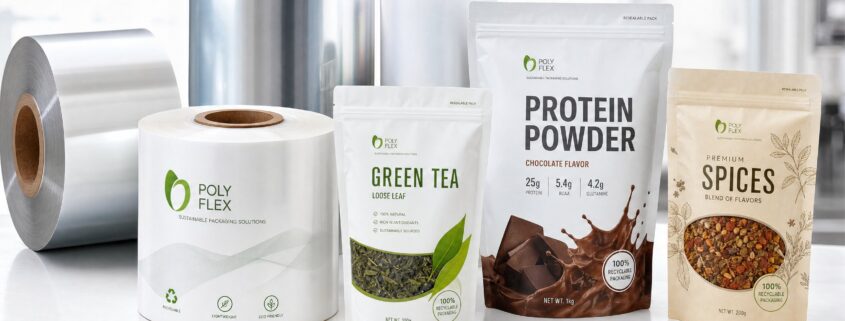
Dry Food Flexible Film: 3-Layer PE Structures for Powder Packaging
Dry food flexible film is undergoing a massive transformation as the European Union enforces stricter recyclability rules. For brands packaging milk powder, spices, tea, and baking mixes, the challenge is clear: how to protect moisture-sensitive products without relying on non-recyclable multi-material laminates. The traditional PET/VMPET/PE structures, while excellent for barrier protection, are increasingly incompatible with the EU Packaging and Packaging Waste Regulation (PPWR). The proven alternative is a 3-layer mono-material PE structure that balances oxygen and moisture barriers with 100% recyclability.
In this guide, we will explore why a 3-layer polyethylene (PE) structure is the optimal dry food flexible film, how it solves specific powder sealing challenges like seal contamination, and how it ensures compliance with the EU PPWR 2030 mandate.
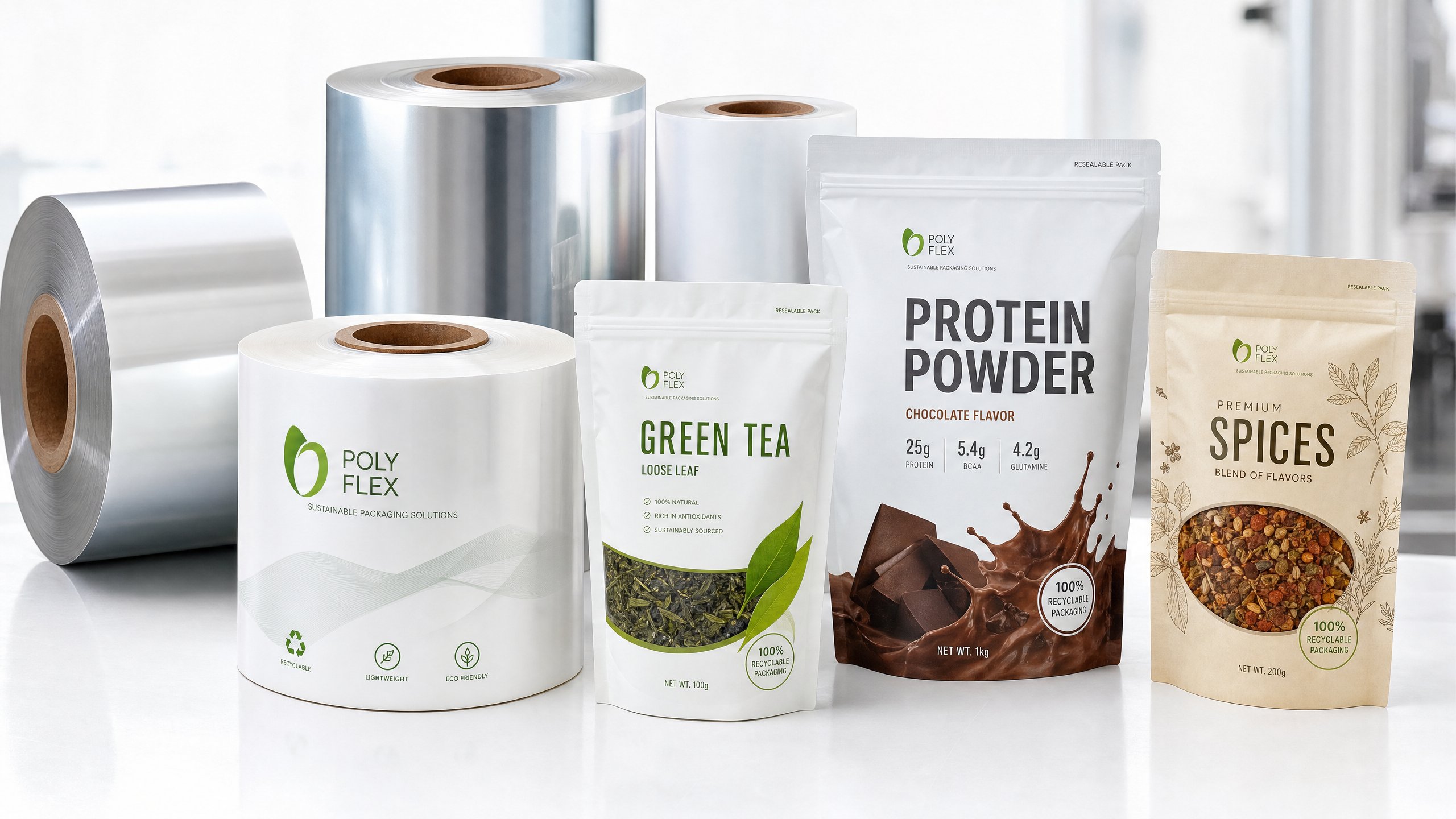
Why Dry Food Flexible Film Must Transition to Mono-Material PE
The EU Packaging and Packaging Waste Regulation (PPWR), which entered into force in February 2025, mandates that all packaging placed on the EU market must be recyclable by 2030. Furthermore, packaging must achieve a high recyclability grade under the Design for Recycling framework. According to the European Commission, packaging with a recyclability grade below 70% will not be considered compliant after 2030.
Traditional dry food flexible film often uses a mixed-material structure, such as an outer layer of PET (Polyethylene Terephthalate) laminated to a PE (Polyethylene) sealant layer. Because these different polymers are bonded together, they cannot be easily separated at recycling facilities, rendering the entire package non-recyclable. By switching to a mono-material PE structure — where the entire film belongs to a single polymer family — brands can ensure their dry food flexible film is fully compatible with existing PE recycling streams. This transition also reduces Extended Producer Responsibility (EPR) fees, as eco-modulation mechanisms reward highly recyclable packaging formats.
For a deeper look at how Adsure approaches sustainable film design, visit our Sustainable Packaging Solutions page.
The 3-Layer PE Architecture for Dry Food Flexible Film
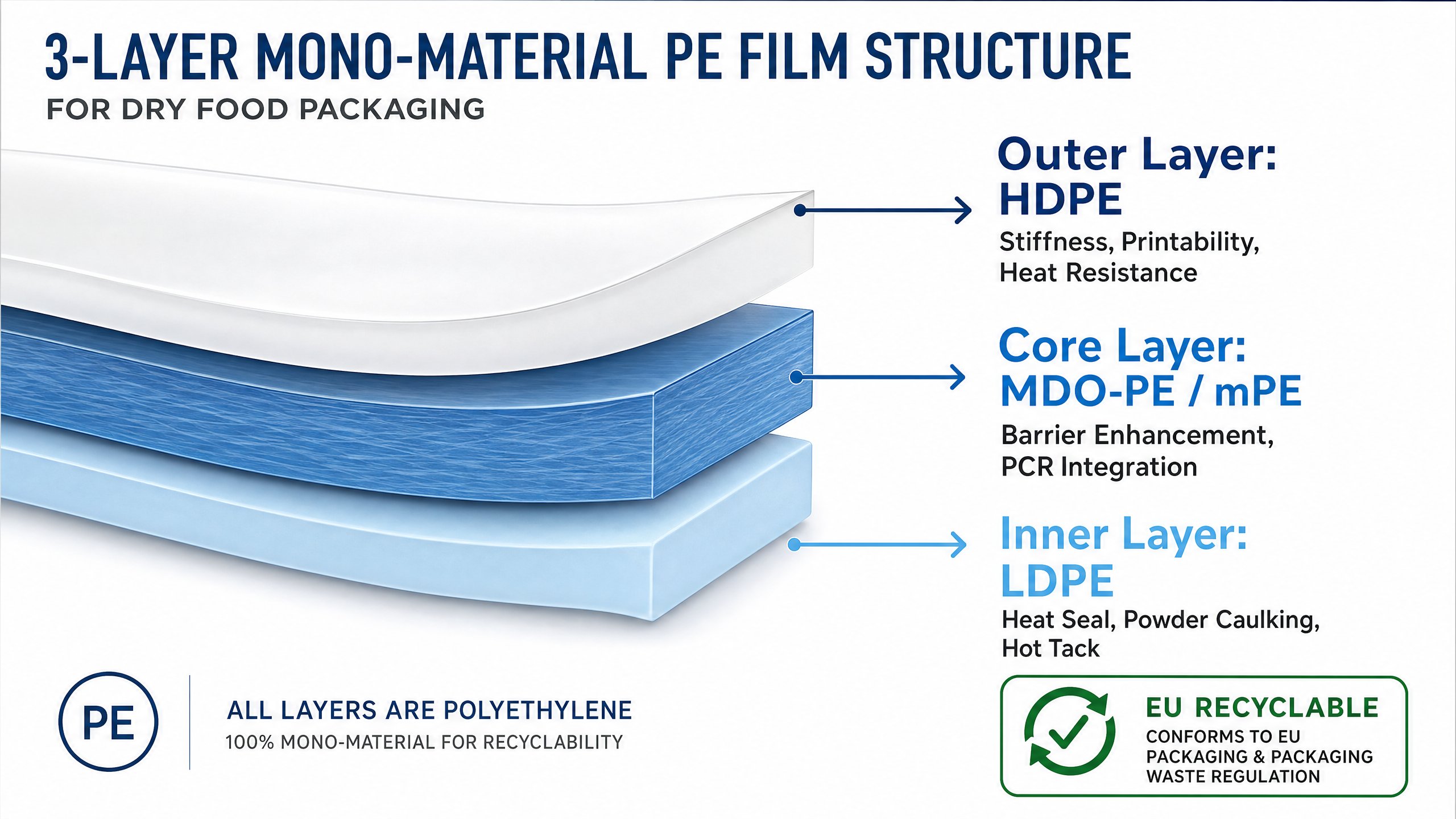
To replicate the performance of traditional laminates, modern dry food flexible film relies on a sophisticated 3-layer co-extrusion process. Each layer is engineered from different PE grades to perform a specific function, ensuring the film runs smoothly on Form-Fill-Seal (FFS) machines while protecting the product.
Outer Layer: HDPE for Retail Presentation and Stiffness
The exterior of the dry food flexible film is formulated with High-Density Polyethylene (HDPE). HDPE provides the necessary rigidity and heat resistance to prevent the film from stretching or melting against the sealing jaws of high-speed packaging machines. Crucially for retail products, the smooth HDPE surface supports high-definition flexographic or gravure printing, ensuring your brand stands out on the supermarket shelf.
Core Layer: Barrier Protection and MDO Technology
The middle layer is where critical barrier performance is achieved. For dry food flexible film, this layer often utilizes Machine Direction Orientation (MDO-PE) technology. Stretching the PE film improves its stiffness and significantly enhances its moisture barrier properties. For highly sensitive products like premium tea or specialized protein powders, the core layer can incorporate ultra-thin barrier coatings — such as AlOx or EVOH — while remaining below 5% of total film weight to preserve the mono-material classification and PPWR compliance.
Inner Layer: LDPE for Hermetic Powder Sealing
The innermost layer is the sealant web, and for powder packaging, Low-Density Polyethylene (LDPE) is the preferred resin. When packaging fine powders like flour, spices, or nutritional supplements, airborne particles often contaminate the seal area. LDPE exhibits excellent “caulking” properties — when heated by the sealing jaws, it flows around the powder particles, encapsulating them and ensuring a hermetic seal. This prevents leaks and extends the shelf life of the dry food product.
Matching OTR and WVTR to Your Dry Food Flexible Film Specification
Not all dry foods require the same level of protection. When specifying your dry food flexible film, it is essential to match the Oxygen Transmission Rate (OTR) and Water Vapor Transmission Rate (WVTR) to your product’s specific needs. Over-engineering the film increases costs, while under-engineering risks product spoilage.
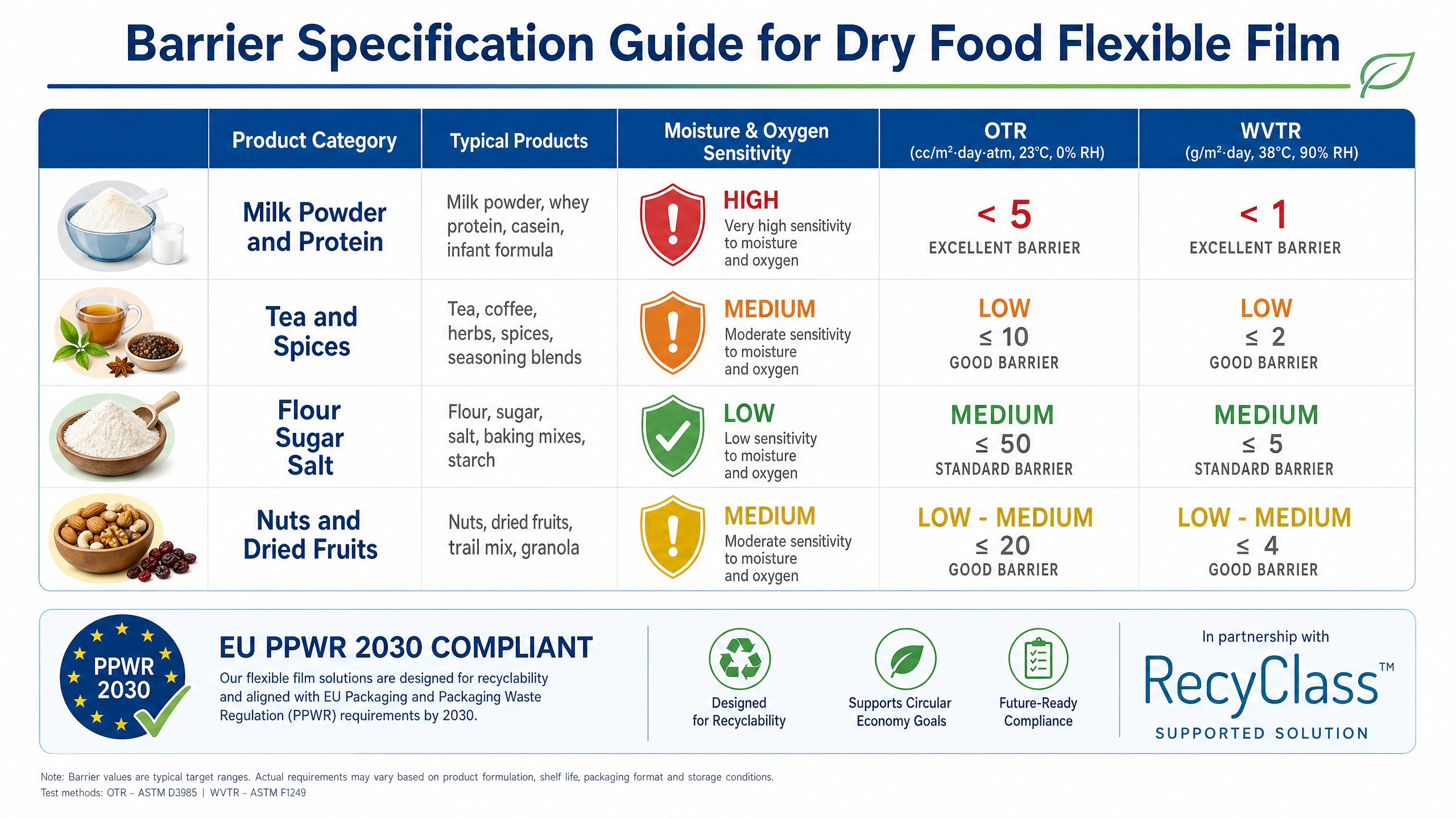
By collaborating with an experienced flexible packaging manufacturer like Adsure Packaging, you can customize the layer thickness and resin blend to achieve the exact barrier performance required for your product. Explore our full range of Flexible & Specialty Packaging Films to find the right solution for your application.
Ensuring Machineability on FFS Equipment
A common concern when switching to mono-material dry food flexible film is whether it will run efficiently on existing Vertical Form-Fill-Seal (VFFS) or Horizontal Form-Fill-Seal (HFFS) machines. A well-engineered 3-layer PE film addresses this by tightly controlling the Coefficient of Friction (COF). The outer HDPE layer ensures the film glides smoothly over forming collars without snagging, while the LDPE inner layer provides a wide heat-seal window and high hot tack strength. This means the seal holds together even when heavy product drops into the bag immediately after sealing, reducing downtime and waste on your packaging line.
To understand how Adsure tests film performance and seal integrity, watch our laboratory testing process below:
Why Choose Adsure for Your Dry Food Flexible Film
Adsure Packaging is a manufacturer with over 40 years of experience in high-performance flexible films. Our dry food flexible film solutions are developed with the following commitments:
- EU PPWR 2030 Ready: Our mono-material PE structures align with CEFLEX Design for a Circular Economy guidelines for full recyclability.
- Custom Barrier Profiles: We tailor OTR and WVTR specifications to match your specific dry food requirements, from milk powder to baking mixes.
- FFS Optimized: Our dry food flexible film is engineered for stable COF and excellent hot tack on automated VFFS and HFFS packaging lines.
- GRS-Certified PCR Content: For clients requiring verified recycled content, we offer films incorporating GRS-certified Post-Consumer Recycled PE resin in the core layer.
Ready to upgrade your powder packaging to a sustainable, high-performance solution? Contact our technical team to discuss your application requirements.
Frequently Asked Questions
Why is mono-material PE the best dry food flexible film for EU PPWR compliance?
The EU PPWR requires all packaging to be recyclable by 2030. Traditional multi-material films (like PET/PE) cannot be easily recycled because the different polymers are bonded together. Mono-material PE dry food flexible film is made entirely from polyethylene, allowing it to be sorted and processed in existing PE recycling streams, ensuring full compliance and lower EPR fees.
Can a 3-layer PE film provide enough barrier protection for powder packaging?
Yes. By using Machine Direction Orientation (MDO) technology and optional ultra-thin barrier coatings (like EVOH or AlOx) in the core layer, a 3-layer PE dry food flexible film can achieve OTR and WVTR levels comparable to traditional laminates, effectively protecting powders from moisture and oxidation for shelf lives of 12–24 months.
How does dry food flexible film handle powder contamination in the seal area?
The inner layer uses Low-Density Polyethylene (LDPE), which has excellent caulking properties. When heated during the sealing process, the LDPE flows around fine powder particles, encapsulating them to create a secure, hermetic seal that prevents leaks — a critical advantage for flour, spices, and protein powder packaging.
Will mono-material dry food flexible film run on my existing FFS machines?
Yes. A well-engineered 3-layer PE film is designed with a controlled Coefficient of Friction (COF) and a stiff HDPE outer layer to ensure smooth tracking. The LDPE inner layer provides a wide sealing window and strong hot tack, making it highly compatible with standard VFFS and HFFS equipment without machine modifications.
Reviewed by: Adsure Packaging Technical Team
Trademark Disclaimer: Autobag®, SidePouch®, and FAS SPRint Revolution™ are trademarks of Automated Packaging Systems, Inc. (a Sealed Air company). Adsure Packaging is not affiliated with, endorsed by, or authorized by Sealed Air Corporation or Automated Packaging Systems. All compatible products are independently manufactured by Adsure Packaging.


