
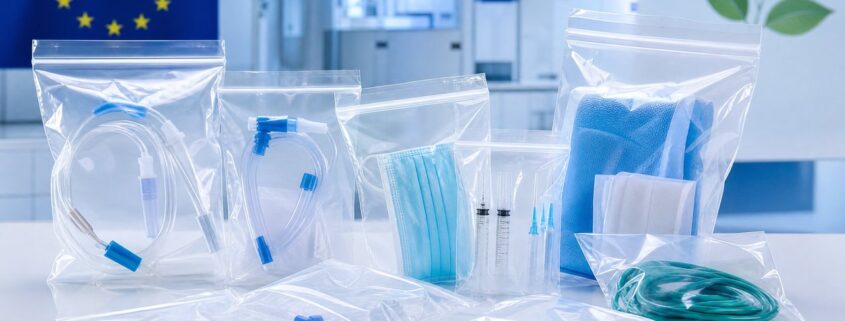
Unprinted Medical Bags Under PPWR: Balancing Safety, Cleanliness & Sustainability
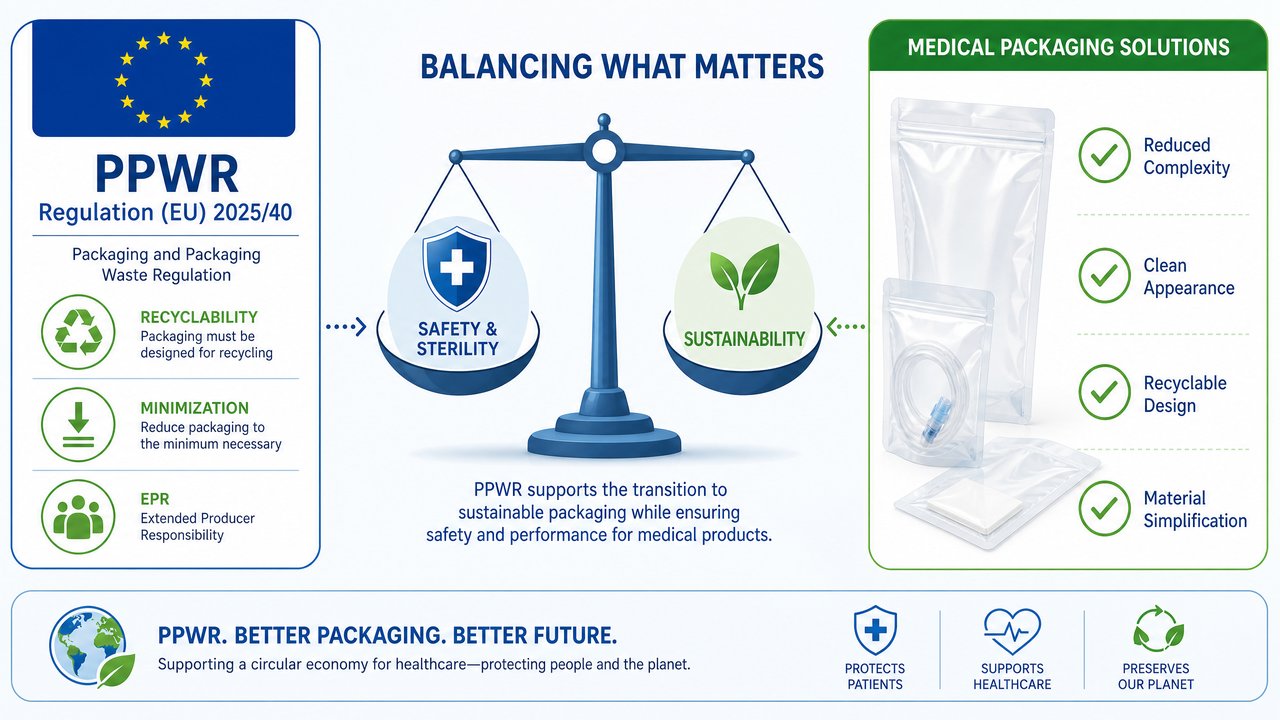
As the EU’s Packaging and Packaging Waste Regulation (PPWR) advances, the packaging industry faces immense pressure to transition toward a circular economy. Historically, the design of medical packaging has been driven almost exclusively by safety, sterility, and regulatory compliance. However, the new PPWR framework—Regulation (EU) 2025/40, which entered into force on February 11, 2025, and will apply directly across EU member states starting August 12, 2026—mandates that even medical packaging must gradually integrate sustainability while ensuring uncompromised safety.
In the context of PPWR driving packaging minimization, recyclable design, and transparent labeling requirements, unprinted medical bags offer a simpler, lower-interference, and future-ready packaging choice for medical devices, consumables, and cleanroom products.
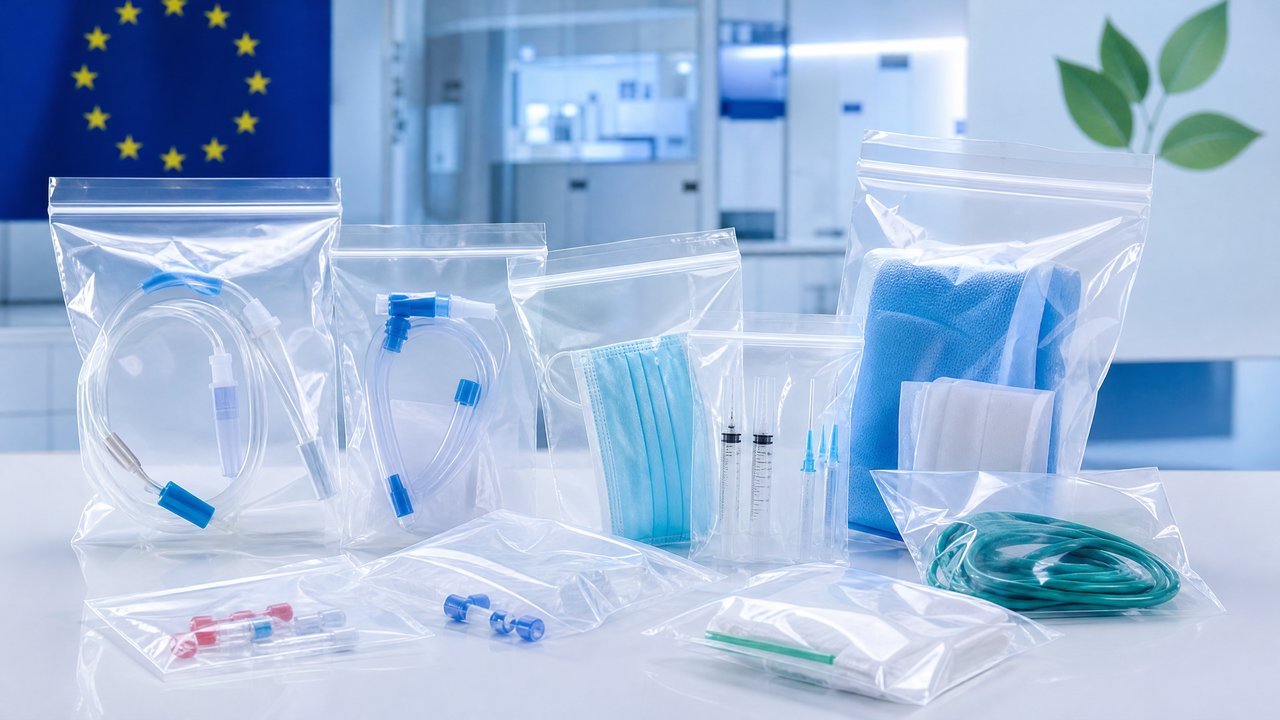
How PPWR is Changing Packaging Design Logic
PPWR does not only target common consumer plastic bags; it covers almost all packaging and packaging waste placed on the EU market. It introduces several core requirements that will profoundly alter packaging design logic, which the medical packaging industry must take seriously:
- Design for Recycling: The European Commission has explicitly stated that by 2030, all packaging must be recyclable. Packaging design must allow materials to smoothly enter the recycling stream after use, rather than ending up in landfills or incinerators.
- Minimization: PPWR requires controlling the weight, volume, and unnecessary empty space of packaging. By 2030, the maximum empty space ratio will be capped at 50%. While medical packaging prioritizes safety and function, material usage can still be reduced through optimized bag shapes, appropriate thickness, and the elimination of redundant structures.
- No Blanket Exemption for Medical Packaging: Medical devices and pharmaceutical packaging do not have a “blanket exemption.” The regulation acknowledges the safety, sterility, and product integrity requirements of healthcare scenarios, granting temporary exemptions for certain contact-sensitive packaging regarding 2030 recyclability or recycled content targets. However, these exemptions will be reassessed by 2035. Companies must proactively plan their packaging strategies now.
- Eco-modulated EPR Fees: From 2025, EU Member States must implement eco-modulated Extended Producer Responsibility (EPR) schemes. Healthcare companies will pay fees based on the recyclability of their packaging; the harder it is to recycle, the higher the fee.
The Unique Nature of Medical Packaging and Compliance Challenges
The primary task of medical packaging is always to protect product safety and usage integrity. Medical packaging cannot simply pursue “less material”; it must also balance cleanliness, seal strength, traceability, and requirements from medical device regulations such as MDR/IVDR.
Industry commentary on medical packaging points out that lightweighting, removing invalid space, and rational size design are practical improvement directions for medical packaging facing PPWR. Furthermore, environmental claims must be specific, accurate, and supported by evidence, avoiding misleading green marketing. For medical packaging, sustainable optimization is not about sacrificing protective performance for an environmental concept, but reducing unnecessary packaging complexity while meeting basic functional requirements.
It is worth noting that while contact-sensitive medical packaging enjoys partial exemptions, healthcare companies must still pay EPR fees based on recyclability. This means that even during the exemption period, adopting simpler, more recyclable packaging designs can bring substantial cost optimization to companies.
Why Unprinted Medical Bags Align with This Trend
In the context of PPWR promoting recyclable design and packaging minimization, medical packaging companies are re-examining every packaging component: Is the material necessary? Is printing necessary? Can the structure be simplified? Does the size truly match the product’s needs?
For medical bags, being unprinted is not just about a clean appearance. It brings substantial compliance and application advantages:
- Reduced Packaging Complexity for Better Recycling: Compared to heavily printed bags, unprinted medical bags reduce the interference of inks, coatings, and colors. Recycling design systems like RecyClass focus heavily on how labels, adhesives, and inks affect the recycling stream. Therefore, “reducing unnecessary printing” is a highly reasonable and provable narrative for recyclable design.
- Transparent and Clean Appearance, Better for Medical Identification: Medical bags often require quick visual inspection of internal items, batch labels, or sterilization indicators. Unprinted bags make identification more intuitive and reduce surface information interference, providing a purer, cleaner visual experience.
- Ideal for Non-Retail Display Packaging: Medical packaging is not consumer goods packaging; it does not require aggressive shelf marketing. Unprinted bags return the packaging function to protection, isolation, identification, and circulation — ideal for medical devices, single-use consumables, and diagnostic kit materials.
- Facilitating Minimization Design: While ensuring strength, sealability, and convenience, combining optimized bag shapes and thickness, unprinted bags can effectively reduce unnecessary material usage, aligning with PPWR’s minimization direction.
- Preserving Compliance Flexibility for Clients: Healthcare clients can carry necessary information via external labels, carton labels, UDI labels, or QR codes, while the bag body itself remains unprinted. This is highly suitable for the medical supply chain: the bag remains minimalist, and information management is handled by a controllable labeling system.
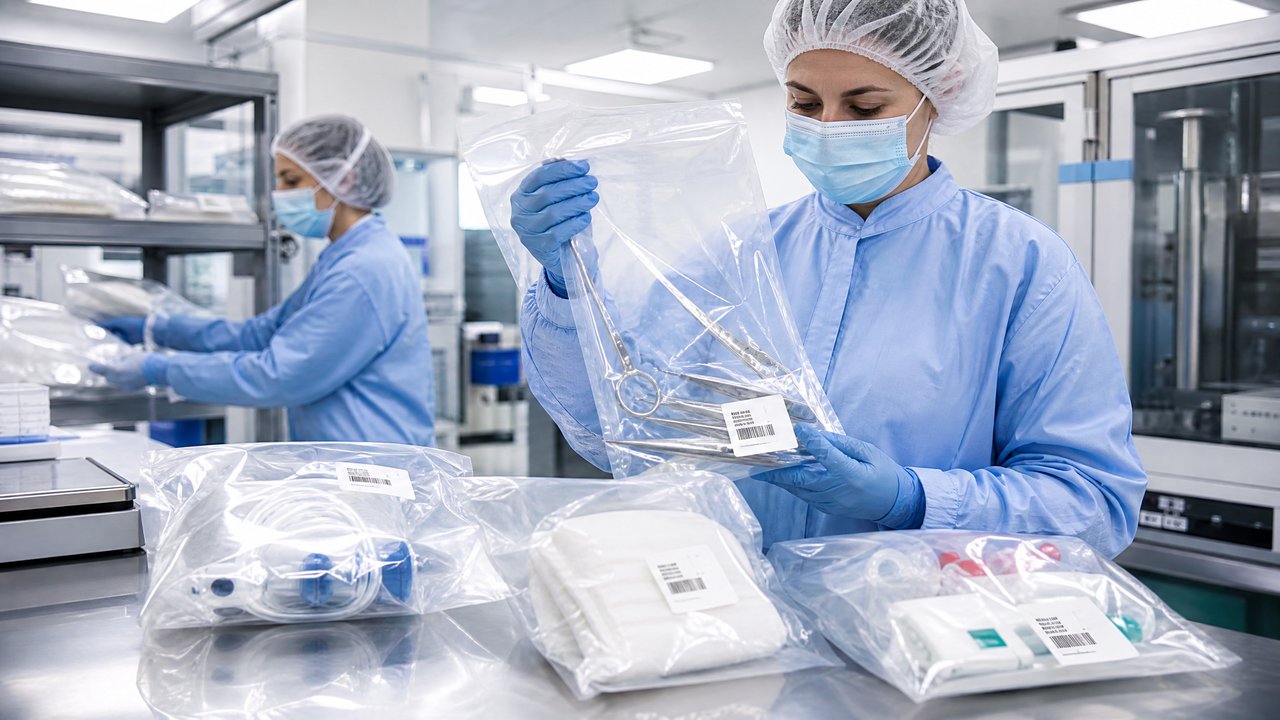
Adsure Packaging: Backed by PPWR Compliance Documentation
When navigating the complex requirements of PPWR, having the right documentation is just as critical as having the right product. At Adsure Packaging, we don’t just claim our unprinted medical bags are ready for PPWR — we back it up with concrete proof.
✓ We provide comprehensive PPWR Declaration of Conformity (DoC) documentation for our medical packaging products. When you source your unprinted medical bags from Adsure, you receive the necessary compliance materials to prove to your clients, auditors, and regulatory bodies that your packaging strategy aligns with the latest EU packaging directives — reducing your compliance risk and simplifying your EPR reporting processes.
Typical Application Scenarios for Unprinted Medical Bags
The specific applicability of unprinted medical bags needs to be evaluated based on material, usage, sterilization method, and client regulatory requirements. Typical application scenarios include:
- Inner bags for medical devices (e.g., surgical instruments, catheters, syringes)
- Packaging bags for single-use medical consumables
- Cleanroom material transfer bags
- In Vitro Diagnostic (IVD) consumable packaging
- Medical accessory sub-packaging bags
- Non-retail display medical packaging
What to Consider When Choosing Unprinted Medical Bags
If you are considering adopting unprinted medical bags to build a simpler, PPWR-aligned medical packaging scheme, please focus on the following aspects:
| Consideration | Specific Requirement | Alignment with PPWR |
|---|---|---|
| Material & Thickness | Sufficient puncture and tear resistance | Minimization: avoid excessive thickness; adhere to the minimum necessary principle |
| Transparency & Cleanliness | Meet the need for rapid identification in medical scenarios | Unprinted design reduces surface processing complexity |
| Seal Strength | Maintain seal integrity during transport, storage, and sterilization | Ensures product safety without compromising functionality |
| Size Matching | Avoid excessive redundant space | Complies with PPWR’s 50% maximum empty space ratio limit |
| Traceability Labeling | External UDI labels or digital information management | Compliance flexibility: minimalist bag body, controllable information |
| Sterilization Suitability | Confirm suitability for Autoclave / Gamma / EO | Functionality first, sustainability second |
Conclusion: Finding the Balance in the PPWR Era
In the PPWR era, medical packaging needs to strike a delicate balance between safety, cleanliness, and sustainability. The value of unprinted medical bags lies in stripping away unnecessary decoration, meeting the core protective needs of medical products with a simpler material structure and lower packaging complexity.
The unprinted medical bags provided by Adsure Packaging align with the packaging minimization and material simplification directions advocated by PPWR. They not only help clients build simpler medical packaging schemes but also provide a friendlier choice for future, stricter recyclable design and packaging responsibility requirements — fully supported by our PPWR Declaration of Conformity. Specific suitability must be assessed based on material, application, sterilization method, and applicable regulatory requirements.
To learn more about our medical packaging solutions, or to request samples, compliance documentation, and a quote for unprinted medical bags, contact our professional team today.
Get a Free Quote & Compliance Docs Today »
Frequently Asked Questions
Are medical packaging bags exempt from the new EU PPWR regulations?
While PPWR provides temporary exemptions for contact-sensitive medical packaging regarding 2030 recyclability and recycled content targets, these will be reviewed by 2035. Medical packaging is not exempt from minimization rules or eco-modulated Extended Producer Responsibility (EPR) fees. Companies should proactively evaluate their packaging strategies now.
How do unprinted medical bags help with PPWR compliance?
Unprinted medical bags reduce packaging complexity by eliminating inks and coatings that can interfere with recycling streams. This aligns with PPWR’s goals for material simplification and recyclable design, while still allowing for compliance labeling via external tags or UDI systems. They represent a packaging strategy aligned with the minimization and material simplification directions advocated by PPWR.
Does Adsure provide PPWR compliance documentation for their medical bags?
Yes. Adsure Packaging provides comprehensive PPWR Declaration of Conformity (DoC) documentation for our medical packaging products. This ensures you have the necessary proof of compliance for your supply chain, auditors, and regulatory bodies, reducing compliance risk and simplifying EPR reporting.
Reviewed by: Adsure Packaging Technical Team
Trademark Disclaimer: Autobag®, SidePouch®, and FAS SPRint Revolution™ are trademarks of Automated Packaging Systems, Inc. (a Sealed Air company). Adsure Packaging is not affiliated with, endorsed by, or authorized by Sealed Air Corporation or Automated Packaging Systems. All compatible products are independently manufactured by Adsure Packaging.
References:
[1] Advena Ltd. PPWR: What It Really Means for Medical Device Manufacturers
[2] European Commission. Packaging Waste
[3] Oliver Healthcare Packaging. EU PPWR: Impact on Healthcare
[4] RecyClass. Recyclability Certifications


