How Police Evidence Bags Protect Crime Scene Integrity
Introduction
Police evidence bags are vital tools for law enforcement. They keep crime scene items safe from tampering, contamination, and loss. Each bag is designed to maintain the chain of custody, which records who handled the evidence and when. A single mistake — like a broken seal or missing label — can make evidence inadmissible in court.
Tamper-evident materials and secure seals protect the evidence’s integrity from the scene to the courtroom. Using the right bag also helps investigators trust that every item remains in its original condition. Police departments use different types and sizes of bags to protect various evidence, ensuring safety and traceability throughout the investigation.
Types of Evidence Bags
Plastic Evidence Bags
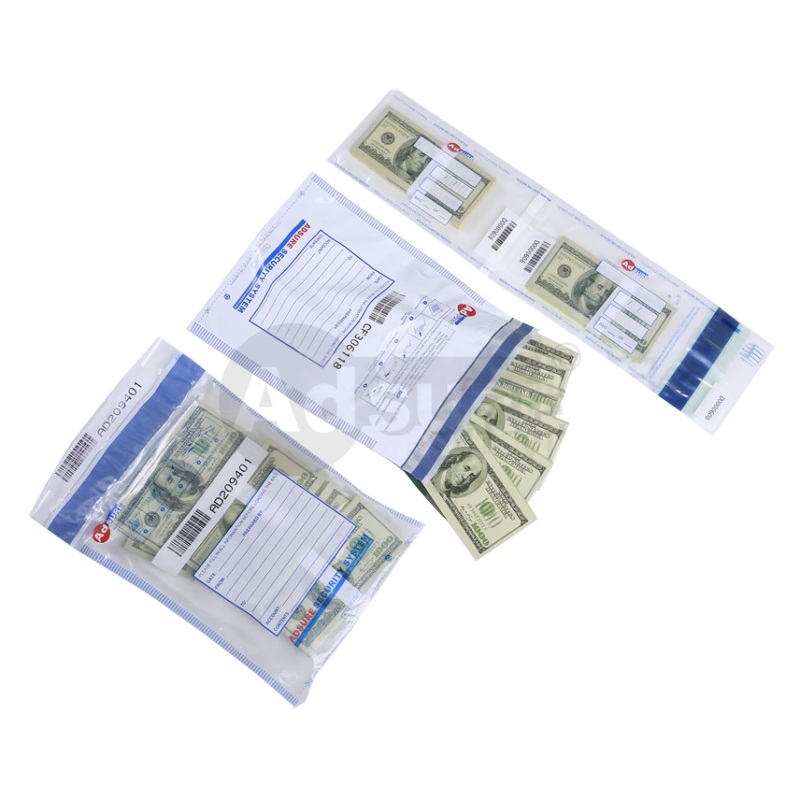
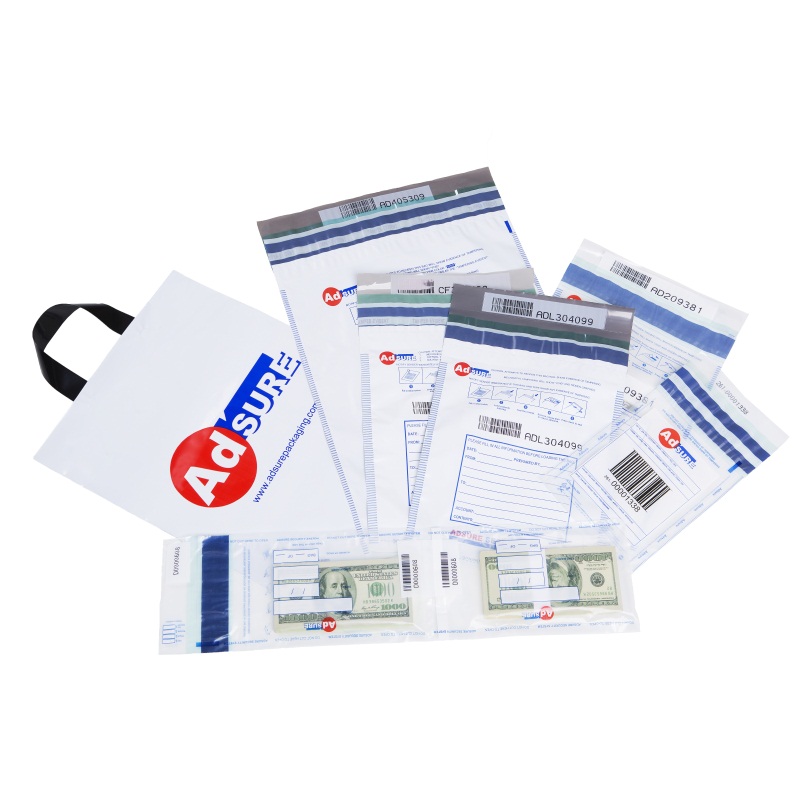
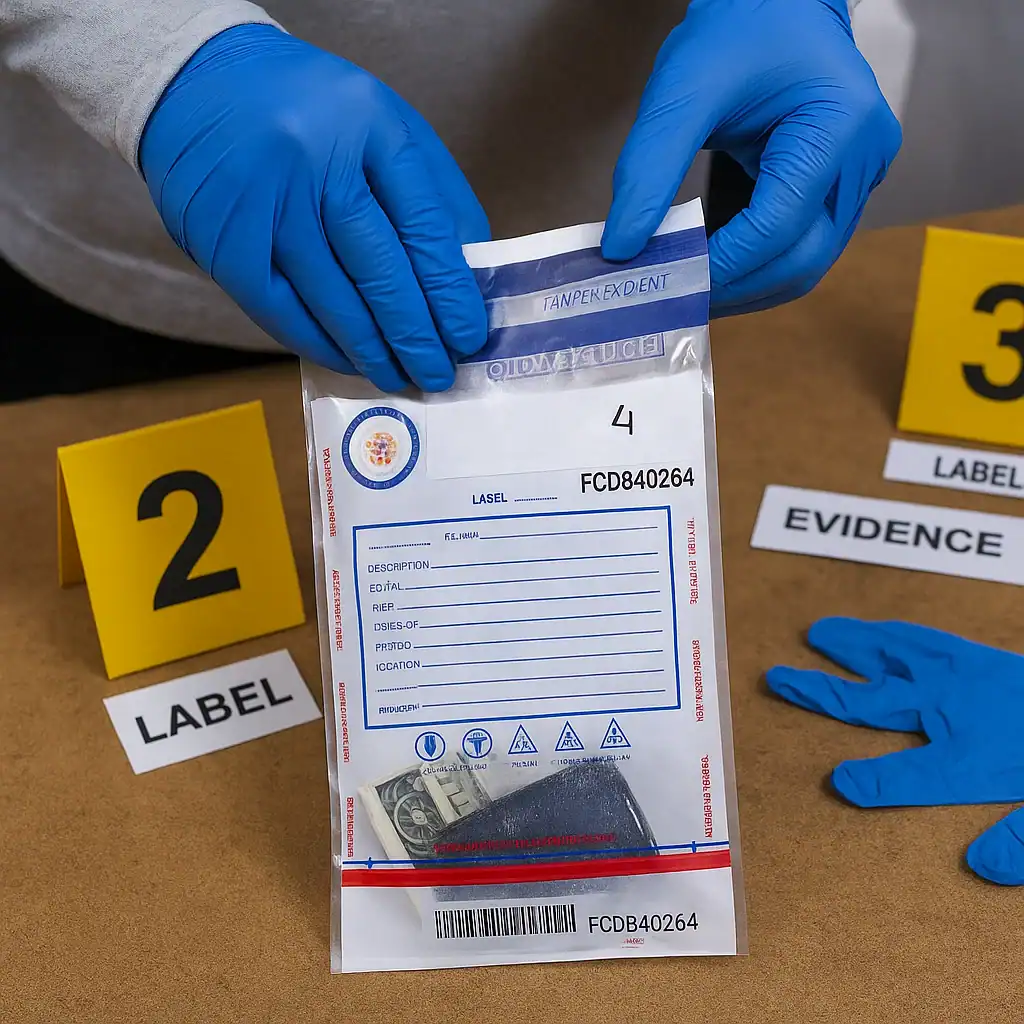
Plastic evidence bags are strong, waterproof, and transparent. Officers can see what’s inside without opening them. These bags are ideal for dry items such as documents, weapons, or narcotics. Many have built-in seals that show a clear “VOID” message if tampered with. They also include serial numbers or barcodes for tracking and auditing.
Paper Evidence Bags
Paper bags are best for biological or wet evidence. Because they breathe, moisture can escape, preventing mold or DNA damage. Officers usually seal them with tamper-evident tape and sign across the seal. While paper isn’t waterproof, it keeps biological samples stable.
Choosing the Right Type
Plastic and paper bags both safeguard evidence, but each serves a specific need. Police often use one bag per item to prevent contamination. Selecting the correct material is key to preserving forensic value.
Key Features of Tamper-Evident Bags
Modern evidence bags are designed for security and traceability.
Main features include:
-
Tamper-evident seal: Displays “VOID” or color change if opened.
-
Unique serial number: Ensures traceability in custody logs.
-
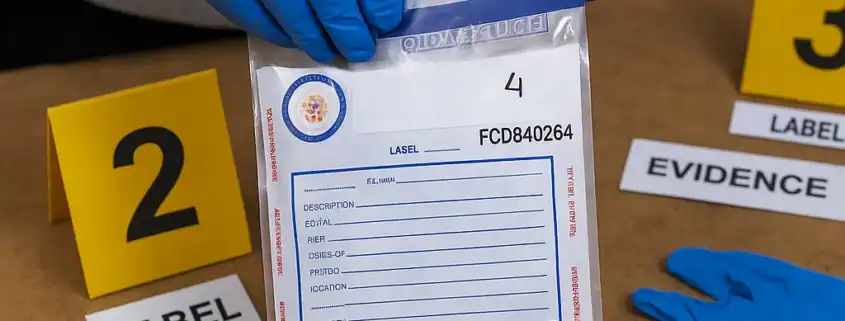
Writable label area: Records case ID, item, collector, and time.
-
Durable film or kraft paper: Prevents tearing and leaks.
-
Optional pouch or receipt: Keeps forms attached and trackable.
These features make evidence bags reliable tools for protecting truth and transparency.
Proper Use and Chain of Custody
-
Label Before Use: Record case details before inserting evidence.
-
Seal Immediately: Use adhesive or tape and sign across the seal.
-
One Bag per Item: Avoid mixing evidence to prevent confusion.
-
Handle Biological Samples Carefully: Let them dry before sealing.
-
Record Every Transfer: Maintain custody logs and serial numbers.
Each action proves that the evidence remained safe and unchanged.
Conclusion
Police evidence bags are more than simple containers — they are proof of integrity. Proper use ensures evidence remains authentic, traceable, and admissible in court.
Manufacturers like Adsure Packaging provide tamper-evident security bags that meet global law enforcement standards. Their products help investigators keep the chain of custody secure from start to finish — protecting truth, justice, and public trust.
Frequently Asked Questions
What makes a police evidence bag tamper-evident?
Police evidence bags use pressure-sensitive adhesive seals that activate a permanent void pattern when broken. Each bag carries a unique serial number printed on both the bag and a tear-off receipt, creating a verifiable record. Any attempt to open the bag leaves irreversible visual evidence.
What types of evidence bags are used by law enforcement?
Law enforcement uses paper bags for dry biological evidence (to prevent moisture build-up), polyethylene bags for non-biological items, biohazard bags for potentially infectious material, and specialised bags for firearms, currency, or digital devices. Each type is chosen to preserve the specific evidence category.
How should police evidence bags be labelled?
Evidence bags must be labelled with the case number, item description, date and time of collection, location, and the officer’s name and badge number. Labels should be completed before sealing to avoid contamination. All subsequent handlers must add their details to maintain the chain of custody.
Can evidence be rejected in court due to improper bagging?
Yes. If the chain of custody is broken — for example, if a bag seal is voided, labels are incomplete, or the bag type was inappropriate for the evidence — defence counsel can challenge the admissibility of that evidence. Courts have excluded evidence due to improper packaging and handling.
Reviewed by: Adsure Packaging Technical Team